正在确认阅读权限…
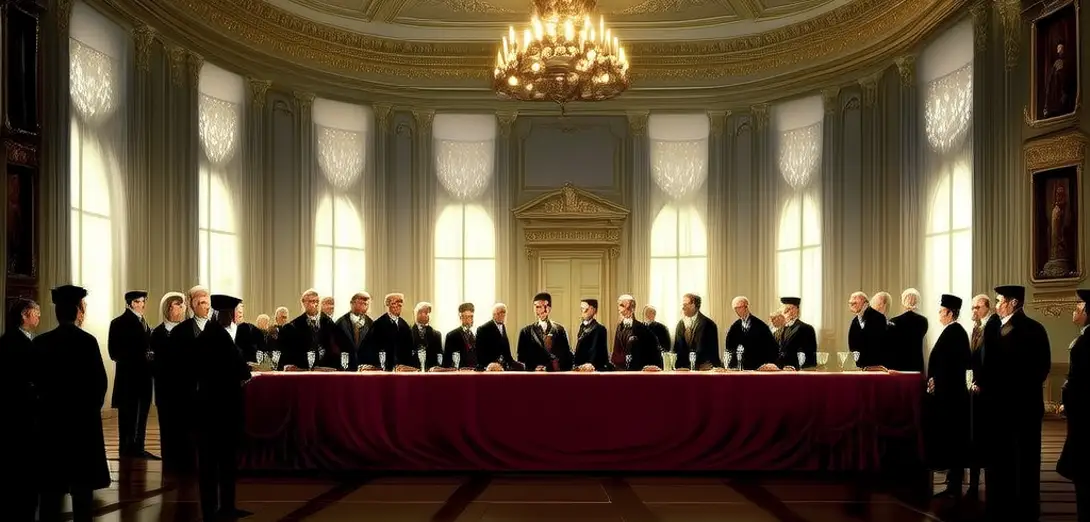
The Congress of Vienna and the Balance-of-Power Ideal
维也纳会议与均势政治理想
-
Held from 1814 to 1815, the Congress of Vienna aimed to restore stability after two decades of revolutionary and Napoleonic wars.维也纳会议于1814至1815年举行,旨在结束长达二十年的革命与拿破仑战争后恢复欧洲稳定。
-
Diplomats like Metternich, Castlereagh, and Talleyrand prioritized legitimacy—restoring monarchies—over nationalism or popular sovereignty.梅特涅、卡斯尔雷和塔列朗等外交家优先考虑正统性——即恢复君主制——而非民族主义或人民主权。
-
Territorial adjustments deliberately created buffer states, such as the Kingdom of the Netherlands, to contain future French aggression.领土调整刻意设立缓冲国,如荷兰王国,以遏制未来法国的扩张。
-
The Concert of Europe emerged not as a formal alliance but as a normative framework for regular consultation among great powers during crises.欧洲协调并非正式同盟,而是大国在危机期间定期磋商的规范性框架。
-
While suppressing liberal uprisings, the system enabled peaceful resolution of disputes like the 1830 Belgian secession through multilateral negotiation.该体系虽镇压自由主义起义,却通过多边谈判和平解决了1830年比利时独立等争端。
-
Its success depended on shared assumptions about hierarchy, restraint, and the dangers of ideological crusades—not mutual trust.其成功依赖于各方对等级秩序、自我克制及意识形态狂热危险性的共同认知,而非相互信任。
-
Colonial possessions were excluded from deliberations, reinforcing a double standard between European diplomacy and imperial administration.殖民地问题被排除在讨论之外,凸显了欧洲外交与帝国治理之间的双重标准。
-
Historians debate whether its longevity stemmed from flexibility or from delaying inevitable conflicts over nationality and democracy.史学家争论其持久性源于灵活性,还是源于推迟了民族与民主问题上不可避免的冲突。
-
Even after 1914, policymakers referenced its precedents when designing the League of Nations and later the UN Security Council structure.即便在1914年后,政策制定者设计国际联盟及后来的联合国安理会结构时,仍援引其先例。
-
The Congress remains a benchmark for studying how order emerges not from consensus but from calibrated compromise among competing interests.维也纳会议至今仍是研究秩序如何通过竞争利益间的审慎妥协(而非共识)而形成的基准。