正在确认阅读权限…
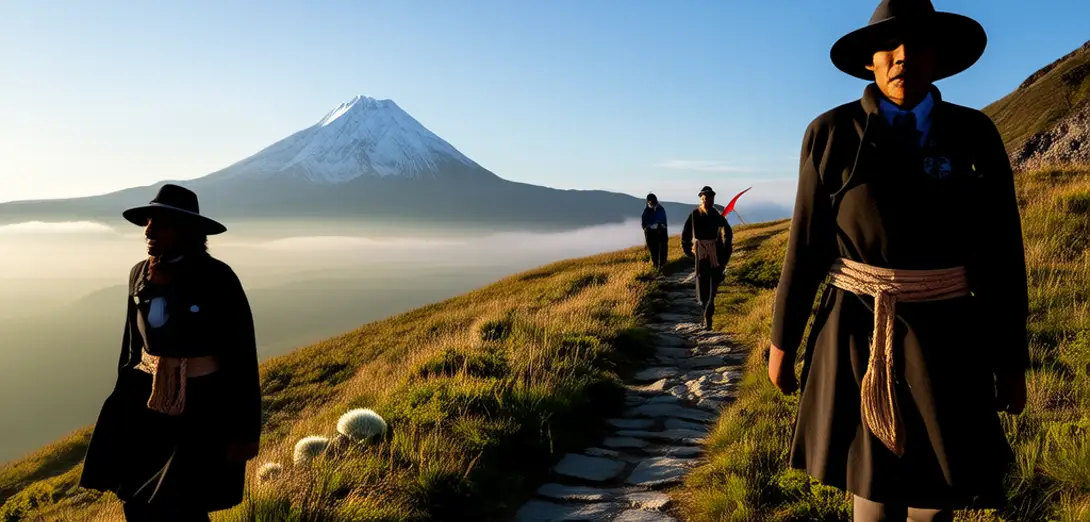
Peruvian Andes: Glacial Retreat and Ritual Continuity in the Qoyllur Rit'i Pilgrimage
秘鲁安第斯山脉:冰川退缩背景下的科伊柳尔里蒂朝圣仪式延续性
-
Each June, thousands ascend Peru’s Sinakara Valley to witness the Qoyllur Rit'i pilgrimage, where Catholic devotion intertwines with pre-Incan mountain cosmology.每年六月,数千人登上秘鲁西纳卡拉山谷,见证考伊柳里蒂朝圣活动,天主教信仰与印加前时代的山岳宇宙观在此交融。
-
Glaciers feeding the sanctuary’s sacred springs have receded over 40% since 1980, altering water availability and ritual timing for indigenous Quechua participants.滋养圣地圣泉的冰川自1980年以来已退缩逾40%,改变了当地原住民克丘亚参与者的用水供应与仪式时间。
-
Local elders now adjust ceremonial routes to avoid unstable moraines and newly exposed bedrock once covered by ice.当地长者如今调整仪式路线,避开不稳定的冰碛和新裸露的基岩——这些岩层曾长期被冰覆盖。
-
Anthropologists observe how ritual chants increasingly reference thawing slopes—not as divine punishment—but as urgent ecological testimony.人类学家观察到,仪式吟唱越来越多提及融化的山坡——并非视作神罚,而是紧迫的生态证言。
-
The pilgrimage’s central icon, the Lord of Qoyllur Rit'i, is carried across terrain whose elevation and microclimate have shifted measurably within living memory.朝圣核心圣像‘考伊柳里蒂之主’所经之地,其海拔与微气候在当代人的记忆中已发生可测变化。
-
Tourism infrastructure expands rapidly, yet community-led mapping initiatives document ancestral trails now submerged beneath glacial lakes or fractured by rockfall.旅游基础设施快速扩张,而社区主导的地图绘制项目却记录下祖先小径——它们或被冰川湖淹没,或遭落石损毁。
-
Unlike purely symbolic adaptations, this ceremony embeds empirical observation into liturgical practice without sacrificing spiritual coherence.这种适应并非仅具象征意义,而是将实证观察融入礼拜实践,同时保持精神内核完整。
-
Researchers note that youth-led oral histories now routinely include GPS coordinates alongside mythic landmarks, merging cartographic precision with ancestral narrative.研究人员注意到,由青年主导的口述史如今常将GPS坐标与神话地标并列,使地图精度与祖先叙事融为一体。
-
The festival’s resilience lies not in resisting change but in re-anchoring meaning amid accelerating geomorphic transformation.该节庆的韧性不在于抗拒变迁,而在于加速的地貌变革中重新锚定意义。
-
Water from melting glaciers still flows into the sanctuary’s fountain, but its temperature, flow rate, and seasonal duration now serve as unspoken liturgical indicators.融冰之水仍流入圣地喷泉,但其温度、流速与季节持续时间如今已成为无言的礼拜指标。
-
This convergence of glaciology and theology reframes environmental literacy as embodied, intergenerational, and ritually grounded—not merely analytical.冰川学与神学的交汇,将环境素养重构为具身化、代际传承且根植于仪式的实践,而非仅限于分析层面。
-
Qoyllur Rit'i demonstrates how cultural continuity can deepen rather than dilute scientific awareness in high-mountain societies.考伊柳里蒂表明,在高山社会中,文化延续性非但未削弱科学认知,反而使其更为深厚。