正在确认阅读权限…
STEM Light Read: Why Frost Flowers Bloom on Sea Ice in Subzero Air (2026-D029)
STEM轻科普延展阅读·独立成篇(2026-D029)
-
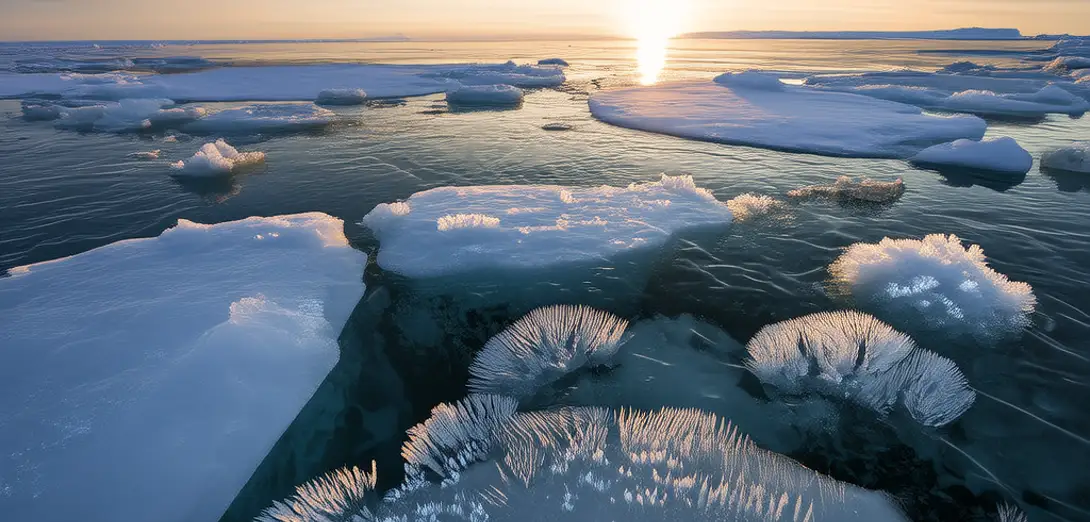
Frost flowers grow on young sea ice when frigid air meets moist, salty brine rising through cracks.霜花在年轻海冰上生长,当极寒空气遇到从冰裂隙中涌出的潮湿、高盐卤水时形成。
-
As brine wicks upward, it freezes instantly in temperatures below −20°C, forming delicate ice crystals.卤水沿冰向上渗出,在低于−20°C的温度下瞬间冻结,形成纤细的冰晶。
-
Salt lowers water’s freezing point, allowing liquid brine to reach the surface even in extreme cold.盐分降低水的冰点,使液态卤水即使在极寒条件下也能抵达冰面。
-
Wind and humidity affect crystal shape—calm air yields feathery structures; breezes make stubbier ones.风速与湿度影响晶体形态:静稳空气生成羽状结构,微风则形成更粗短的晶体。
-
Each flower contains concentrated salt, making it a natural microhabitat for cold-adapted microbes.每朵霜花都富含盐分,构成嗜冷微生物的天然微栖息地。
-
Scientists collect them to study microbial life surviving in Earth’s harshest surface environments.科学家采集霜花,以研究能在地球最严酷地表环境中存活的微生物生命。
-
Unlike snowflakes, frost flowers form without falling from clouds and grow outward from surfaces.与雪花不同,霜花并非自云中降落,而是从表面向外生长而成。
-
Their presence signals rapid ice formation and helps calibrate satellite measurements of sea ice age.其存在标志海冰正快速形成,并有助于校准卫星对海冰年龄的遥感测量。
-
Climate models now include frost flower physics to improve Arctic salinity and albedo estimates.当前气候模型已纳入霜花物理过程,以提升对北极海域盐度和反照率的估算精度。
-
This fragile beauty illustrates how chemistry, physics, and biology intertwine at freezing frontiers.这转瞬即逝的美,展现了化学、物理与生物学在冰冻前沿的紧密交织。