正在确认阅读权限…
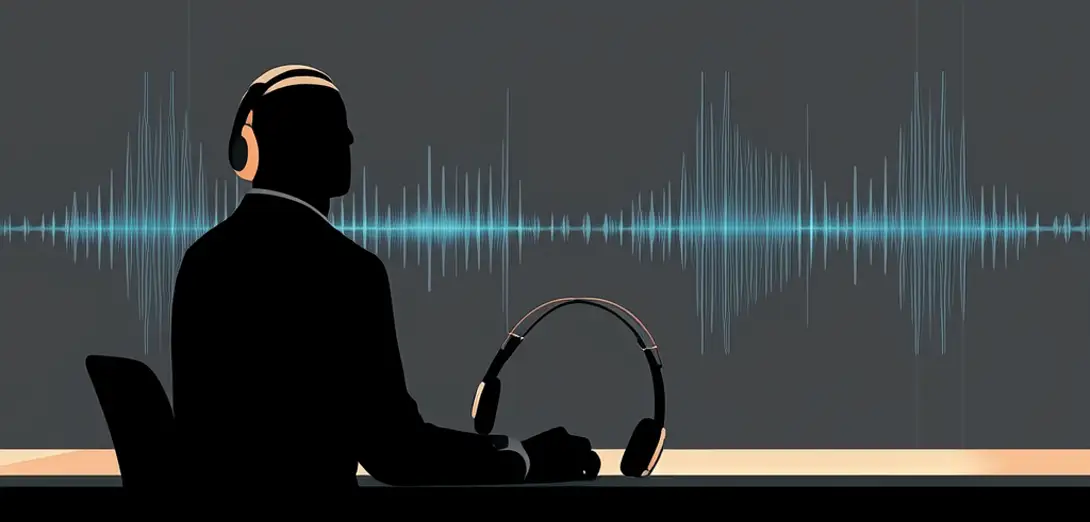
The Physics of Noise-Canceling Headphones: Adaptive Algorithms and Acoustic Impedance Matching
主动降噪耳机的物理原理:自适应算法与声阻抗匹配
-
Active noise cancellation doesn’t erase sound—it generates anti-phase pressure waves timed to destructive interference, requiring microsecond-level latency and precise acoustic path modeling.主动降噪并非消除声音,而是生成相位相反的压力波,利用相消干涉原理实现降噪,这要求微秒级延迟和精确的声学路径建模。
-
Ear cup geometry, seal integrity, and even ear canal resonance affect phase response; thus, modern headphones use real-time impedance sensing to adapt filter coefficients across 20–2000 Hz bands.耳罩几何结构、密封性甚至耳道共振都会影响相位响应;因此,现代耳机采用实时阻抗感知技术,在20–2000 Hz频段内动态调整滤波器系数。
-
Battery-powered processing must compensate for thermal drift: silicon audio DACs shift reference voltages by up to 0.8% per °C, introducing subtle harmonic distortion if uncorrected.电池供电的处理系统必须补偿热漂移:硅基音频DAC的参考电压随温度变化每摄氏度偏移高达0.8%,若未校正,将引入细微谐波失真。
-
Low-frequency cancellation (e.g., airplane cabin rumble) relies on feedforward microphones, while mid/high frequencies use feedback sensors inside the ear cup—each requiring distinct adaptive filter architectures.低频降噪(如飞机客舱轰鸣)依赖前馈麦克风,而中高频则使用耳罩内部的反馈传感器——二者需采用不同的自适应滤波架构。
-
Material science intersects acoustics: memory-foam ear pads compress differently across temperatures, altering cavity resonance and necessitating recalibration via embedded piezoelectric strain gauges.材料科学与声学交叉:记忆棉耳垫在不同温度下压缩特性不同,导致腔体共振变化,需通过嵌入式压电应变传感器重新校准。
-
Third-party testing reveals that published SNR figures often reflect idealized lab conditions—real-world attenuation drops 12–18 dB when users wear glasses or have prominent ear cartilage.第三方测试表明,厂商公布的信噪比(SNR)数据常基于理想化实验室条件;现实中,佩戴眼镜或耳软骨突出会使实际降噪效果下降12–18 dB。
-
Bluetooth codec limitations constrain bandwidth: LDAC supports 990 kbps but introduces 120 ms latency, forcing trade-offs between audio fidelity and ANC responsiveness to transient noise.蓝牙编解码器带宽受限:LDAC支持990 kbps,但引入120 ms延迟,迫使在音质保真度与ANC对瞬态噪声的响应速度之间权衡。
-
Military-grade variants add beamforming arrays to isolate voice commands amid gunfire—yet consumer versions omit this due to SAR compliance challenges near the temporal bone.军用级型号增加波束成形阵列,可在枪声环境中精准拾取语音指令;消费级版本则因颞骨附近SAR合规难题而省略该功能。
-
The ultimate bottleneck isn’t computation—it’s transducer linearity: driver membranes must reproduce waveforms within 0.5% THD across 5–20 kHz to avoid generating secondary noise artifacts.真正的瓶颈并非算力——而是换能器线性度:扬声器振膜须在5–20 kHz范围内将总谐波失真(THD)控制在0.5%以内,否则会生成二次噪声伪影。
-
What users perceive as ‘silence’ emerges from coordinated physics, materials engineering, and real-time signal processing—not passive absorption alone.用户感知的‘寂静’,源于物理原理、材料工程与实时信号处理的协同作用,而不仅是被动吸音。