正在确认阅读权限…
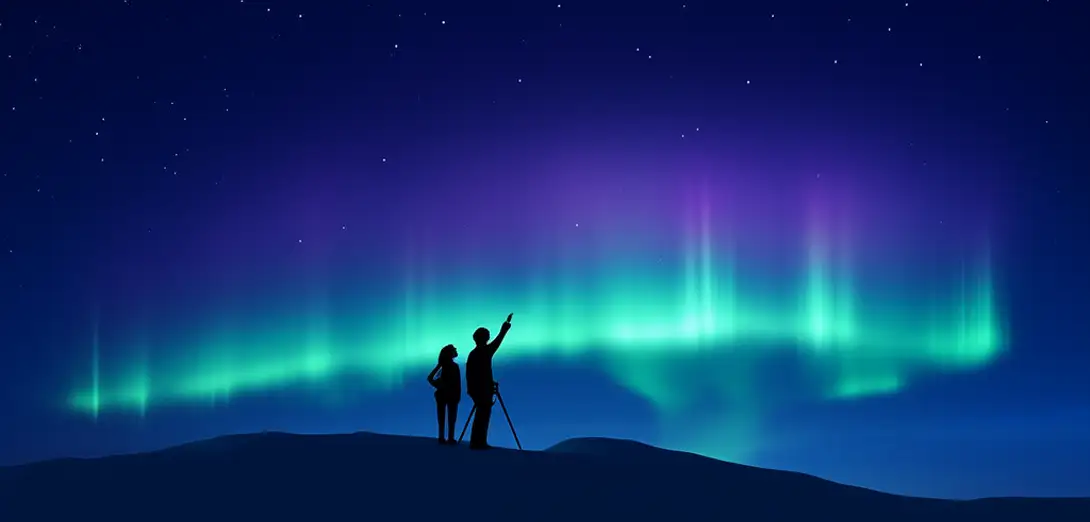
What Causes the Different Colors in Aurora Borealis and Australis?
科学常识延展阅读·自动延展(批次0001-020)
-
Auroras glow when charged solar particles collide with gases high in Earth’s atmosphere.极光产生于带电太阳粒子与地球高层大气中的气体碰撞时。
-
Oxygen atoms at very high altitudes emit rare red light, while lower ones produce green—the most common color.极高空的氧原子发出罕见的红光,而较低处的氧原子则发出最常见的绿色。
-
Nitrogen molecules contribute blue or purplish hues, especially during intense geomagnetic storms.氮分子则呈现蓝色或紫红色,尤其在强烈的地磁暴期间。
-
The altitude of collisions determines which gases get excited and what color we see from the ground.碰撞发生的高度决定了哪些气体被激发,以及地面观测到的颜色。
-
Solar wind speed and magnetic field orientation influence both aurora brightness and color variety.太阳风速度和磁场方向共同影响极光的亮度与色彩多样性。
-
Cameras with long exposures often capture colors invisible to the naked eye in low-light conditions.长时间曝光的相机常能捕捉人眼在弱光下不可见的极光色彩。
-
Different planets show unique auroral colors based on their atmospheric composition—like Saturn’s ultraviolet glow.不同行星因大气成分差异呈现独特极光颜色,例如土星的紫外辉光。
-
Scientists use spectrometers to analyze aurora light and learn about upper-atmosphere chemistry.科学家利用光谱仪分析极光,以研究高层大气化学。
-
Magnetic latitude matters too: people near the Arctic Circle see more vivid displays than those farther south.地磁纬度也很关键:北极圈附近居民比更南地区的人看到的极光更绚丽。
-
Studying auroras helps us understand space weather effects on satellites and power grids.研究极光有助于我们理解空间天气对卫星和电网的影响。