正在确认阅读权限…
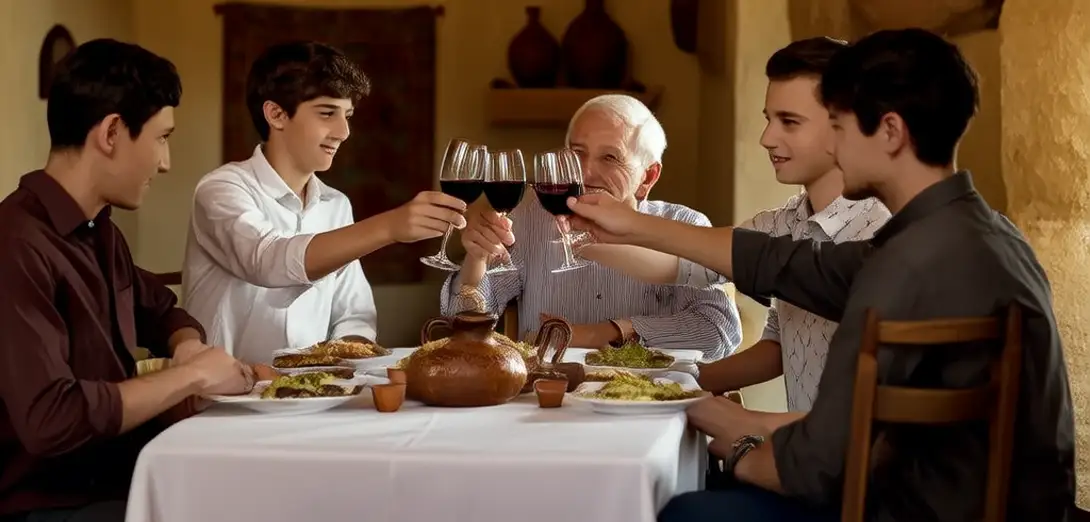
Batch 0001-042: Bowing Twice in Georgia’s Supra Toast Ritual
批次0001-042:格鲁吉亚萨帕祝酒仪式中的两次鞠躬
-
At every Georgian supra, the tamada (toastmaster) stands, raises his horn of wine, and bows deeply—to the table first.在每一场格鲁吉亚盛宴上,祝酒人都会起身,举起牛角杯,先向餐桌深深鞠躬。
-
Then he bows again, lower this time, toward the guest of honor seated beside him at the long wooden table.接着他再次鞠躬,这次弯得更低,朝坐在长木桌旁的贵宾致意。
-
These two bows acknowledge both shared space and singular dignity, a balance central to Kartvelian ethics.这两鞠躬既承认共处的空间,也彰显个体的尊严,体现了卡尔特维利人伦理的核心平衡。
-
Each toast lasts exactly as long as a slow breath, never rushed, never repeated verbatim twice in one evening.每段祝酒词时长恰如一次缓慢呼吸,从不仓促,整晚绝不重复一字一句。
-
Guests listen fully before clinking horns—no side conversations, no phones, no glances at watches.宾客专注聆听,待祝酒完毕才碰杯——无人交头接耳,不用手机,也不看表。
-
If someone stumbles over a toast, elders gently correct phrasing but never shame, treating words like fragile clay vessels.若有人祝酒出错,长辈会温和纠正措辞,却从不羞辱,视言语如易碎陶器。
-
The final toast honors ‘those who are not here’, spoken while everyone holds their horn aloft in quiet air.最后一轮祝酒致敬‘缺席者’,众人高举牛角杯,在静默中齐声说出。
-
Wine flows continuously, yet drunkenness is culturally invisible—only grace and timing matter.美酒不断流淌,而醉态在文化中近乎隐形——唯有风度与节奏才重要。
-
Even children offer short toasts, bowing twice like adults, learning dignity through repetition, not lecture.连孩童也发表简短祝酒,像成人一样两次鞠躬,在重复中习得尊严,而非靠说教。
-
This ritual survives Soviet bans and digital distraction because it turns speech into shared breath and memory.这一仪式历经苏联禁令与数字干扰仍存续至今,因它将言语化为共有的呼吸与记忆。