正在确认阅读权限…
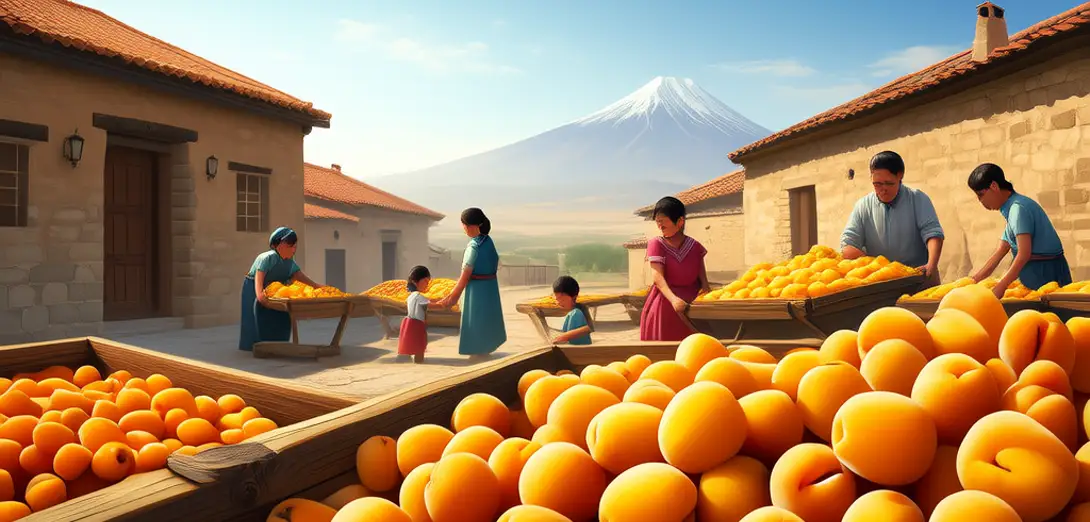
Batch 0001-039: Tending Memory in Armenian Apricot-Drying Yards
批次0001-039:亚美尼亚杏干晾晒场中的记忆养护
-
In the Ararat Valley, families spread ripe apricots on wide wooden trays beneath the high sun for three full days.在阿拉拉特山谷,家家户户将熟透的杏子铺在宽大的木托盘上,在烈日下晾晒整整三天。
-
Each tray bears a small cloth tag with a grandmother’s initials—no two batches share the same drying rhythm or shade.每只托盘都系着一块小布签,绣着祖母名字的缩写——没有两批杏子的晾晒节奏与色泽完全相同。
-
Neighbors check each other’s fruit at noon, tasting for tartness and pressing skins to test sugar concentration.邻居们每天正午互相查看果子,尝酸度、按果皮,检验糖分浓度。
-
Drying isn’t rushed; too-fast heat makes fruit brittle, while slow sun draws out sweetness like whispered stories.晾晒从不赶工:升温太快会让果肉变脆,而慢晒的阳光则如低语般缓缓析出甜味。
-
At dusk, sheets are rolled gently—not folded—to keep fruit breathing overnight under cool mountain air.日暮时分,晾晒布被轻轻卷起而非折叠,让果子在清凉山风中整夜呼吸。
-
Children learn to sort by color and firmness, understanding that golden means ready, orange means waiting, red means too soft.孩子们从小学习按颜色和硬度分拣:金黄代表成熟,橙色尚需等待,泛红则已过熟。
-
When rain threatens, whole villages move as one, lifting trays onto covered porches with practiced silence.一旦预报有雨,整个村庄便默契行动,默然将托盘抬至带顶门廊。
-
These yards double as gathering spaces where elders tell tales while turning fruit with wooden paddles.这些院落也是聚会场所,长辈一边用木铲翻动果子,一边讲述往事。
-
No machine replaces hands here, because texture and timing must be felt, not measured.这里不用机器替代双手,因为质感与火候必须靠触感把握,而非仪器测量。
-
Every winter jar holds not just fruit, but the exact light and warmth of one August week in 1987 or 2014.每个冬日的玻璃罐里,封存的不只是果实,更是一九八七年或二〇一四年某一周八月的阳光与暖意。