正在确认阅读权限…
2026-D039: Palm-Weaving Silence in Kerala’s Theyyam Preparations
2026-D039:喀拉拉邦泰亚姆仪式前的棕榈编织静默
-
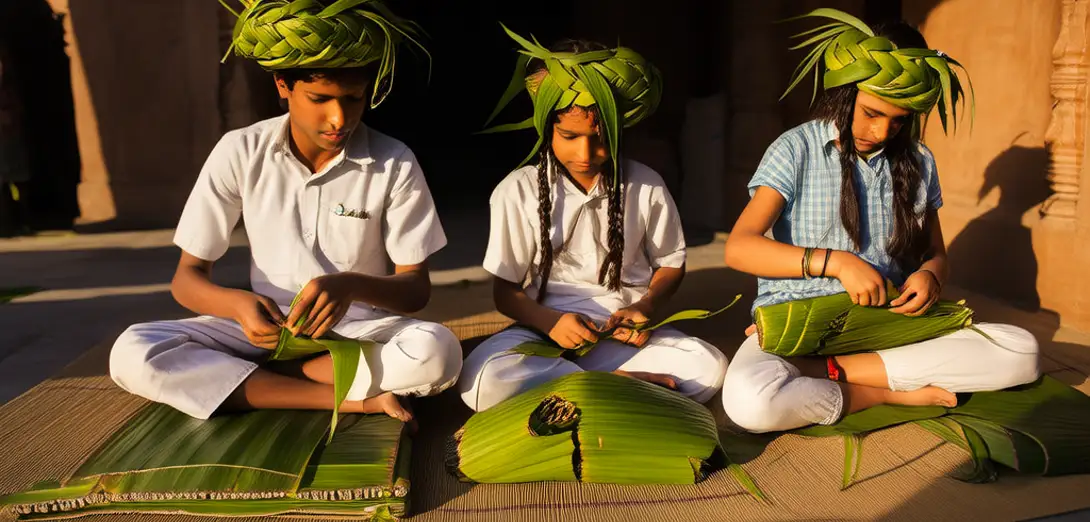
For seven days before Theyyam, performers sit barefoot on coconut-leaf mats, weaving intricate palm fronds into ritual headgear.在神舞节前七天,表演者赤脚坐在椰叶垫上,将棕榈叶编织成繁复的仪式头饰。
-
They speak only in whispers, and only to elders who check the symmetry of each woven coil against ancestral patterns.他们只用耳语交谈,且仅与长辈交流,由长辈对照祖先图样检查每圈编织的对称性。
-
Each knot represents a vow—not to gods, but to memory, discipline, and the continuity of embodied storytelling.每个绳结都代表一项誓言——不是向神明,而是向记忆、自律及身体叙事传统的延续。
-
Women prepare rice paste pigments while men chant low syllables that match the rhythm of their fingers folding green leaves.女性调制米浆颜料,男性低吟音节,节奏与手指折叠绿叶的动作完全一致。
-
No mirrors are used during weaving; artisans rely entirely on touch and inherited muscle memory passed down for centuries.编织全程不用镜子,匠人全凭触觉和传承数百年的肌肉记忆完成。
-
When a piece is finished, it rests overnight under a neem tree—not for blessing, but to absorb stillness from its shade.成品完工后,须在印度楝树下静置一整夜——并非为祈福,而是汲取树荫中的沉静。
-
Young apprentices watch without touching, learning that some knowledge lives only in silence and repetition.年轻学徒静观不触,领悟某些知识只存于沉默与重复之中。
-
The final headdress weighs over eight kilograms, yet dancers wear it without straps, balancing it solely through posture and breath.最终头饰重逾八公斤,舞者却不用任何绑带,仅凭体态与呼吸维持平衡。
-
This weaving is never photographed until after the first performance—images taken earlier are believed to weaken the spirit’s arrival.这种编织过程严禁拍照,直至首场演出结束后方可拍摄;提前摄录被认为会削弱神灵降临之力。
-
In northern Kerala, palm-weaving silence is not absence of sound, but presence of intention made tangible.在喀拉拉邦北部,棕榈编织时的寂静并非无声,而是可感的专注意志。