正在确认阅读权限…
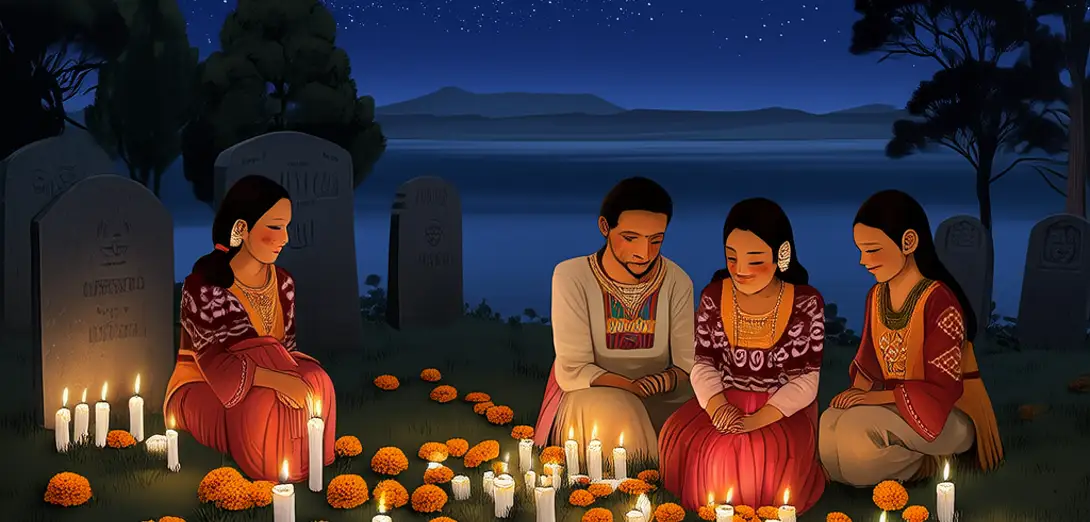
Día de los Muertos in Michoacán: Lake Pátzcuaro’s Island Vigils
墨西哥米却阿卡州亡灵节:帕茨夸罗湖岛上的守夜仪式
-
Every November, families gather on Janitzio Island to light candles beside graves draped in marigolds.每年十一月,家家户户齐聚哈尼茨奥岛,在铺满万寿菊的墓旁点起蜡烛。
-
They bring pan de muerto, sugar skulls, and photographs of loved ones who passed away recently or long ago.他们带来亡灵面包、糖制骷髅头,以及近期或多年前离世亲人的照片。
-
Unlike mourning elsewhere, this ritual treats death as a natural part of life’s continuing circle across generations.与别处的哀悼不同,这一仪式将死亡视作生命代代延续的自然一环。
-
Elders tell stories under candlelight while children carry small paper lanterns shaped like monarch butterflies.长者在烛光下讲述故事,孩童提着形似帝王蝶的小纸灯笼。
-
The lake’s still surface reflects both stars and flickering flames, blurring boundaries between memory and presence.帕茨夸罗湖平静的水面倒映着繁星与摇曳烛火,模糊了记忆与当下的界限。
-
Families stay awake all night not to grieve alone but to welcome returning souls with music and laughter.家人彻夜不眠,并非独自悲恸,而是以音乐与欢笑迎接归来的灵魂。
-
Local Purépecha artisans carve wooden nichos that hold offerings, linking pre-Hispanic cosmology with Catholic feast days.当地普雷佩查族匠人雕刻木制神龛盛放祭品,将前西班牙时代的宇宙观与天主教节日相联结。
-
Tourists observe quietly from boats, respecting the sacred rhythm that belongs to island kinship, not spectacle.游客静坐船中远观,尊重这属于岛屿亲族、而非供人观赏的神圣节律。
-
This tradition has endured Spanish colonization, land reforms, and modern migration by adapting without erasing its core meaning.这一传统历经西班牙殖民、土地改革与现代人口迁徙,始终在适应中坚守核心意义。
-
Lake Pátzcuaro remains a living archive where water, wind, and remembrance shape history daily.帕茨夸罗湖至今仍是活着的档案馆,水、风与追忆日日塑造历史。