正在确认阅读权限…
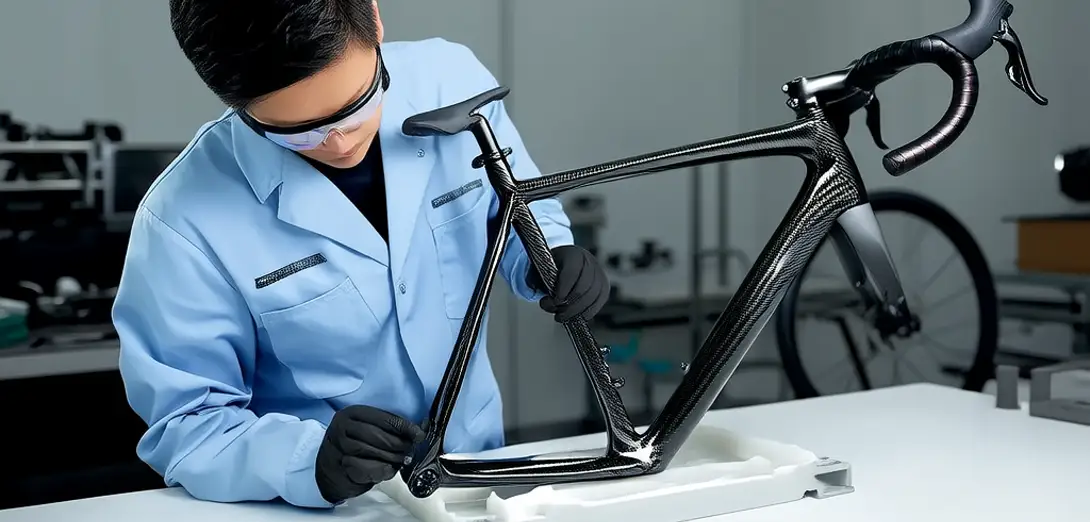
How Carbon Fiber Bicycle Frames Balance Strength and Flexibility
碳纤维自行车车架如何兼顾强度与弹性
-
Carbon fiber frames are built by layering thin sheets of resin-impregnated fibers onto a mold shaped like a bicycle frame.碳纤维车架通过将浸渍树脂的薄纤维层叠在自行车车架形状的模具上制成。
-
Engineers orient each ply at specific angles—0°, 45°, or 90°—to control stiffness, torsional rigidity, and vibration absorption.工程师将每层纤维按特定角度(0°、45°或90°)铺设,以调控刚性、抗扭刚度和减振性能。
-
Vertical flex in the seat stays cushions bumps without sacrificing pedaling efficiency, thanks to strategic fiber layup.座管后叉的纵向弹性可缓冲颠簸,同时借助精准的纤维铺层设计不损失踩踏效率。
-
Torsional stiffness around the bottom bracket ensures power transfers directly to the rear wheel during hard sprints.五通区域的高抗扭刚度确保全力冲刺时动力直接传递至后轮。
-
Unlike aluminum or steel, carbon doesn’t fatigue suddenly; instead, damage accumulates slowly and shows as surface cracks or delamination.与铝或钢不同,碳纤维不会突然疲劳失效,而是缓慢累积损伤,表现为表面裂纹或分层。
-
Non-destructive testing like ultrasonic scanning checks for hidden voids or resin inconsistencies before shipping.出厂前采用超声波扫描等无损检测手段,排查内部空隙或树脂不均等缺陷。
-
Riders choose frames based on ride quality profiles—endurance models prioritize comfort, while race versions maximize responsiveness.车手依据骑行特性选择车架:耐力型侧重舒适,竞赛型追求响应速度。
-
Recycling remains challenging, but new chemical processes now recover up to 95% of carbon fiber for reuse in lower-grade composites.回收仍具挑战性,但新型化学工艺现已能回收高达95%的碳纤维,用于低等级复合材料。
-
Designers use finite element analysis software to simulate stresses from potholes, jumps, and braking forces before prototyping.设计师借助有限元分析软件,在原型制作前模拟坑洼、跳跃及制动等工况下的应力分布。
-
This fusion of materials science, mechanical engineering, and human-centered design creates lightweight, responsive, and durable machines.这种材料科学、机械工程与以人为本设计的融合,造就了轻量、灵敏且耐用的自行车。