正在确认阅读权限…
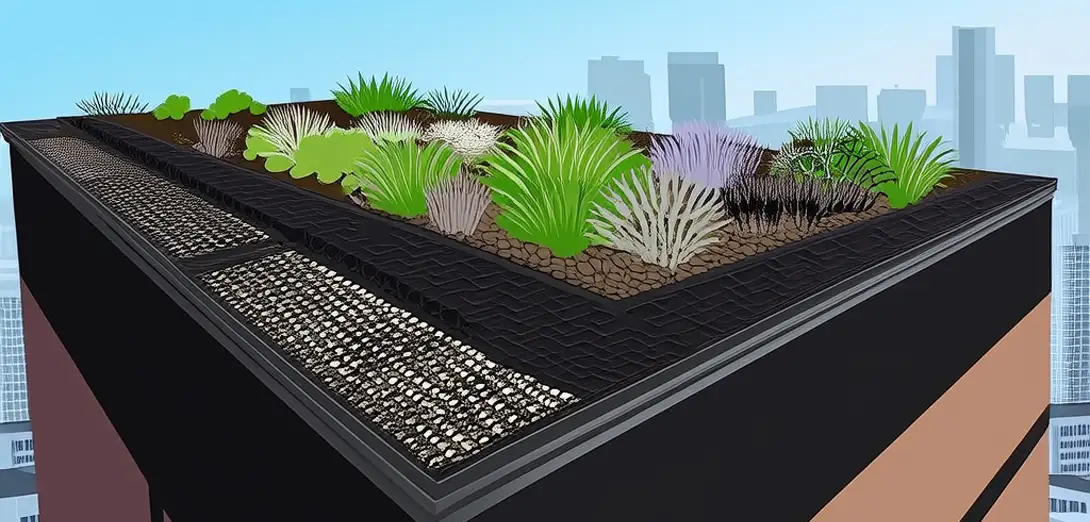
How Urban Green Roofs Reduce Building Energy Use
城市绿色屋顶如何降低建筑能耗
-
Green roofs consist of soil, drought-tolerant plants, drainage layers, and waterproof membranes installed atop flat or low-slope building roofs.绿色屋顶由土壤、耐旱植物、排水层和防水膜组成,铺设在平顶或低坡度建筑屋顶上。
-
They act like natural insulators: summer sun heats plant leaves and soil instead of concrete or asphalt, reducing heat transfer into the building.它们起到天然隔热作用:夏季阳光加热植物叶片和土壤,而非混凝土或沥青,从而减少热量向建筑内部传导。
-
Evapotranspiration—the combined effect of evaporation and plant transpiration—cools surrounding air by up to 3°C on hot days.蒸散作用(蒸发与植物蒸腾的共同效应)可在炎热天气使周边空气降温达3°C。
-
Studies show green roofs cut rooftop surface temperatures by as much as 40°C compared to conventional black tar roofs.研究表明,相比传统黑色沥青屋顶,绿色屋顶可使屋面温度降低高达40°C。
-
Winter insulation is modest but real: the soil and plant mass slows heat loss from interior spaces below.冬季隔热效果虽有限但真实存在:土壤与植物质量可减缓下方室内空间的热量流失。
-
Stormwater retention is another benefit—green roofs absorb 50–90% of rainfall, easing pressure on city sewer systems during heavy storms.雨水滞留是另一大益处——绿色屋顶可吸收50%至90%的降雨,减轻暴雨期间城市排水系统的压力。
-
Biodiversity improves too: bees, butterflies, and birds find new habitats in otherwise barren urban zones.生物多样性也得以提升:蜜蜂、蝴蝶和鸟类在原本荒芜的城市区域找到了新栖息地。
-
Structural engineers verify roof load capacity first, since saturated soil adds significant weight per square meter.结构工程师需首先确认屋顶承重能力,因为饱和土壤每平方米会增加显著重量。
-
Maintenance includes seasonal pruning, irrigation checks, and weeding—but many native plant mixes thrive with minimal care.养护包括季节性修剪、灌溉系统检查和除草——但许多本土植物组合只需极少照料即可茁壮生长。
-
From thermal physics to ecology, green roofs represent interdisciplinary engineering that turns infrastructure into living systems.从热物理学至生态学,绿色屋顶体现了跨学科工程理念,将基础设施转化为活体系统。