正在确认阅读权限…
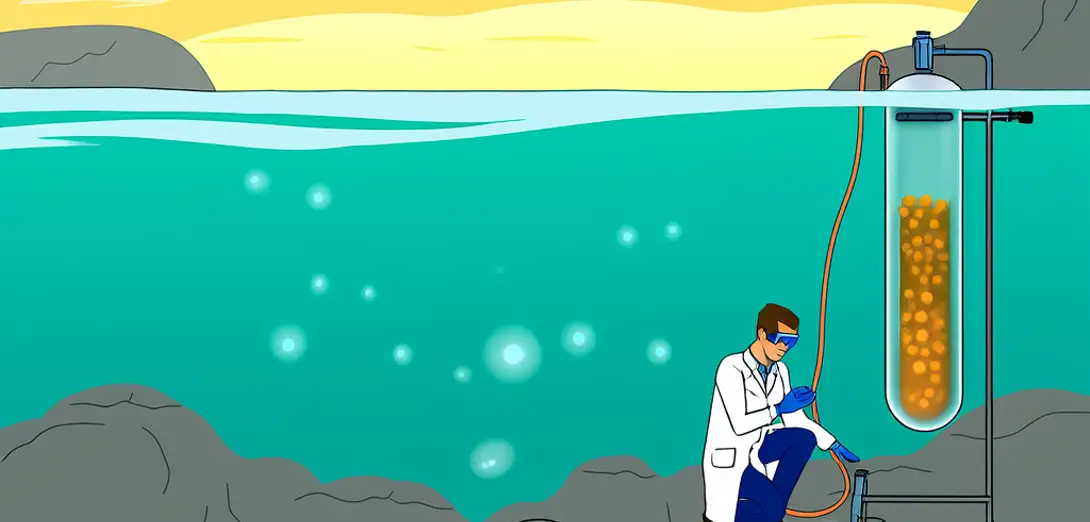
How Scientists Select Materials to Pull Uranium from Seawater
科学家如何筛选从海水中提取铀的吸附材料
-
Seawater holds about 4.5 billion tons of uranium—enough to power reactors for thousands of years.海水中含有约45亿吨铀,足以供核反应堆运行数千年。
-
But its concentration is extremely low: just 3.3 parts per trillion, mixed among many competing ions like sodium and calcium.但其浓度极低:仅为3.3万亿分之一,并与钠、钙等大量共存离子混杂在一起。
-
Effective adsorbents must bind uranium strongly while ignoring these far more abundant elements.高效吸附剂必须强力结合铀,同时忽略这些丰度高得多的元素。
-
Scientists test polymer fibers coated with amidoxime groups, which chemically ‘recognize’ uranium’s unique shape and charge.科学家测试表面涂覆偕胺肟基团的聚合物纤维,该基团能化学‘识别’铀的独特形状与电荷。
-
They run seawater through lab columns packed with candidate materials and measure how much uranium sticks after days or weeks.他们在实验室中将海水泵过装有候选材料的柱子,数天或数周后测量吸附的铀量。
-
Real-world tests happen offshore, where fibers hang in mesh bags for months to assess durability and fouling resistance.实地测试在近海进行,纤维置于网袋中悬浸数月,以评估耐久性与抗污损能力。
-
X-ray spectroscopy confirms whether uranium bonds are stable—or break down due to salt corrosion or biofilm growth.X射线光谱分析可确认铀键是否稳定——或因盐腐蚀或生物膜生长而分解。
-
Cost matters too: ideal materials regenerate cleanly after acid washing, allowing reuse for five or more cycles.成本同样关键:理想材料经酸洗后能洁净再生,可重复使用五次以上。
-
Japan and China lead field trials, aiming for extraction costs below $300 per kilogram—competitive with mining.日本与中国主导实地试验,目标是将提取成本降至每公斤300美元以下,与矿产开采成本相当。
-
This work merges chemistry, oceanography, and materials engineering to unlock a vast, renewable nuclear fuel source.这项工作融合化学、海洋学与材料工程,旨在释放这一储量巨大且可再生的核燃料资源。