正在确认阅读权限…
How Do Magnetic Fields Protect Planets From Solar Wind Damage?
磁场如何保护行星免受太阳风的损害?
-
Planets with global magnetic fields, like Earth, deflect charged particles from the solar wind outward.拥有全球磁场的行星(如地球)会将太阳风中的带电粒子偏转至外侧。
-
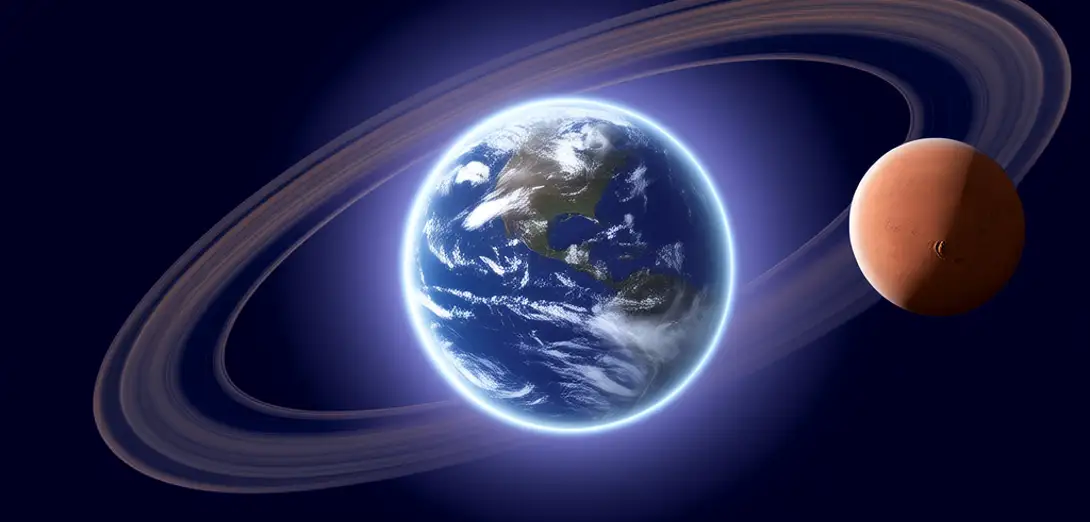
This deflection creates a protective bubble called the magnetosphere that surrounds the planet.这种偏转形成一个名为磁层的保护性气泡,包裹着整个行星。
-
Without it, solar wind would gradually strip away atmospheres — as likely happened on Mars.若无磁层,太阳风会逐渐剥离行星大气——火星很可能就经历了这一过程。
-
Earth’s field originates from swirling molten iron in its outer core, generating electric currents.地球磁场源于外核中流动的熔融铁,由此产生电流。
-
The magnetosphere channels some particles toward the poles, where they create auroras upon hitting air molecules.磁层将部分粒子导向两极,这些粒子撞击大气分子后形成极光。
-
Venus and Mars lack strong internal dynamos, so their atmospheres erode more easily over time.金星和火星缺乏强劲的内部发电机机制,因此其大气随时间推移更容易被侵蚀。
-
Satellites like ESA’s Swarm mission map magnetic field changes to monitor planetary shielding strength.欧空局“蜂群”等卫星任务通过测绘磁场变化来监测行星磁屏蔽强度。
-
Even weak fields can reduce atmospheric loss significantly if combined with thick atmospheres or ionospheres.即使磁场较弱,只要配合浓厚大气或电离层,也能显著减缓大气流失。
-
During solar storms, the magnetosphere compresses but usually holds — though power grids may still be affected.太阳风暴期间,磁层虽会压缩,但通常仍能维持稳定——不过电网仍可能受影响。
-
Understanding this shield helps scientists assess habitability of exoplanets orbiting active stars.理解这一屏障有助于科学家评估围绕活跃恒星运行的系外行星是否宜居。