正在确认阅读权限…
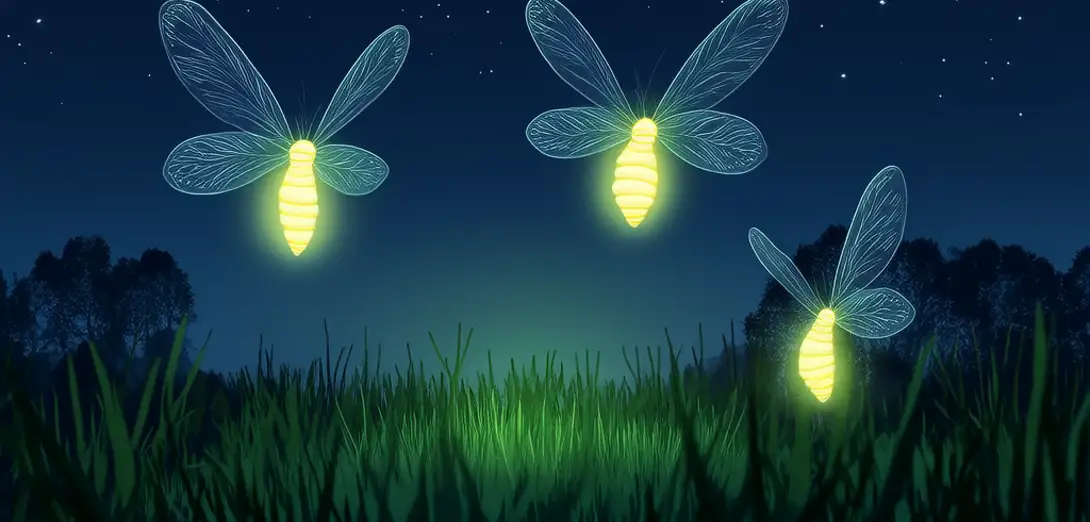
How Do Fireflies Produce Cold Light Without Burning?
萤火虫如何发出不发热的冷光,又不会烧伤自己?
-
Fireflies make light through bioluminescence — a chemical reaction inside living organisms.萤火虫通过生物发光——即活体生物体内的化学反应——产生光。
-
They combine luciferin, oxygen, and ATP with the enzyme luciferase to produce visible light.它们将荧光素、氧气和ATP在荧光酶催化下反应,生成可见光。
-
Over 90% of the energy becomes light, not heat, which is why it’s called ‘cold light’.超过90%的能量转化为光而非热,因此被称为‘冷光’。
-
This efficiency far exceeds incandescent bulbs, which waste most energy as infrared radiation.这种效率远超白炽灯,后者大部分能量以红外辐射形式浪费。
-
Each species flashes a unique pattern to attract mates or warn predators about bad taste.不同物种发出独特的闪光模式,用于求偶或向捕食者警示其味道不佳。
-
The light intensity and timing are controlled by nerve signals regulating oxygen flow to light organs.光强与闪烁时序由神经信号调控,控制氧气流向发光器官。
-
Scientists have copied this system to develop biosensors that detect disease markers in human cells.科学家仿照该机制开发出可检测人体细胞疾病标志物的生物传感器。
-
Unlike fire or electricity, bioluminescence requires no high temperature or external power source.与火焰或电力不同,生物发光无需高温或外部电源。
-
Marine creatures like jellyfish and anglerfish also use similar chemistry in deep-ocean darkness.水母、琵琶鱼等海洋生物也在深海黑暗中运用类似的化学机制发光。
-
This natural design inspires sustainable lighting and medical imaging technologies worldwide.这一自然设计正推动全球可持续照明与医学成像技术的发展。