正在确认阅读权限…
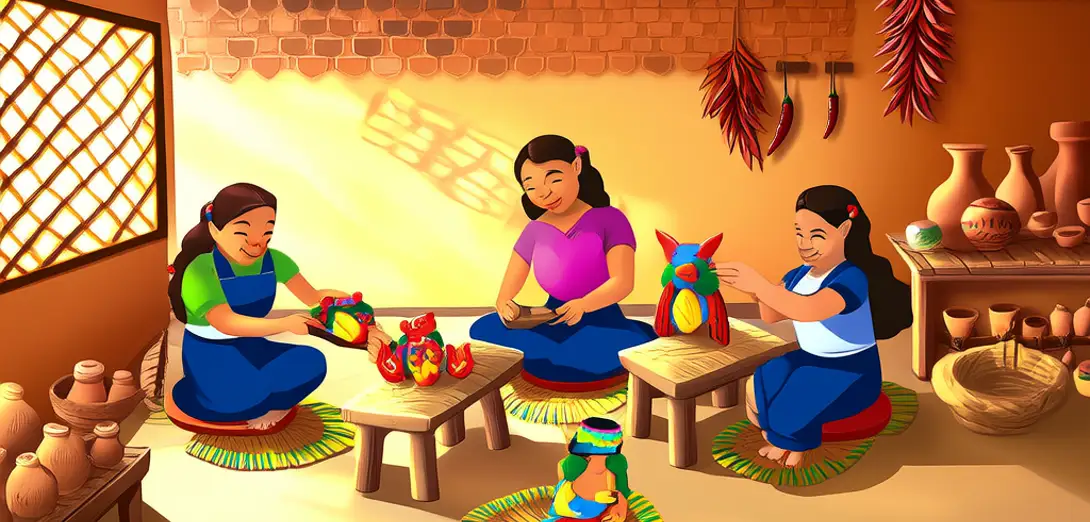
Clay Dolls of Oaxaca
瓦哈卡的陶土玩偶
-
Artisans in Oaxaca shape colorful clay dolls by hand each morning.瓦哈卡的工匠每天清晨手工制作色彩缤纷的陶土娃娃。
-
Each doll wears tiny clothes stitched from local wool and cotton.每个娃娃都穿着用当地羊毛和棉布缝制的小衣服。
-
Dolls represent community roles: teachers, farmers, midwives, and dancers.这些娃娃代表社区中的不同角色:教师、农民、助产士和舞者。
-
Families place them on home altars during Day of the Dead.亡灵节期间,家家户户将它们摆放在家中祭坛上。
-
Children paint faces using natural pigments from plants and stones.孩子们用植物和石头提取的天然颜料为娃娃画脸。
-
No two dolls have identical smiles or hair braids.没有两个娃娃的笑容或发辫完全相同。
-
Tourists buy them as symbols of cultural memory, not souvenirs.游客购买它们是作为文化记忆的象征,而非普通纪念品。
-
Making dolls is taught early, but names and stories stay within families.制作娃娃的技艺从小传授,但每个娃娃的名字与故事仅在家族内部传承。