正在确认阅读权限…
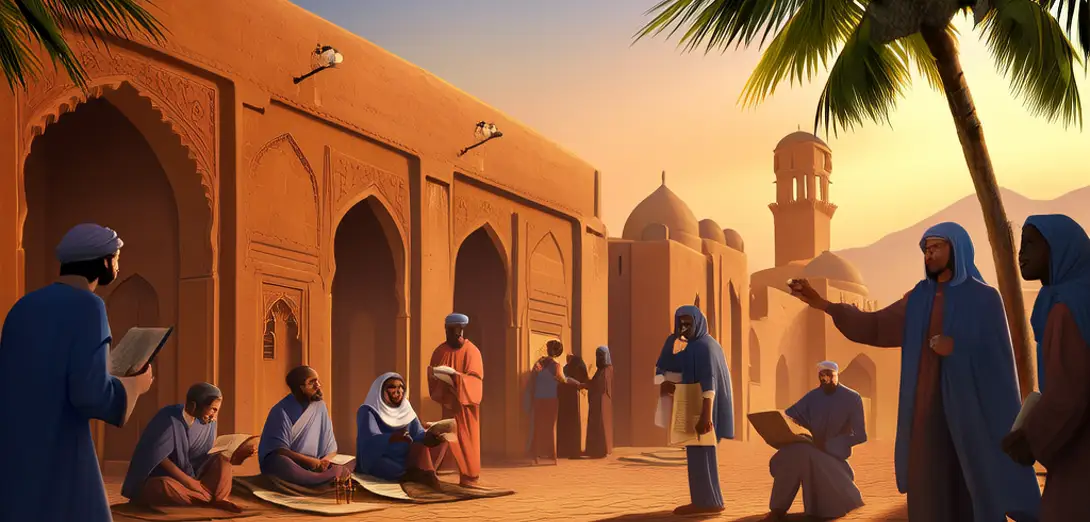
Batch 0001-007: The Songhai Empire and the Scholarly Culture of Timbuktu’s Sankoré Madrasah
批次0001-007:桑海帝国与廷巴克图桑科尔清真寺学院的学术文化
-
Under Askia Muhammad in the late 15th century, Songhai transformed Timbuktu into West Africa’s foremost intellectual center.15世纪末,在阿斯基亚·穆罕默德统治下,桑海将廷巴克图打造成西非首屈一指的学术中心。
-
The Sankoré Madrasah attracted jurists, astronomers, and grammarians from Fez, Cairo, and even al-Andalus.桑科尔伊斯兰学校吸引了来自非斯、开罗乃至安达卢斯的法学家、天文学家和语法学家。
-
Students studied logic, jurisprudence, and Qur’anic exegesis using annotated manuscripts copied locally.学生使用本地抄写的带注释手稿,学习逻辑学、教法学和《古兰经》释义。
-
Libraries amassed tens of thousands of volumes, many still preserved in private family collections today.图书馆藏书数以万计,其中许多至今仍保存在私人家庭收藏中。
-
Teaching emphasized critical reasoning rather than rote memorization, reflecting Maliki legal tradition and rationalist theology.教学强调批判性思维而非死记硬背,体现了马立克学派法学传统与理性神学精神。
-
Scholars debated ethics, governance, and cosmology in public forums held beneath acacia trees near the mosque.学者们在清真寺附近的金合欢树下公开辩论伦理、治理与宇宙观。
-
Timbuktu’s reputation drew Portuguese and Ottoman diplomats seeking treaties and intelligence about trans-Saharan trade.廷巴克图的盛名吸引了葡萄牙与奥斯曼外交官,前来缔约并探听跨撒哈拉贸易情报。
-
Even after Moroccan invasion weakened central authority, manuscript production continued in decentralized scholarly lineages.即便摩洛哥入侵削弱了中央权威,手稿抄写仍在分散的学术世系中持续进行。
-
This ecosystem showed how Islamic learning could thrive independently of imperial patronage when rooted in civic institutions.这一学术生态表明:只要扎根于市民机构,伊斯兰学问便能脱离帝国庇护而繁荣发展。
-
Hence, Songhai’s legacy endures less in monuments than in enduring chains of textual transmission.因此,桑海的遗产不在于宏伟建筑,而在于绵延不绝的文本传承链条。