正在确认阅读权限…
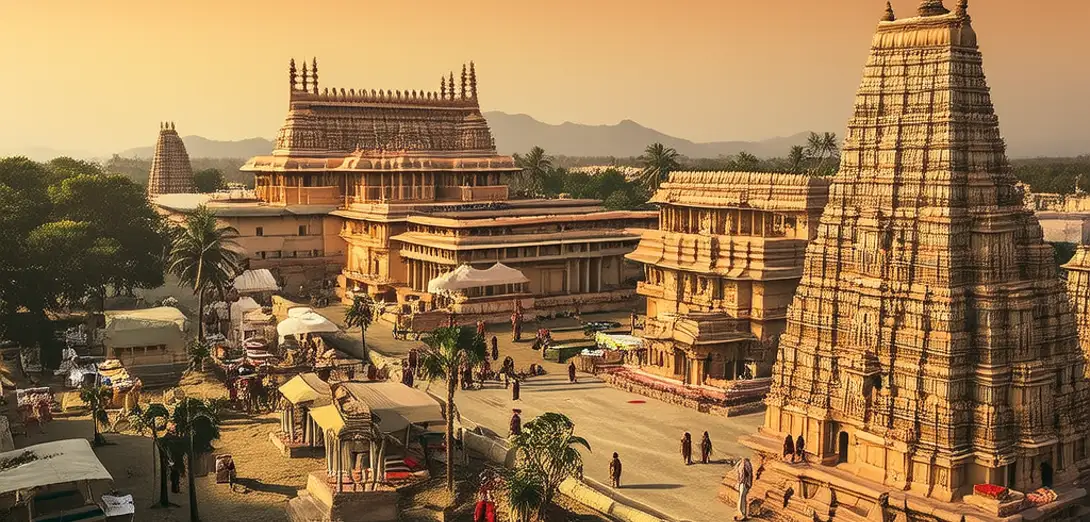
Batch 0001-049: The Vijayanagara Empire and Temple-Centered Urbanism in South India
批次0001-049:维贾亚纳加尔帝国与南印度以神庙为中心的城市规划
-
Founded in 1336 CE, Vijayanagara grew into one of the largest premodern cities in the world by the 15th century.维贾亚纳加尔始建于公元1336年,至15世纪已成为世界最大的前现代城市之一。
-
Its planners organized the capital around monumental temples like Virupaksha and Vittala, which functioned as economic and ritual anchors.规划者以毗卢巴克沙寺、维塔拉寺等宏伟寺庙为中心布局首都,这些寺庙兼具经济与宗教核心功能。
-
Temple complexes housed granaries, schools, hospitals, and artisan guilds operating under royal charters.寺庙建筑群内设粮仓、学校、医院及受王室特许的行会作坊。
-
Annual festivals drew pilgrims whose spending sustained markets, irrigation projects, and road maintenance.年度节庆吸引大量朝圣者,其消费支撑了市场运转、灌溉工程与道路维护。
-
Architectural innovations—such as musical pillars and chariot-shaped shrines—blended Dravidian style with emerging Indo-Islamic motifs.建筑创新——如能奏乐的石柱、战车形神龛——融合达罗毗荼风格与新兴的印伊装饰元素。
-
Royal inscriptions detail land grants to temples, ensuring their autonomy from provincial governors and military commanders.王室铭文详载赐予寺庙的土地,确保其免受地方总督与军事将领管辖。
-
When the empire fell in 1565, temple networks helped preserve regional identity despite Mughal and Deccan Sultanate expansions.1565年帝国覆灭后,寺庙网络在莫卧儿帝国与德干苏丹国扩张中维系了区域认同。
-
Water management systems fed temple tanks that doubled as reservoirs for surrounding farmland.水利系统既供给寺庙水池,又兼作周边农田的蓄水库。
-
This model demonstrated how sacred infrastructure could coordinate ecological, economic, and cultural resilience.这一模式表明,神圣基础设施可统筹生态、经济与文化韧性。
-
Vijayanagara thus redefined urbanism not as secular administration but as devotional ecology.维贾亚纳加尔 thus 将城市化重新定义为虔信生态,而非世俗治理。