正在确认阅读权限…
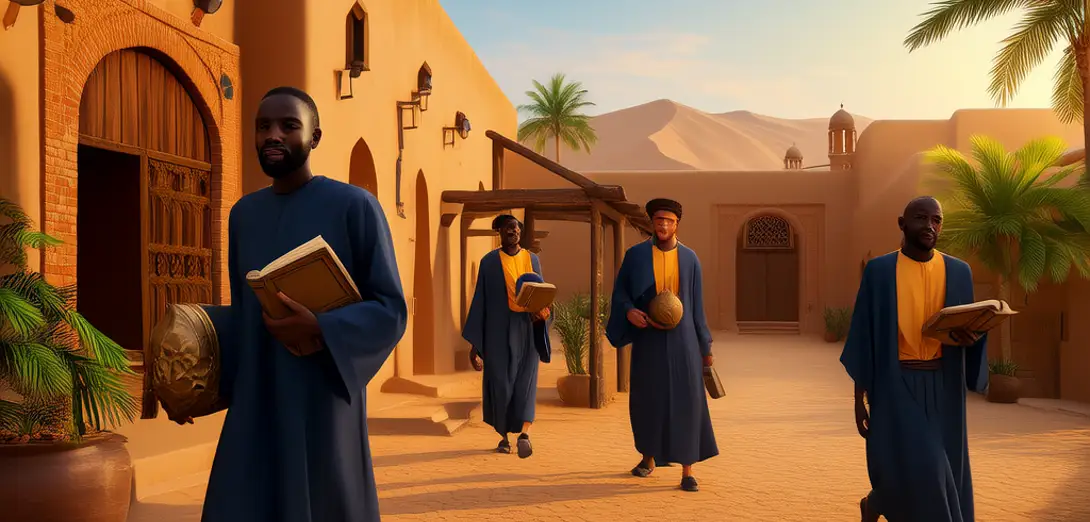
Timbuktu: Where Scholars Kept Knowledge Alive
廷巴克图:学者守护知识之城
-
By the 14th century, Timbuktu in West Africa was one of the world’s greatest centers of learning.到14世纪,西非的廷巴克图已成为世界最重要的学术中心之一。
-
Its three great mosques—Djinguereber, Sankoré, and Sidi Yahia—doubled as universities with thousands of students.城中三座宏伟清真寺——津贾里贝尔、桑科尔和西迪·亚希亚——兼具大学功能,学生多达数千人。
-
Scholars wrote and copied manuscripts on theology, law, astronomy, medicine, and poetry in Arabic and African languages.学者们用阿拉伯语和非洲本土语言撰写、抄录神学、法学、天文学、医学及诗歌等手稿。
-
Many texts were stored in family libraries passed down for generations, some still preserved today.许多文献存于世代相传的家庭图书馆中,部分至今仍被完好保存。
-
Trade in gold and salt brought wealth that funded education, libraries, and public buildings.黄金与食盐贸易带来财富,资助了教育、图书馆和公共建筑建设。
-
When European explorers finally reached Timbuktu in the 1800s, they were amazed by its intellectual reputation.19世纪欧洲探险家最终抵达廷巴克图时,对其盛名卓著的学术声誉深感惊叹。
-
Modern restoration efforts now digitize fragile manuscripts to protect them from climate and conflict.如今的修复工作正将脆弱手稿数字化,以抵御气候与战乱威胁。
-
Timbuktu proves that knowledge thrives wherever curiosity, respect, and community support it.廷巴克图证明:只要充满好奇、彼此尊重并获得社群支持,知识便能蓬勃发展。