正在确认阅读权限…
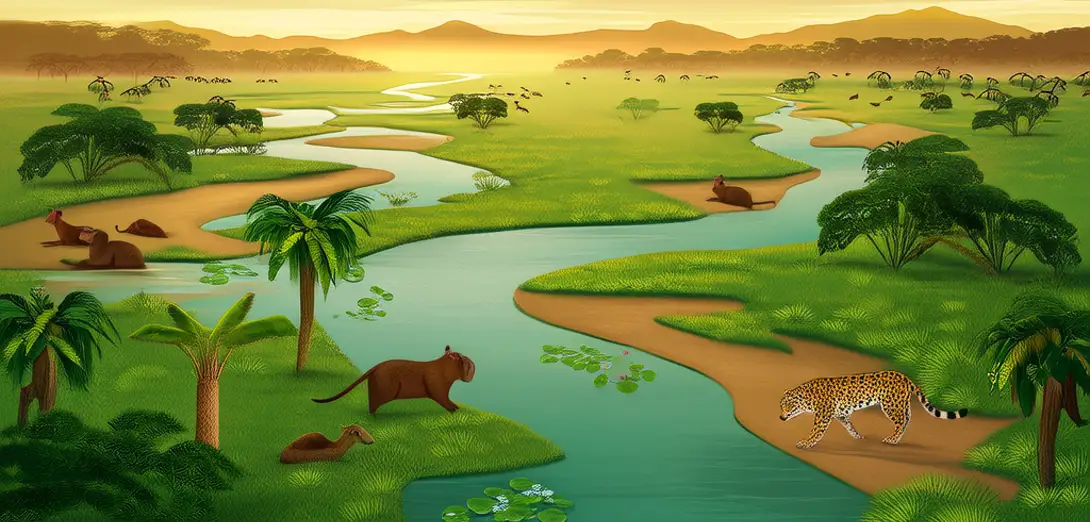
The Pantanal: A Seasonal Mosaic of Floodplain Ecology
潘塔纳尔:季节性洪泛平原的生态马赛克
-
The Pantanal is the world’s largest tropical wetland, spanning over 140,000 km² across Brazil, Bolivia, and Paraguay.潘塔纳尔是全球最大的热带湿地,横跨巴西、玻利维亚和巴拉圭,面积逾14万平方公里。
-
Its annual flood pulse transforms flat grasslands into a vast, shallow inland sea each rainy season.每年雨季,周期性洪水将平坦草原化为广阔的浅水内陆海。
-
This rhythmic inundation supports extraordinary biodiversity, including jaguars, hyacinth macaws, and giant river otters.这种规律性淹没孕育了非凡的生物多样性,包括美洲豹、蓝紫金刚鹦鹉和巨型水獭。
-
Unlike permanent rivers, the Pantanal’s water flows slowly through porous soils and seasonal channels.与常年河流不同,潘塔纳尔的水流经多孔土壤和季节性河道,缓慢漫溢。
-
Human infrastructure like roads and dams increasingly disrupts the natural hydrological connectivity of this floodplain.道路、水坝等人类基础设施日益破坏这片洪泛平原天然的水文连通性。
-
Cattle ranching dominates land use, yet many estates now adopt flood-adapted grazing practices to sustain ecology.牧场养殖占据主导土地用途,但许多牧场已采用适应洪水的轮牧方式以维系生态。
-
Satellite monitoring reveals how subtle shifts in rainfall timing alter the extent and duration of flooding each year.卫星监测显示,降雨时间的细微变化逐年影响洪水范围与持续时长。
-
Soil chemistry here varies sharply between flooded basins and elevated cordilheira ridges, shaping plant community boundaries.flooded盆地与抬升的科尔迪莱拉山脊之间土壤化学性质差异显著,塑造了植物群落边界。
-
Conservation efforts focus on transboundary water governance, since upstream deforestation in the highlands affects downstream flow.保护工作聚焦于跨境水资源治理,因高原上游毁林直接影响下游径流。
-
Because it lies at the convergence of Amazon, Cerrado, and Chaco biomes, the Pantanal functions as a vital ecological filter.潘塔纳尔地处亚马孙、塞拉多和查科三大生物群落交汇处,发挥着关键生态过滤功能。