正在确认阅读权限…
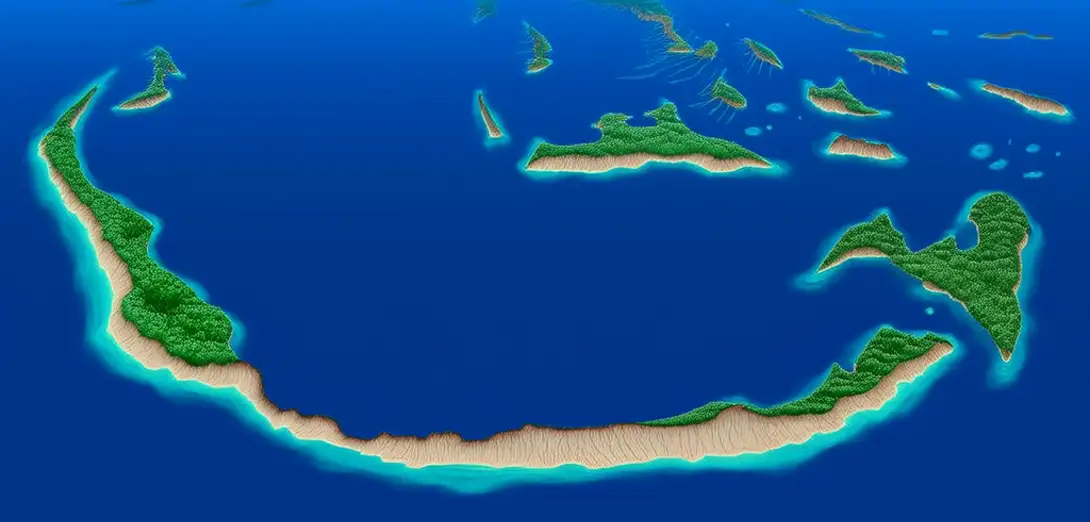
The Banda Arc Collision Zone: Subduction Geometry Driving Island Arc Volcanism and Microplate Rotation
班达弧碰撞带:俯冲几何形态驱动岛弧火山活动与微板块旋转
-
The Banda Arc in eastern Indonesia results from complex collision between the Indo-Australian Plate and Eurasian margins.印尼东部的班达弧源于印度-澳大利亚板块与欧亚板块边缘的复杂碰撞。
-
Unlike linear subduction zones, its curved geometry forces microplates like Timor and Seram to rotate independently.与其线性俯冲带不同,其弯曲几何形态迫使帝汶、塞兰等微板块独立旋转。
-
Volcanic islands align along arcs whose curvature matches the dip angle and rollback rate of the downgoing slab.火山岛沿弧形分布,其曲率与下插板块的倾角及后撤速率相匹配。
-
GPS measurements confirm clockwise rotation of the Timor Block at 6–8 degrees per million years relative to stable Australia.GPS测量证实,帝汶块体相对于稳定澳大利亚以每百万年6–8度的速度顺时针旋转。
-
Seismic tomography reveals tears in the subducting slab that localize mantle upwelling and magma generation.地震层析成像揭示下插板块存在撕裂,导致地幔上涌和岩浆生成局地化。
-
Uplifted coral terraces record episodic vertical motion linked to slab detachment events beneath Flores.抬升的珊瑚阶地记录了与弗洛雷斯下方板块脱离事件相关的间歇性垂直运动。
-
Marine geophysics shows compressional ridges forming where microplate edges converge obliquely.海洋地球物理显示,微板块边缘斜向汇聚处形成挤压脊。
-
This region proves that island arc volcanism can persist even during continental collision if slab geometry permits mantle flux.该区域证明:只要板块几何条件允许地幔物质通量,岛弧火山作用即使在大陆碰撞期间也能持续。
-
Spatial analysis of vent locations reveals clustering near predicted zones of maximum crustal strain.火山口空间分析显示,其分布集中在预测的最大地壳应变区附近。
-
It challenges simplified plate models by showing how 3D subduction architecture dictates surface geography.它挑战了简化的板块模型,表明三维俯冲构造决定了地表地貌。