正在确认阅读权限…
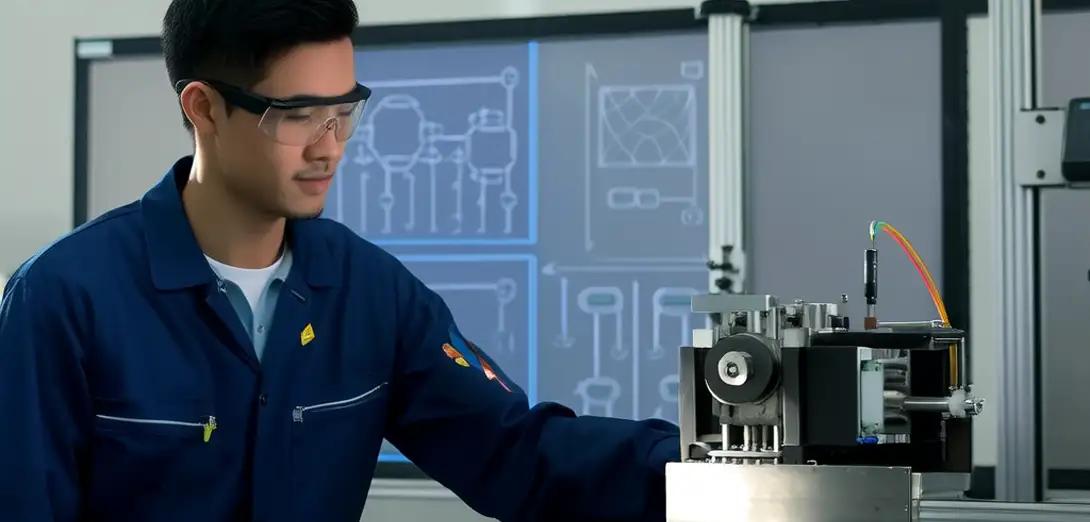
Automated Extension in STEM Literacy: Batch 0001-043
STEM轻科普延展阅读·自动延展(批次0001-043)
-
Batch 0001-043 converts semiconductor fabrication white papers—originally targeting process engineers at TSMC or Samsung—into operational primers for equipment technicians maintaining photolithography tools in Vietnam and Mexico.第0001-043批将半导体制造白皮书——原面向台积电或三星的工艺工程师——转化为越南和墨西哥光刻设备技术人员的操作指南。
-
It replaces cleanroom-class process parameters (e.g., 'ArF excimer laser pulse energy stability ±0.3% over 10k shots') with observable machine-state diagnostics: beam alignment drift manifests as reticle heating gradients detectable via IR thermography.它用可观测的设备状态诊断替代洁净室级工艺参数(例如‘ArF准分子激光脉冲能量稳定性在1万次发射中波动±0.3%’):光束对准漂移表现为可通过红外热成像检测的掩模版加热梯度。
-
Maintenance logs are cross-referenced with wafer defect clustering patterns, enabling root-cause attribution without requiring fab-floor metrology access.维修日志与晶圆缺陷聚类模式交叉比对,无需产线计量设备即可定位根本原因。
-
Each primer embeds fault-tree navigation: selecting 'non-uniform resist development' triggers conditional branches for developer concentration, spray-nozzle clogging, or bake-plate thermal gradient checks.每份指南嵌入故障树导航:选择‘光刻胶显影不均’即触发条件分支,分别检查显影液浓度、喷嘴堵塞或烘烤板温度梯度。
-
The system incorporates regional supply-chain realities—flagging parts with >90-day lead times from Shanghai and suggesting validated local alternatives meeting SEMI F47 voltage-sag tolerance specs.系统纳入区域供应链现实——标出上海供货周期超90天的备件,并推荐符合SEMI F47电压暂降容限标准的经验证本地替代品。
-
All safety-critical sequences include bilingual lockout-tagout checkpoints synchronized with Vietnamese Ministry of Labor OSH directives and Mexican NOM-002-STPS.所有安全关键操作流程均含双语上锁挂牌检查点,并同步越南劳动部职业安全健康指令及墨西哥NOM-002-STPS标准。
-
It transforms yield-loss metrics into technician-level KPIs: 'reducing pattern collapse events by 12% correlates directly with nozzle cleaning frequency adjustments'.它将良率损失指标转化为技师级KPI:‘图案坍塌事件减少12%’直接对应喷嘴清洁频次调整。
-
No quantum-mechanical explanations of photoresist chemistry appear—only empirical correlations between ambient humidity logs and standing-wave artifacts.不出现光刻胶化学的量子力学解释——仅呈现环境湿度记录与驻波缺陷之间的经验关联。
-
Outputs assume zero access to process integration teams; instead, they codify tacit knowledge from veteran field service engineers’ incident reports.输出默认无法接触工艺整合团队;而是提炼资深现场服务工程师事故报告中的隐性知识。
-
This batch treats advanced manufacturing not as theoretical precision but as a distributed socio-technical practice grounded in tool-specific heuristics.本批次将先进制造视为依托设备特有经验法则的分布式社会技术实践,而非理论上的精密工程。
-
Its efficacy is measured in mean-time-to-repair reduction—not in fidelity to original academic prose.其有效性以平均修复时间缩短为衡量标准,而非对原始学术文本的忠实度。
-
It redefines expertise as context-aware interpretation: knowing *which* parameter deviation matters most when your spare-part inventory holds only three focus rings.它将专业能力重新定义为情境感知式解读:当备件库存仅有三个调焦环时,清楚哪个参数偏差最需优先关注。