正在确认阅读权限…
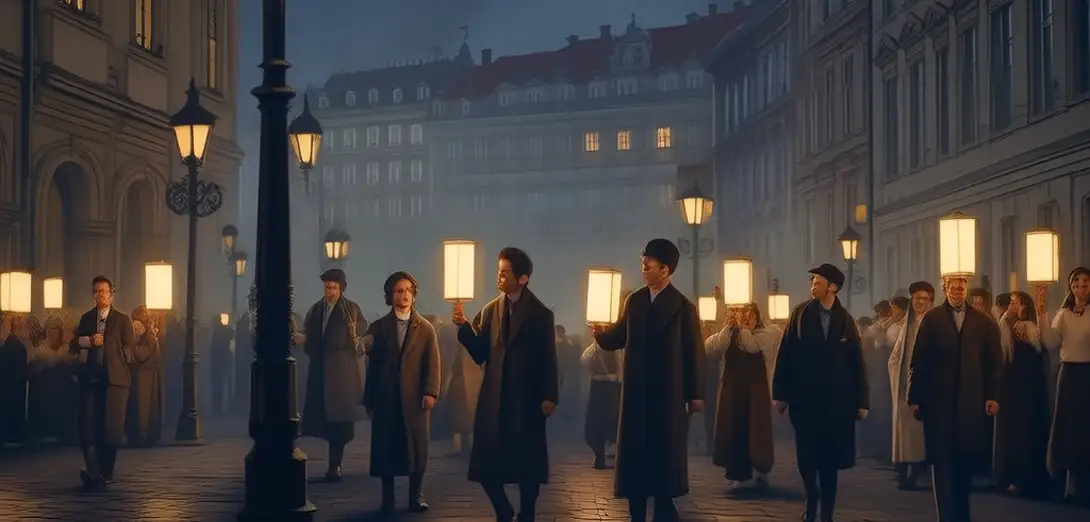
Czech Velvet Revolution Lantern Processions as Counter-Monumental Pedagogy
捷克天鹅绒革命烛光游行:反纪念碑式公民教育实践
-
Every November 17th since 1989, Prague’s Wenceslas Square fills not with statues but with thousands of handheld candles held at chest height.自1989年起,每年11月17日,布拉格瓦茨拉夫广场上不立雕像,而是站满数千人,胸前齐高举着手持蜡烛。
-
Unlike official memorials, these processions reject fixed form—no plaques, no speeches, no designated speakers—only synchronized walking and flame maintenance.与官方纪念活动不同,这一游行拒绝固定形式——没有铭牌、没有演讲、没有指定发言人,只有同步行走与持烛护火。
-
Participants learn historical literacy not through dates or names but by mastering candle-holding angles that prevent wax drip onto neighbors’ coats.参与者并非通过日期或人名学习历史,而是靠掌握持烛角度来防止蜡油滴落邻人外套,从而习得历史素养。
-
Teachers bring high-school students not to lecture but to assign roles: wick-trimmer, wind-shielder, flame-counter—each embedding responsibility in material practice.教师带高中生前来,并非授课,而是分配角色:剪烛芯者、挡风者、数火焰者——每种角色都将责任嵌入实操之中。
-
The candle’s fragility becomes a pedagogical anchor: extinguished flames require immediate neighborly re-ignition, modeling interdependence as political grammar.蜡烛的易熄性成为教学支点:火焰一灭,须即刻由邻人重新点燃,以此将相互依存具象为政治语法。
-
Urban planners deliberately avoid lighting infrastructure along the route, preserving darkness as an active civic condition rather than a technical deficit.城市规划者刻意不在游行路线上设置照明设施,让黑暗成为一种主动的公民状态,而非技术缺憾。
-
Media coverage focuses less on slogans than on the geometry of light clusters shifting across cobblestones—a visual syntax of distributed agency.媒体报道焦点不在口号,而在烛光群组随石板路起伏流动的几何形态——一种展现分散能动性的视觉语法。
-
Historians note that participants rarely discuss 1989 ideology; instead, they debate optimal wax blends and paper sleeve thickness for wind resistance.历史学者指出,参与者极少谈论1989年的意识形态,更多争论的是蜡料配比与纸套厚度,以提升抗风性。
-
This embodied repetition transforms commemoration from passive remembrance into somatic rehearsal of democratic contingency.这种身体化的重复,使纪念从被动追忆转变为对民主偶然性的具身预演。
-
The procession ends not with a rally but with silent candle placement on Charles Bridge railings—temporary, non-possessive, weather-vulnerable.游行不在集会中结束,而是在查理大桥栏杆上静默置烛——临时、非占有、易受天气影响。
-
Its power lies precisely in refusing monumentality: memory here is held in trembling hands, not cast in bronze.其力量正源于拒斥纪念碑性:此处的记忆握于颤抖之手,而非铸于青铜。
-
When EU officials propose ‘modernizing’ the event with LED candles, Czech civil society groups counter that synthetic light erases the pedagogy of vulnerability.当欧盟官员提议用LED蜡烛‘现代化’这一活动时,捷克民间团体反驳称,人造光消解了脆弱性所承载的教学意义。