正在确认阅读权限…
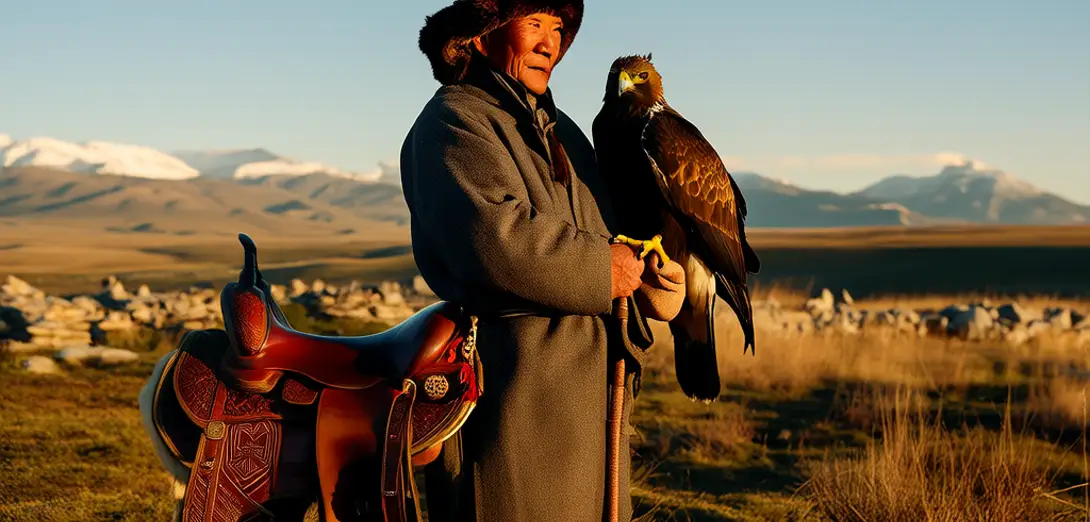
Kyrgyzstan’s Eagle Hunting Lineages as Nomadic Archival Sovereignty
吉尔吉斯斯坦猎鹰世家:游牧式档案主权实践
-
In the Tien Shan foothills, eagle hunting lineages maintain genealogies not in written documents but in feather patterns, saddle-stitch sequences, and falconry call cadences passed through oral calibration.在天山山麓,猎鹰世家的谱系并非记载于文字档案,而是铭刻于羽毛纹样、马鞍缝线序列,以及代代口传校准的猎鹰呼哨韵律之中。
-
Each golden eagle’s molt cycle maps onto a boy’s adolescence—its first successful hunt coincides with his formal naming as ‘qushchi’, a title requiring communal witness, not bureaucratic registration.每只金雕的换羽周期与少年的青春期同步——它首次成功捕猎之时,正是少年被正式冠以‘库什奇’(qushchi)之名之际;这一称号需经社群见证,而非官僚登记。
-
State archives request lineage records; herders respond by gifting hand-stitched saddlebags containing shed feathers, each tagged with seasonal notes in Arabic-script Kyrgyz—untranslatable without shared ecological context.官方档案馆索要世系记录,牧民则回赠手工缝制的鞍囊,内装脱落羽毛,每根羽毛均以阿拉伯字母书写的柯尔克孜语标注季节信息——若无共享的生态语境,便无法翻译。
-
Digital ethnographers attempting to digitize calls discovered that pitch modulation depends on wind speed and altitude, rendering studio recordings epistemically void.试图数字化猎鹰呼哨的数字人类学者发现,音调调制依赖风速与海拔,致使录音棚录制的音频在认知层面毫无意义。
-
Women elders preserve ‘sky calendars’—not astronomical charts but oral mnemonics linking eagle behavior to glacial melt patterns observed over seven generations.女性长者守护着‘天空历’——这并非天文星图,而是口传记忆法,将金雕行为与七代人观测到的冰川消融模式相联结。
-
When mining companies demand land surveys, families submit aerial photographs annotated not with GPS coordinates but with eagle flight paths during spring migration—maps legible only to those who read thermals as narrative.当矿业公司索要土地测绘时,牧民家族提交的航拍照片上并未标注GPS坐标,而是标出金雕春季迁徙时的飞行轨迹——唯有能将上升热气流读作叙事的人,方能识读此图。
-
The Kyrgyz term ‘jailoos’ refers both to summer pastures and to the living archive of animal-human co-adaptation embedded in grazing routes.柯尔克孜语‘贾伊洛斯’(jailoos)一词既指夏季牧场,亦指嵌于放牧路线中的人畜共适应活态档案。
-
School curricula now include ‘feather literacy’ modules where students match molt samples to oral histories of drought years and snowpack depth.当下学校课程已纳入‘羽毛识读’模块,学生须将换羽样本与关于干旱年份及积雪深度的口述史一一对应。
-
This sovereignty rejects the archive-as-container model in favor of archive-as-ongoing-relational-act between species, terrain, and time.这种主权摒弃‘档案即容器’范式,转而视档案为物种、地貌与时间之间持续发生的关联性实践。
-
International conservation NGOs frame eagles as endangered species; local hunters counter that extinction would mean the collapse of a knowledge system, not just a bird population.国际环保非政府组织将金雕界定为濒危物种;当地猎人则指出,其灭绝意味着整套知识体系的崩塌,而不仅是一个鸟类种群的消失。
-
The eagle’s return each March is less a biological event than a grammatical one—marking the subjunctive tense of collective survival.金雕每年三月归来,与其说是生物事件,不如说是一场语法事件——它标记着集体存续的虚拟语气。
-
When biologists tag birds with GPS, herders quietly remove devices, not from opposition to science but to protect the epistemic boundary of their archive.当生物学家为金雕加装GPS追踪器时,牧民会悄然取下设备,并非反对科学,而是为守护自身档案的认知边界。