正在确认阅读权限…
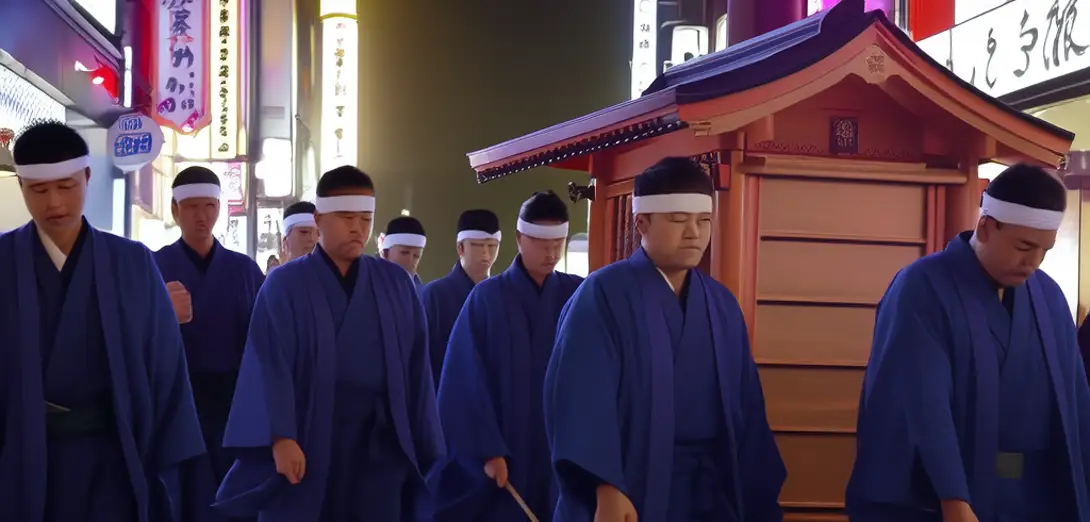
Japanese Kanda Matsuri Processional Silence as Temporal Sovereignty Protocol
日本神田祭巡游静默:时间主权协议
-
During Tokyo’s Kanda Matsuri, the 300-year-old mikoshi procession moves through Akihabara’s neon district without amplification, creating a 500-meter radius of enforced acoustic sovereignty amid digital noise.东京神田祭期间,已有300年历史的神轿游行队伍穿行于秋叶原霓虹街区,全程未使用扩音设备,在数字噪音中划出半径500米的强制性声学主权区。
-
This silence is not passive absence but active temporal governance: smartphones lose signal, LED billboards dim, and even construction cranes halt—protocols enforced not by law but by collective somatic calibration.这种寂静并非被动缺失,而是主动的时间治理:手机信号消失、LED广告牌变暗,甚至建筑起重机也暂停作业——这些规范并非由法律强制,而是依靠集体身体的默契协调。
-
Local shopkeepers install ‘silence thresholds’—floor sensors that trigger automatic shutter closure when procession proximity exceeds 15 meters, treating quiet as physical infrastructure.当地店主安装‘静音阈值’装置——当神轿接近至15米内时,地面传感器自动触发卷帘门关闭,将安静视为实体基础设施。
-
Acoustic engineers measured decibel drops of 22 dB within the procession corridor, revealing how silence here functions as measurable urban zoning, not cultural relic.声学工程师测得游行通道内分贝值骤降22分贝,表明此处的寂静实为可量化的城市功能分区,而非文化遗存。
-
Scholars argue this isn’t tradition but real-time negotiation: the mikoshi’s path recalibrates every year based on new data about corporate headquarters locations and server farm placements.学者指出,这并非传统延续,而是实时协商:神轿路线每年依新数据动态调整,包括企业总部与数据中心的新位置。
-
Foreign diplomats attending are briefed not on Shinto theology but on ‘silence compliance metrics’—how long they must hold breath during key intersections to avoid disrupting temporal coherence.受邀出席的外国外交官接受的 briefing 并非神道教义,而是‘静音合规指标’——例如在关键路口须屏息多久,以免破坏时间 coherence。
-
Tokyo Metropolitan Government publishes annual ‘Silence Integrity Reports’, analyzing microphone data to assess whether commercial zones respected acoustic boundaries during the three-day event.东京都政府每年发布《静音完整性报告》,分析麦克风采集数据,评估商业区在为期三天的活动中是否遵守了声学边界。
-
When delivery drones attempted flight near the route, neighborhood associations deployed ultrasonic emitters mimicking temple bell frequencies—disrupting navigation systems without violating aviation law.当配送无人机试图靠近游行路线时,社区协会启用超声波发射器模拟寺庙钟声频率,干扰其导航系统,却不违反航空法规。
-
This protocol treats time not as linear resource but as layered sovereignty: Edo-period rhythms physically displace 21st-century temporalities in designated corridors.该机制不将时间视作线性资源,而视为层叠的主权:江户时代的节奏在指定走廊内物理性地取代了21世纪的时间秩序。
-
University labs now study ‘silence contagion’—how the procession’s acoustic field induces slower speech rates and delayed decision-making in adjacent office buildings for 72 hours post-event.高校实验室正研究‘静音传染效应’——游行声场如何使邻近办公楼员工语速变慢、决策延迟,影响持续72小时。
-
Critics call it nostalgia; practitioners call it ‘time-wrangling’—the daily work of maintaining plural temporalities in hyper-accelerated cities.批评者称之为怀旧;实践者则称其为‘时间驾驭’——在高速运转的城市中维系多重时间性的日常努力。
-
The final mikoshi stop occurs not at a shrine but at Tokyo Station’s automated ticket gates, where sensors register the procession’s arrival by detecting reduced electromagnetic interference—proving silence can be quantified, regulated, and weaponized.神轿最终停驻点并非神社,而是东京站自动检票口;传感器通过检测电磁干扰减弱来确认神轿抵达——证明寂静可被量化、规制,甚至武器化。