正在确认阅读权限…
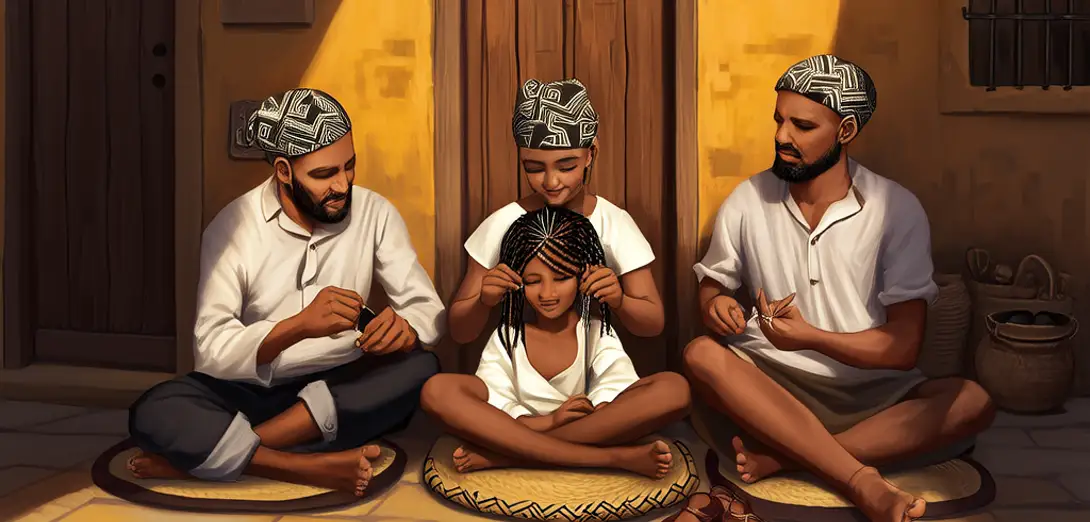
Senegalese Ndawrabine Ceremonial Hair-Weaving as Kinship Cartography
塞内加尔恩达布里宾仪式编发:亲属关系的空间测绘
-
In Dakar’s historic Médina quarter, master braiders map lineage through geometric patterns woven over three days.在达喀尔历史悠久的麦地那区,编织大师用三天时间编织几何图案,以此勾勒家族谱系。
-
Each braid sequence encodes maternal clan affiliation, marital status, and generational position within the Wolof kinship lattice.每组辫子序列编码母系氏族归属、婚姻状况及沃洛夫亲属体系中的世代位置。
-
The ceremony’s silence during crown-weaving signifies suspended social time—neither past nor future, only relational present.冠部编织时的静默象征社会时间的悬置——既非过去亦非未来,唯有关系性的当下。
-
Clients arrive with ancestral photographs and handwritten genealogies, not aesthetic preferences or Instagram references.顾客携祖先照片与手写家谱而来,而非审美偏好或Instagram参考图。
-
Braiding proceeds counter-clockwise to mirror the sun’s path across the Sahel, embedding cosmology in scalp topology.辫发按逆时针方向进行,以呼应撒赫勒地区太阳运行轨迹,将宇宙观嵌入头皮拓扑。
-
Hair is never cut during Ndawrabine; its length symbolizes unbroken transmission across eight documented generations.‘恩达瓦拉宾’仪式中从不剪发,其长度象征跨越八代有据可查的血脉传承。
-
Young apprentices memorize over two hundred pattern names, each tied to a specific marriage alliance or land inheritance clause.年轻学徒须熟记二百多种图案名称,每种均关联特定婚姻联盟或土地继承条款。
-
The final rinse uses fermented baobab pulp—a preservative and symbolic seal of intergenerational covenant.最终冲洗使用发酵猴面包树果浆——兼具防腐功效与代际契约的象征封印。
-
Foreign diplomats attending state functions now request Ndawrabine preparation, acknowledging its diplomatic semiotics beyond ornamentation.出席国家典礼的外国外交官如今主动要求接受‘恩达瓦拉宾’准备,认可其超越装饰意义的外交符号价值。
-
This practice resists digitization not out of Luddism but because algorithmic pattern replication erases embodied consent protocols.该实践抗拒数字化,并非出于卢德主义,而是因算法复刻图案会抹除具身化的同意规程。
-
When French colonial archives mislabeled these motifs as 'decorative folk art', Wolof elders responded with silent, week-long re-weavings in public squares.当法国殖民档案将这些纹样误标为‘装饰性民间艺术’时,沃洛夫长老以沉默、持续一周的公开重编辫回应。
-
Ndawrabine persists not as heritage performance but as living constitutional syntax governing land, memory, and succession.‘恩达瓦拉宾’存续并非作为遗产展演,而是作为活态宪制语法,规约土地、记忆与继承。