正在确认阅读权限…
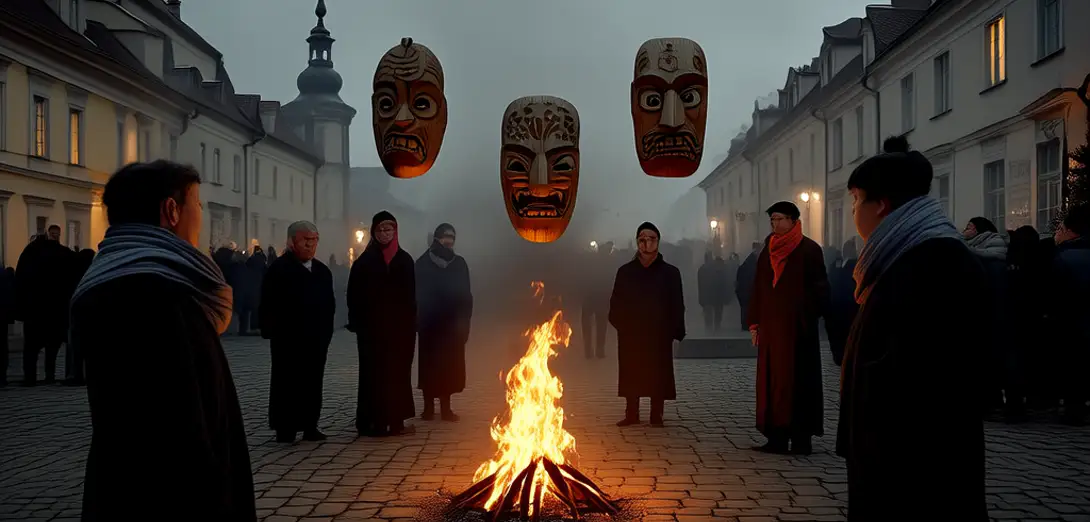
Lithuanian Užgavėnės Mask-Burning as Epistemic Threshold Ritual
立陶宛乌兹加文尼斯面具焚烧:认知边界的阈限仪式
-
On Ash Wednesday’s eve in Vilnius Old Town, citizens gather not for revelry but for deliberate epistemic dismantling.圣灰星期三前夕,维尔纽斯老城的市民聚集,并非为了狂欢,而是为有意识地解构知识体系。
-
Hand-carved wooden masks depicting greed, apathy, or bureaucratic inertia are burned atop birch logs in cathedral square.手雕木面具——刻画贪婪、冷漠或官僚惰性——在主教座堂广场的桦木堆上焚烧。
-
The fire’s intensity determines communal readiness—not for Lent, but for renegotiating civic epistemologies post-Soviet transition.火焰强度决定集体准备程度:不是为四旬期,而是为后苏联转型期重新协商公民认知方式。
-
Mask-makers consult historians, not artisans, verifying each caricature against declassified KGB surveillance transcripts from 1978–1983.面具制作者咨询历史学家而非工匠,依据1978至1983年解密的克格勃监控笔录逐一核验每幅讽刺画。
-
Participants chant in archaic Samogitian dialect, deliberately unintelligible to younger generations as linguistic quarantine measure.参与者用古萨莫吉希亚方言吟诵,刻意令年轻一代无法理解,作为语言隔离措施。
-
Ashes are mixed with rye flour and baked into flatbreads distributed to municipal offices, embedding accountability into daily sustenance.灰烬混入黑麦粉烘烤成薄饼,分发至市政部门,将问责嵌入日常食粮。
-
No photographs are permitted during combustion; the ritual insists on non-reproducible, temporally anchored witnessing.燃烧过程严禁拍照;仪式坚持不可复制、时间锚定的亲历见证。
-
When EU integration debates intensified, mask themes shifted from Soviet tropes to algorithmic governance and data sovereignty anxieties.欧盟一体化论争加剧时,面具主题从苏联陈套转向算法治理与数据主权焦虑。
-
The bonfire’s orientation follows pre-Christian star charts, aligning civic reflection with celestial cycles rather than fiscal quarters.篝火朝向依循前基督教星图,使公民反思与天体周期而非财政季度同步。
-
Municipal clerks undergo mandatory Užgavėnės participation before assuming roles involving public record access or archival classification.市政文员须强制参与乌兹加维内斯节,方能担任涉及公共档案查阅或分类的职务。
-
This is not carnival catharsis but calibrated epistemic recalibration—burning certainties to make space for contested truths.这并非狂欢式宣泄,而是精准校准的认知重置——焚毁确信,为争议性真相腾出空间。
-
The ritual concludes not with celebration but with collective signing of a temporary civic compact, valid only until next year’s ashes cool.仪式不以庆祝收尾,而以集体签署一份临时公民契约告终,有效期仅至来年余烬冷却。