正在确认阅读权限…
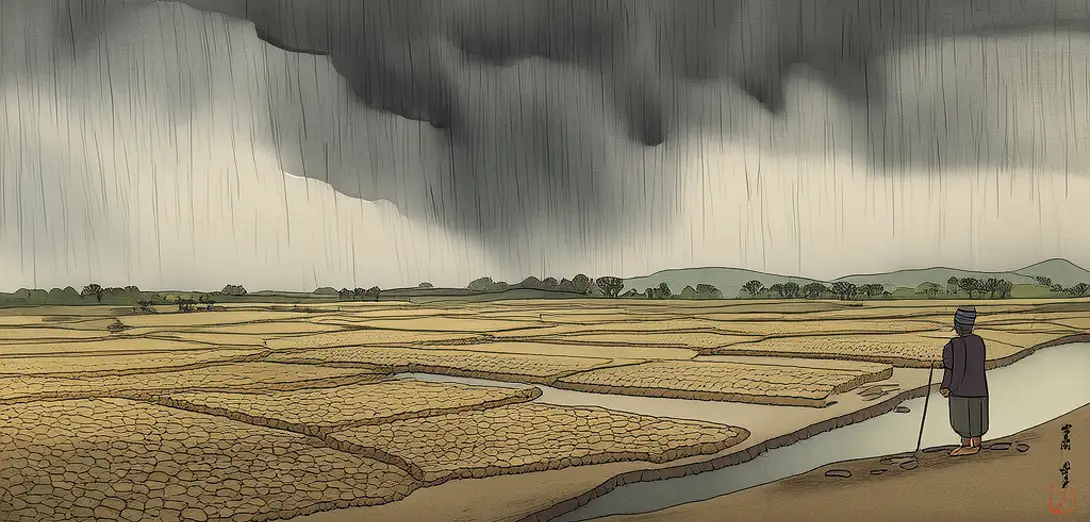
Monsoon Variability and the Unsettling of Agricultural Livelihoods in South Asia
南亚季风变异性与农业生计的失序
-
South Asia’s monsoon system—once predictable within decadal envelopes—is now exhibiting phase shifts, intensity spikes, and spatial fragmentation that defy historical baselines.南亚季风系统——曾可在十年尺度上准确预测——如今却出现相位偏移、强度骤增和空间碎片化,彻底偏离历史基准。
-
Farmers in Punjab and Bihar increasingly rely on satellite-derived rainfall forecasts issued by ISRO and the Indian Meteorological Department, not traditional phenological indicators like bird migrations or flowering cycles.旁遮普邦和比哈尔邦的农民日益依赖印度空间研究组织(ISRO)和印度气象局发布的卫星降雨预报,而非传统的物候指标,如鸟类迁徙或植物开花周期。
-
Delayed onset dates correlate strongly with reduced paddy transplanting windows, forcing agrarian households to reallocate labor toward off-farm wage work before sowing even begins.季风迟到日期与水稻移栽窗口期缩短高度相关,迫使农户在播种开始前就将劳动力转向非农务工。
-
Groundwater depletion in northwest India has accelerated not only due to over-extraction, but because erratic monsoons reduce natural recharge by up to 37 percent compared to stable regimes.西北印度地下水枯竭加剧,不仅源于过度开采,更因季风异常导致自然补给量较稳定时期减少高达37%。
-
Crop insurance payouts under India’s PMFBY scheme now trigger automatically upon deviation thresholds from district-level rainfall norms, bypassing bureaucratic verification delays.印度‘总理保险计划’(PMFBY)下的作物保险赔付如今在降雨量偏离县级基准阈值时自动触发,绕过官僚式核查延误。
-
Urban heat islands in Hyderabad and Dhaka intensify localized convection, altering micro-monsoon trajectories and creating 'rain shadows' over peri-urban farming belts.海得拉巴和达卡的城市热岛效应加剧局地对流,改变微季风路径,在城郊农业带形成‘雨影区’。
-
Transboundary water treaties like the Indus Waters Treaty lack provisions for climate-induced flow variability, leaving downstream Pakistan vulnerable to upstream India’s adaptive reservoir releases.《印度河水条约》等跨境水协议未纳入气候引发的径流变化条款,致使下游巴基斯坦易受上游印度适应性水库调度影响。
-
Agro-meteorological advisory services delivered via WhatsApp now reach over 14 million smallholders, translating probabilistic forecasts into planting-date recommendations calibrated to soil moisture sensors.通过WhatsApp推送的农气服务现已覆盖逾1400万小农户,将概率预报转化为结合土壤湿度传感器校准的播种日期建议。
-
Rice-wheat double-cropping systems—once optimized for fixed monsoon calendars—are being replaced by millet-sorghum rotations better suited to intermittent moisture pulses.曾按固定季风日历优化的稻麦两熟制,正被更适合间歇性降水脉冲的粟类—高粱轮作取代。
-
Monsoon failure no longer means temporary scarcity; it triggers cascading credit defaults, school dropout surges, and out-migration waves documented in longitudinal village surveys across Uttar Pradesh.季风失败已不止意味着短期短缺,更会引发连锁反应:信贷违约、辍学潮及外迁潮,这在北方邦长期村级调查中已有明确记录。
-
Climate adaptation funding flows disproportionately to infrastructure projects, while indigenous knowledge systems—such as cloud morphology interpretation—receive negligible institutional support or documentation.气候适应资金严重偏向基础设施项目,而本土知识体系——如云形判读——却几乎未获制度性支持或系统性记录。
-
The monsoon is receding not just in timing, but in epistemic authority: its rhythms are now mediated through algorithms, satellites, and actuarial models far more than through intergenerational observation.季风不仅在时间上退却,其认知权威也在消退:其节律如今更多经由算法、卫星和精算模型中介,而非代际观察。