正在确认阅读权限…
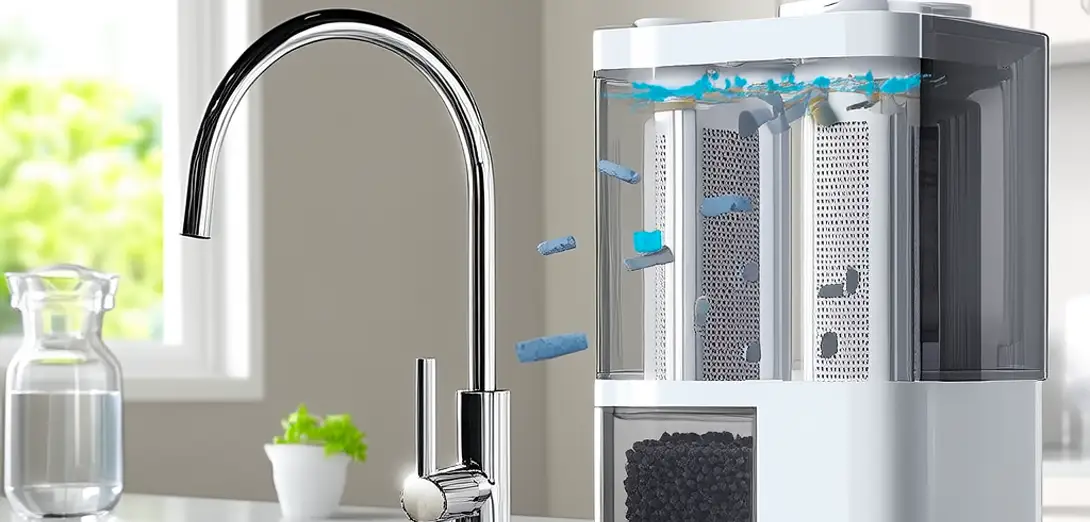
How Water Filters Remove Microplastics
净水器如何去除微塑料
-
Microplastics—tiny plastic fragments under 5 mm—are increasingly found in tap and bottled water worldwide.微塑料——直径小于5毫米的微小塑料碎片——正越来越多地在全球各地的自来水和瓶装水中被检出。
-
Activated carbon filters trap some particles through adsorption, but their effectiveness depends on pore size and contact time.活性炭滤芯通过吸附作用截留部分颗粒,但其效果取决于孔径大小和接触时间。
-
Ceramic filters with sub-micron pores physically block particles larger than 0.2–0.5 micrometers reliably.亚微米级孔径的陶瓷滤芯能可靠阻隔大于0.2–0.5微米的颗粒。
-
Reverse osmosis systems force water through semi-permeable membranes that reject over 99% of microplastics and dissolved salts.反渗透系统迫使水流经半透膜,可去除99%以上的微塑料及溶解盐类。
-
Newer nanofiber membranes offer higher flow rates while maintaining filtration down to 0.1 micrometers.新型纳米纤维膜在保持0.1微米过滤精度的同时,提供更高通量。
-
Testing confirms RO units remove nearly all microplastics, whereas pitcher filters vary widely by brand and age.检测证实,反渗透设备几乎可完全去除微塑料,而水壶式滤芯的效果则因品牌和使用年限差异极大。
-
Filters must be replaced regularly; clogged or worn media lose efficiency and may even release trapped particles.滤芯须定期更换;堵塞或老化的滤材会降低效率,甚至可能释放已截留的颗粒。
-
Independent labs now test consumer filters for microplastic removal, helping buyers compare real-world performance.独立实验室现已对消费级滤芯开展微塑料去除率测试,帮助用户比对真实性能。
-
Combining multiple stages—sediment + carbon + membrane—provides layered defense against diverse contaminants.多级组合过滤(如沉淀+活性炭+膜)可针对多种污染物构建多重防护。
-
This convergence of materials science, fluid dynamics, and environmental health makes modern filtration essential.材料科学、流体力学与环境健康领域的融合,使现代净水技术变得不可或缺。