正在确认阅读权限…
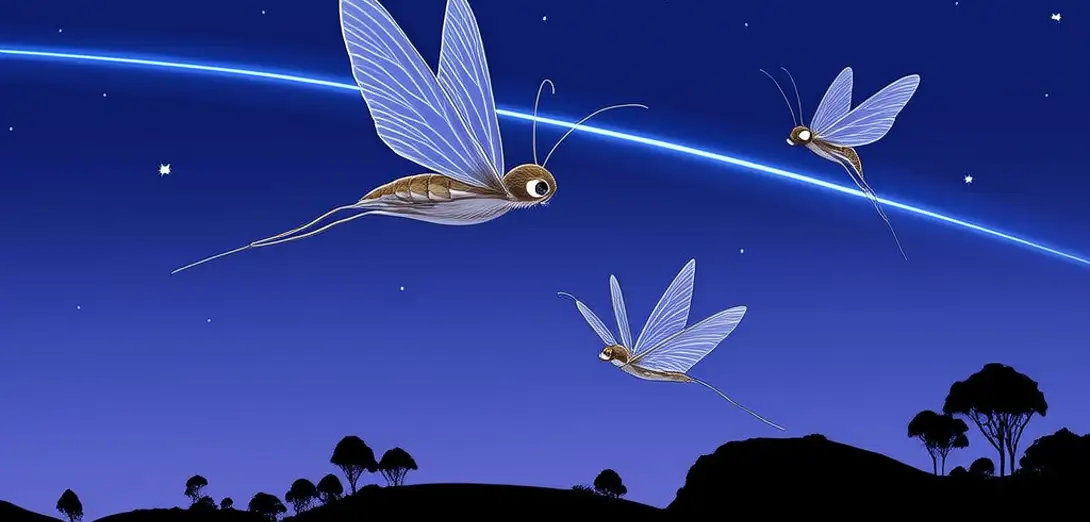
How Do Certain Moths Navigate Using Starlight Alone?
某些蛾类如何仅靠星光导航?
-
Nocturnal moths like the Bogong moth detect polarized patterns in starlight using specialized photoreceptors.夜行性蛾类(如博贡蛾)利用特化的光感受器探测星光中的偏振模式。
-
Their compound eyes contain dorsal rim areas tuned to ultraviolet wavelengths scattered by night sky stars.它们的复眼背缘区对夜空恒星散射的紫外波长敏感。
-
Even under moonless conditions, they maintain straight flight paths by referencing the Milky Way’s band.即便在无月条件下,它们也能通过参照银河带保持直线飞行。
-
Laboratory experiments prove they lose orientation when star patterns are obscured or rotated artificially.实验室实验证明,当星图被遮挡或人为旋转时,它们会失去方向感。
-
This celestial navigation supports multi-night migrations spanning hundreds of kilometers to cool mountain refuges.这种天体导航支持跨越数百公里、持续多夜的迁徙,抵达凉爽的高山避难所。
-
Unlike birds, moths lack internal magnetic compasses and rely entirely on visual sky cues.与鸟类不同,蛾类缺乏内在磁罗盘,完全依赖视觉天空线索导航。
-
Urban light pollution disrupts their ability to resolve faint stellar gradients, causing disorientation.城市光污染干扰其分辨微弱恒星梯度的能力,导致迷失方向。
-
Researchers attach micro-tracking devices to study real-time flight behavior across diverse landscapes.研究人员为蛾类安装微型追踪装置,以实时研究其在多样地貌中的飞行行为。
-
Evolutionary biologists compare moth neural circuits with those of dung beetles that also navigate by stars.进化生物学家将蛾类的神经回路与同样依靠星辰导航的蜣螂进行对比。
-
Understanding this system aids conservation planning for habitats aligned with natural light-pollution thresholds.理解这一系统有助于依据自然光污染阈值制定栖息地保护规划。