正在确认阅读权限…
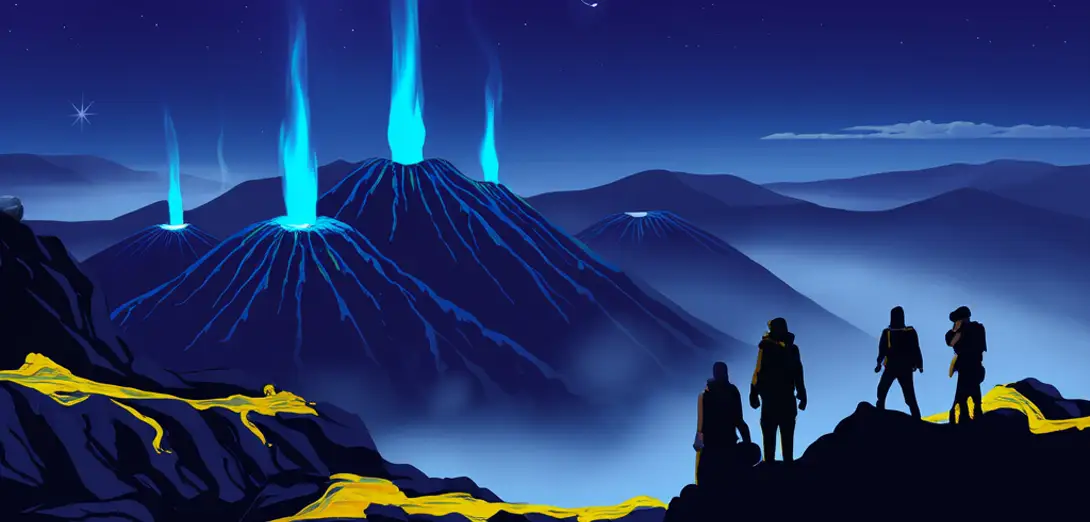
Why Do Some Volcanoes Emit Blue Flames Instead of Red Lava?
为什么有些火山喷发蓝色火焰而非红色岩浆?
-
Blue flames at volcanoes like Indonesia’s Kawah Ijen come from ignited sulfur vapor—not burning lava.印尼卡瓦伊真火山等地的蓝色火焰源自燃烧的硫蒸气,而非熔岩燃烧。
-
Underground sulfur deposits melt and rise through cracks, then ignite spontaneously upon contact with air.地下硫矿床熔化后沿裂缝上升,接触空气后自燃。
-
The combustion produces bright blue flames visible even in daylight and emits toxic sulfur dioxide gas.燃烧产生明亮的蓝色火焰,白天清晰可见,并释放有毒的二氧化硫气体。
-
Temperatures exceed 600°C, but the blue color comes from excited molecular sulfur emitting at 450 nm.温度超过600°C,但蓝色源于激发态硫分子在450纳米波长发光。
-
Unlike red-orange lava glow, which results from thermal radiation, this is chemiluminescence from chemical reactions.与红橙色熔岩辉光(热辐射所致)不同,这是化学反应产生的化学发光。
-
Local miners collect cooled sulfur for industrial use despite hazardous working conditions and poor ventilation.当地矿工在通风不良、作业环境危险的情况下采集冷却后的硫磺用于工业。
-
Scientists use spectrometers to distinguish sulfur flame signatures from other volcanic heat sources.科学家用光谱仪区分硫火焰特征与其他火山热源信号。
-
This phenomenon occurs only where high-sulfur magma interacts with hydrothermal systems near the surface.该现象仅发生于高硫岩浆与近地表热水系统相互作用的区域。
-
Nighttime photography reveals dramatic blue rivers of fire flowing down crater walls.夜间摄影可捕捉到沿火山口壁奔流而下的壮观蓝色火河。
-
Monitoring flame intensity helps volcanologists assess subsurface gas pressure and eruption risk.监测火焰强度有助于火山学家评估地下气体压力及喷发风险。