正在确认阅读权限…
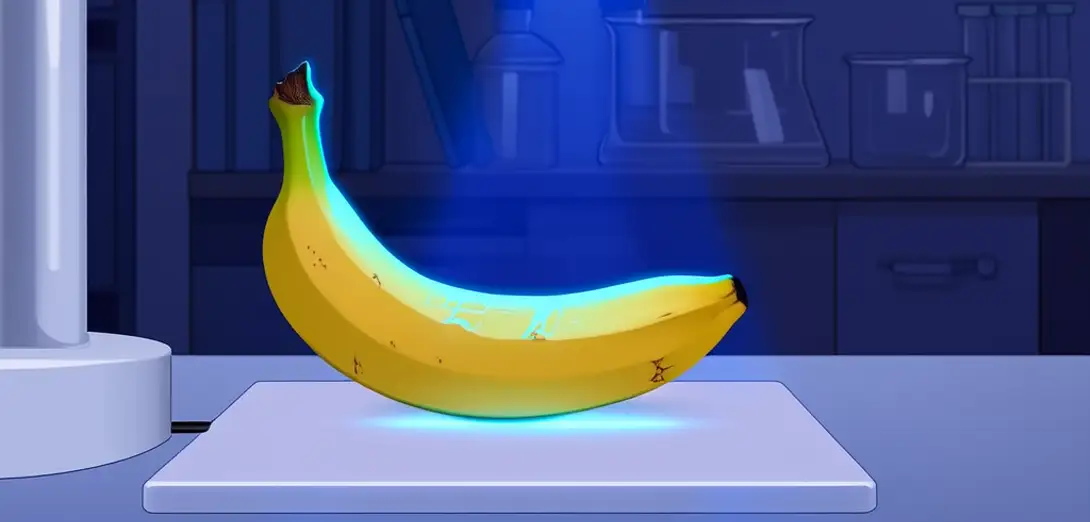
Why Do Bananas Glow Blue Under Ultraviolet Light?
香蕉在紫外灯下为什么会发蓝光?
-
Bananas emit faint blue fluorescence when exposed to UV light due to chlorophyll breakdown products.香蕉暴露在紫外线下会发出微弱的蓝光荧光,这是叶绿素分解产物所致。
-
As bananas ripen, chlorophyll degrades into fluorescent catabolites that absorb UV and re-emit blue light.随着香蕉成熟,叶绿素降解为具有荧光性的代谢物,吸收紫外线并重新释放蓝光。
-
These compounds accumulate in the peel’s cell walls and remain stable longer than the original pigment.这些化合物积聚在果皮细胞壁中,比原始色素更稳定、存留时间更长。
-
The bluer the glow, the more advanced the ripening stage—even before yellow color fully develops.蓝光越明显,成熟度越高——甚至在果皮完全变黄之前就已显现。
-
Other fruits like pears and apples show weaker versions, but banana fluorescence is unusually strong and consistent.其他水果如梨和苹果也有类似现象,但香蕉的荧光异常强烈且稳定。
-
Scientists use this property to monitor fruit quality non-invasively during transport and storage.科学家利用这一特性,在运输和储存过程中无损监测水果品质。
-
UV-induced fluorescence doesn’t harm the fruit or affect taste, nutrition, or safety.紫外线激发的荧光不会损害果实,也不影响其口感、营养或安全性。
-
It’s visible only under blacklight; normal sunlight contains too much competing visible light to see it.该荧光仅在黑光灯下可见;阳光中可见光过强,会掩盖这一现象。
-
This natural phenomenon inspired new biosensors that detect plant stress or disease early.这一自然现象启发了新型生物传感器的开发,可用于早期检测植物胁迫或病害。
-
Interestingly, some insects see UV light and may use banana fluorescence to locate ripe fruit.有趣的是,部分昆虫能感知紫外线,可能借此荧光定位成熟果实。