正在确认阅读权限…
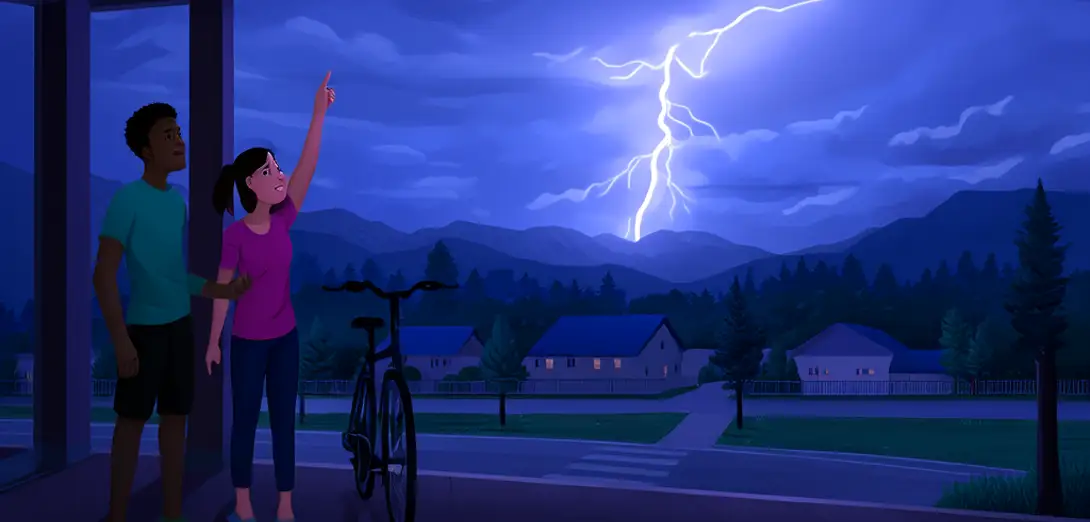
Why Do We Hear Thunder Several Seconds After Seeing Lightning?
为什么先看到闪电,几秒后才听到雷声?
-
Light travels nearly a million times faster than sound—about 300,000 km per second versus 343 m per second.光速约为每秒30万公里,比声速(约每秒343米)快近百万倍。
-
Because lightning and thunder happen simultaneously, the delay tells us how far away the storm is.由于闪电和雷声同时发生,二者之间的时间差可用来估算风暴距离。
-
Counting seconds between flash and bang and dividing by three gives distance in kilometers.用闪电与雷声之间的秒数除以3,即可得出距离(单位:公里)。
-
Sound bends and scatters as it passes through varying air temperatures and wind layers, causing rumbling.声音穿过温度不均的空气和风层时会发生弯曲和散射,从而形成隆隆声。
-
Nearby strikes produce sharp, loud cracks; distant ones sound like low, rolling booms.近距离雷击发出尖锐响亮的爆裂声;远处雷击则听起来像低沉滚动的轰鸣。
-
Temperature gradients in the atmosphere can refract sound waves, making thunder audible farther than expected.大气中的温度梯度会使声波发生折射,让雷声传播得比预期更远。
-
Mountains or buildings may echo thunder, stretching it out or creating multiple arrival points.山体或建筑物可能反射雷声,使其拉长或产生多个到达点。
-
Thunder cannot travel through vacuum—so no sound occurs on the Moon, even during lightning-like discharges.雷声无法在真空中传播——因此即使月球上有类似闪电的放电现象,也不会听到声音。
-
Meteorologists combine lightning maps with thunder timing to triangulate storm cell movement and intensity.气象学家结合闪电定位图与雷声到达时间,通过三角测量法确定雷暴单体的移动路径和强度。
-
Wearing headphones during storms won’t mute thunder—it’s the pressure wave itself vibrating your eardrums.雷暴期间戴耳机并不能隔绝雷声——因为它是压力波直接震动耳膜产生的。