正在确认阅读权限…
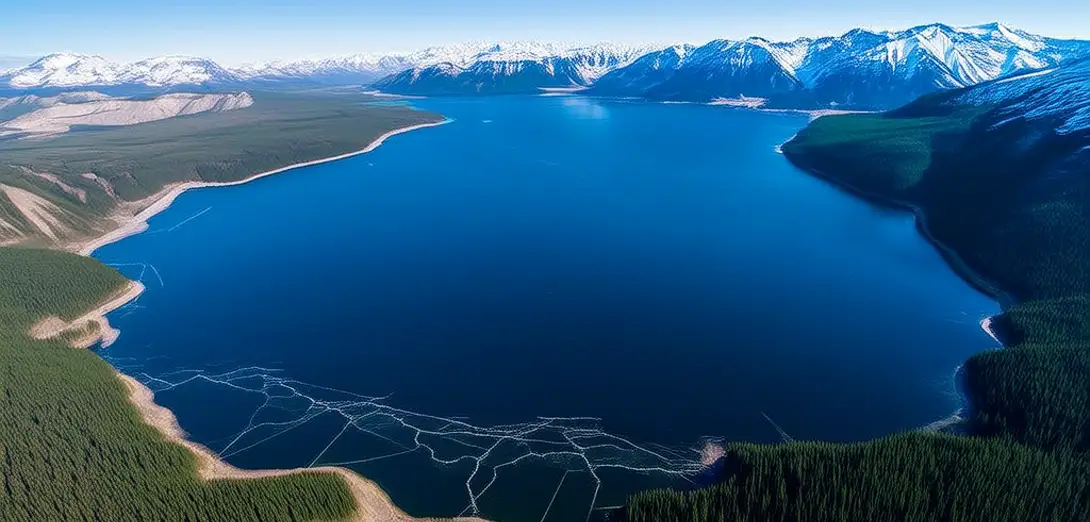
Lake Baikal: The World’s Deepest and Oldest Freshwater Rift Basin
贝加尔湖:世界最深最古老的淡水裂谷湖
-
Lake Baikal lies in a tectonic rift valley where the Eurasian Plate slowly pulls apart.贝加尔湖位于欧亚板块缓慢张裂的构造裂谷中。
-
At 1,642 meters deep, it holds 20% of Earth’s unfrozen freshwater and formed over 25 million years ago.湖深1642米,蕴藏地球20%的未冻结淡水,形成于2500多万年前。
-
Its isolation and stable cold climate allowed unique species like the Baikal seal to evolve nowhere else.其地理隔绝与常年寒冷稳定的气候,使贝加尔海豹等特有物种仅在此演化。
-
Underwater faults and hydrothermal vents sustain chemosynthetic communities far below sunlight zones.水下断层与热液喷口在无光带深处维系化能合成生物群落。
-
Sediment layers in its basin preserve continuous climate records spanning millions of years.湖盆沉积层保存了跨越数百万年的连续气候记录。
-
Waters remain exceptionally clear due to endemic crustaceans that filter algae year-round.特有甲壳类全年滤食藻类,使湖水异常清澈。
-
The Selenga River contributes half the inflow but also carries mining runoff threatening water quality.色楞格河贡献一半入水量,但也携带来自采矿业的径流,威胁水质。
-
Winter ice cover reaches one meter thick, yet cracks form predictable patterns revealing subsurface stress fields.冬季冰盖厚达一米,但冰面裂纹呈现可预测模式,揭示地下应力场。
-
Local communities rely on fisheries and eco-tourism, both constrained by strict UNESCO World Heritage protections.当地社区依赖渔业与生态旅游,二者均受联合国教科文组织世界遗产严格保护限制。
-
Climate warming accelerates ice melt, altering thermal stratification and disrupting endemic food webs.气候变暖加速冰层消融,改变水体热分层,扰乱特有食物网。