正在确认阅读权限…
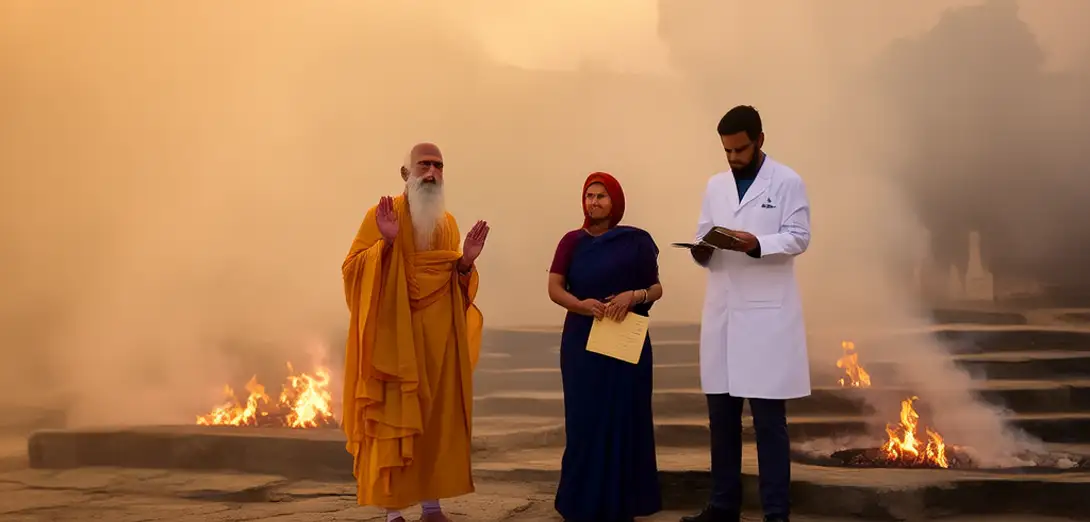
Ash Syntax: Cremation Ground Rituals as Lexical Infrastructure in Varanasi’s Ghats
灰烬语法:瓦拉纳西河坛火葬仪式作为语言基础设施
-
Varanasi’s Manikarnika Ghat does not host funerals—it hosts linguistic recalibrations where Sanskrit mantras, Hindi colloquialisms, and English medical certificates coexist in ritual adjacency.瓦拉纳西的曼尼卡尼卡码头不举行葬礼,而是进行语言重构:梵语祷文、印地语口语和英文死亡证明在仪式中毗邻共存。
-
The pyre’s ash is not waste but lexical residue: sifted, labeled, and archived in copper urns according to caste, cause of death, and astrological alignment.柴堆余烬并非废料,而是词汇残渣:按种姓、死因和星象排列,筛选、标注后存入铜 urn。
-
British census takers in 1881 attempted standardized death registers, but priests responded by embedding census categories into mantra cadence—turning bureaucracy into chant.1881 年英国人口普查员试图推行标准化死亡登记,祭司却将普查分类嵌入祷文节奏,把官僚程序化为吟诵。
-
Modern crematoriums now issue QR-coded ash urns, yet families still request handwritten labels in Devanagari script to preserve semantic weight.现代火葬场如今发放带二维码的骨灰 urn,但家属仍要求用天城文手写标签,以保留语义分量。
-
The rhythm of firewood stacking constitutes grammatical structure: three layers for unmarried persons, five for widows, seven for sannyasis—each a syntactic case marker.堆叠柴薪的节奏即语法结构:未婚者三层,寡妇五层,苦行僧七层——每层都是一个句法格标记。
-
Anthropologists note how ash dispersal into the Ganges follows verb valency rules: transitive verbs govern upstream release, intransitives downstream.人类学家指出,骨灰撒入恒河遵循动词配价规则:及物动词支配上游抛洒,不及物动词支配下游。
-
When climate change alters monsoon timing, priests adjust mantra tempo—not content—to maintain phonetic resonance with river flow velocity.当气候变化打乱雨季时间,祭司调整祷文节奏而非内容,以保持语音共振与河水流速同步。
-
This system treats mortality not as endpoint but as lexical transition: the deceased becomes a grammatical subject only after ash dissolves fully.该体系视死亡非终点,而是词汇转换:逝者须待骨灰完全溶解,方成为语法主语。
-
Legal disputes over ash rights hinge on whether a label was incised pre- or post-cremation—a distinction with evidentiary hierarchy in Hindu succession courts.骨灰归属权的法律纠纷,取决于标签刻写是在火化前还是后——这一区别在印度继承法庭具有证据效力层级。
-
Even forensic archaeologists acknowledge these urns as ‘semantic stratigraphy,’ where layer depth correlates with juridical weight, not chronological age.就连法医考古学家也承认这些 urn 是‘语义地层’:层深对应司法权重,而非年代先后。
-
The ghat’s stone steps themselves function as punctuation: commas between lives, periods between lineages, ellipses where names fade from collective memory.码头石阶本身即标点符号:逗号分隔人生,句号终结世系,省略号标记名字从集体记忆中淡出。
-
Here, language isn’t spoken—it’s burned, sifted, carried, and dissolved, making grammar inseparable from hydrology and thermodynamics.在此,语言并非被言说,而是被焚烧、筛选、携带与溶解,使语法与水文学、热力学不可分割。