正在确认阅读权限…
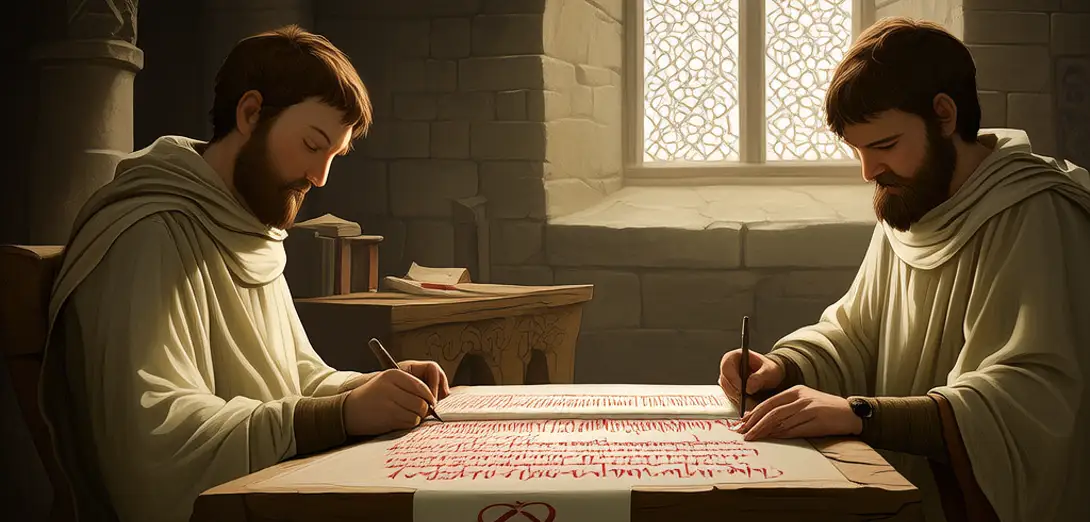
Scriptorium Syntax: Monastic Copying as Temporal Calibration in Ireland’s Glendalough Manuscripts
抄经室语法:爱尔兰格伦达洛手稿中的修道院抄写作为时间校准实践
-
At Glendalough, seventh-century scribes did not merely reproduce texts but recalibrated liturgical time through marginalia and seasonal rubrics.在格伦达洛,七世纪的抄写员不仅复制文本,更通过页边批注和季节性礼仪标记重新校准了礼拜时间。
-
Each vellum page encoded a dual chronology—one scriptural, one agrarian—binding divine order to local ecological rhythms.每张羊皮纸都编码了双重时间序列:一为圣经时间,一为农耕时间,将神圣秩序与当地生态节律紧密联结。
-
The spacing of psalms aligned with solstitial light patterns entering the scriptorium’s narrow apertures, making illumination part of textual authority.诗篇的排布与冬至、夏至时射入抄写室狭小窗隙的光线模式相契合,使光照本身成为文本权威的一部分。
-
Scribes inserted interlinear glosses in Old Irish not to translate Latin but to anchor theological concepts within native kinship metaphors.抄写员在拉丁文经文行间插入古爱尔兰语注释,并非为翻译,而是将神学概念锚定于本土亲缘隐喻之中。
-
This was not preservation but active temporal governance: rewriting eternity into vernacular seasonal cadence.这并非保存,而是一种主动的时间治理:将永恒重写为方言化的季节韵律。
-
Monastic calendars omitted Roman feast days where Gaelic land rites held juridical weight over ecclesiastical decree.修道院历法删去了罗马节日,因盖尔人的土地仪式在司法效力上凌驾于教会敕令之上。
-
The ink itself—iron gall mixed with bog oak tannin—functioned as a chemical archive of regional hydrology and soil chemistry.墨水本身——以铁胆汁混合泥炭橡树单宁制成——本身就是区域水文与土壤化学的化学档案。
-
Errors were rarely corrected; instead, they were annotated as 'temporal fissures' where divine time momentarily bent to human fatigue.抄写错误极少被抹去,反而被标注为‘时间裂隙’,即神圣时间因人类疲惫而短暂弯曲之处。
-
Glendalough’s scriptorium thus operated as a chronographic infrastructure, not a literary workshop.因此,格伦达洛抄写室实为一种计时基础设施,而非单纯的文学作坊。
-
Its legacy survives not in perfect copies but in layered corrections that map monastic labor across decades of climate shifts.其遗产不存于完美复本,而见于层层叠叠的修订痕迹,映射出数十年气候变迁中修士劳作的轨迹。
-
Modern digitization projects now treat these manuscripts not as static artifacts but as calibrated time-keeping devices.当代数字化项目如今不再将这些手稿视作静态文物,而视作经过校准的时间计量装置。
-
This reframes medieval copying not as passive transmission but as deliberate chrono-political engineering.这重新定义了中世纪抄写行为:它并非被动传承,而是刻意为之的时间政治工程。