正在确认阅读权限…
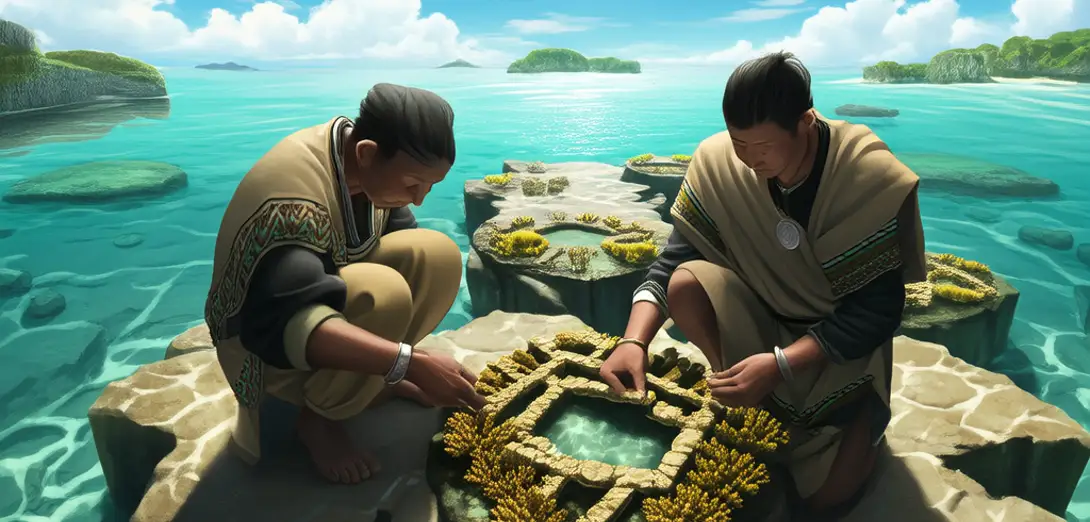
Coral Grammar: Reef-Weaving Rituals as Sovereign Epistemology in Palau’s Rock Islands
珊瑚语法:帕劳岩岛礁编织仪式作为主权认识论
-
Palauan elders do not ‘manage’ coral reefs but co-weave them through annual intertidal ceremonies that reconfigure marine boundaries via living lattice construction.帕劳长者并不‘管理’珊瑚礁,而是通过一年一度的潮间带仪式与之共同编织,以活体珊瑚格架重构海洋边界。
-
Each woven coral frame encloses a designated fishing zone whose access rights shift annually based on lineage-specific tidal memory rather than GPS coordinates.每个编织的珊瑚框架围出指定渔区,其准入权每年依各氏族特有的潮汐记忆而非GPS坐标轮换。
-
The ritual uses live staghorn coral fragments, whose growth rate becomes a biological clock measuring intergenerational stewardship commitments.仪式使用活体鹿角珊瑚碎片,其生长速率成为生物时钟,计量代际守护承诺。
-
Participants chant genealogical chants while placing fragments—not prayers, but phonetic anchors linking kinship lines to specific reef microhabitats.参与者放置珊瑚碎片时吟唱谱系歌谣——并非祈祷,而是以语音锚点将亲缘脉络系于特定珊瑚微生境。
-
Western marine biologists initially misread these structures as ‘nursery habitats’; they are in fact jurisdictional markers inscribed in calcified syntax.西方海洋生物学家最初误将其结构视为‘苗圃栖息地’;实则为以钙化语法铭刻的管辖标识。
-
Coral weaving follows strict grammatical rules: subject-verb-object order maps directly onto spatial hierarchy—clan leader, reef sector, harvest quota.珊瑚编织遵循严格语法规则:主谓宾顺序直接对应空间层级——氏族首领、礁区、捕捞配额。
-
When typhoons destroy sections, reconstruction must follow original grammatical sequence—deviation invalidates territorial claims.台风损毁部分结构后,重建必须沿袭原始语法序列——偏离即失效领土主张。
-
The U.S. Trust Territory once banned the practice as ‘superstitious obstruction’, failing to recognize it as maritime treaty-making in non-verbal form.美国托管地曾以‘迷信阻碍’为由禁止该实践,未能识其为非言语形式的海洋缔约行为。
-
Today, Palau’s constitution formally recognizes coral grammar as binding customary law alongside written statutes.如今帕劳宪法正式承认珊瑚语法为具约束力的习惯法,与成文法并列。
-
This epistemology treats sovereignty not as territorial possession but as metabolic reciprocity measured in coral polyp proliferation rates.这种认知体系将主权视作代谢互惠,以珊瑚虫增殖速率衡量,而非领土占有。
-
International conservation NGOs now train staff in reef-weaving protocols before drafting marine protected area plans.国际环保非政府组织现要求员工先掌握珊瑚编织规程,再拟定海洋保护区规划。
-
The coral lattice thus functions as both ecological scaffold and constitutional substrate—living law grown from sea and lineage.珊瑚格架 thus 兼具生态支架与宪制基质双重功能——由海洋与血脉生长而成的活法。