正在确认阅读权限…
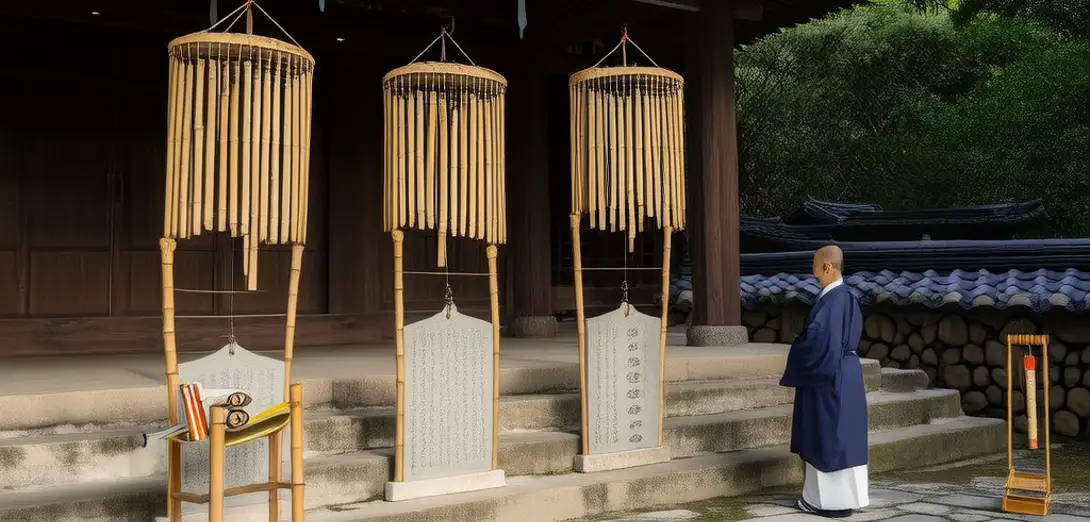
Bamboo Ledger: Wind-Chime Calibration as Fiscal Memory in Korea’s Jeju Island Ancestral Shrines
竹账簿:韩国济州岛祖先祠堂风铃校准作为财政记忆
-
On Jeju Island, ancestral shrines suspend bamboo wind-chimes not for ambiance but as calibrated fiscal instruments tracking grain tribute, tax arrears, and debt forgiveness cycles.在济州岛,祖先祠堂悬挂竹制风铃,并非为营造氛围,而是作为精密的财政工具,用以追踪谷物贡赋、税款拖欠及债务豁免周期。
-
Each chime’s pitch corresponds to a household’s three-generation tax record; harmonic dissonance signals unpaid levies older than thirty years.每只风铃的音高对应一户人家三代的纳税记录;不和谐音则提示存在逾三十年未缴税款。
-
Shrine keepers adjust node placement annually using lunar-solar alignment charts, transforming acoustics into auditable ledger entries.祠堂管理者每年依据阴阳历对照图调整竹节位置,将声学特征转化为可审计的账目条目。
-
The bamboo species used—Dendrocalamus latiflorus—is harvested only during monsoon’s third week, embedding hydrological data into each resonant tube.所用竹种——大叶牡竹——仅在雨季第三周采伐,使每根共鸣竹管天然嵌入水文数据。
-
Chimes are never replaced; instead, nodes are re-carved to reflect new debt settlements, creating stratified sonic palimpsests.风铃从不更换,仅通过重新刻削竹节来反映新达成的债务清偿,形成层层叠叠的声学重写本。
-
Colonial Japanese authorities confiscated chimes during land surveys, interpreting them as ‘primitive accounting’ rather than interscalar fiscal ontology.殖民时期的日本当局在土地调查中没收风铃,将其视为‘原始记账’,而非跨尺度的财政本体论实践。
-
Modern Jeju courts occasionally admit chime recordings as evidence in land restitution cases involving pre-1910 tributary obligations.如今济州法院偶尔采纳风铃录音作为证据,用于涉及1910年前贡赋义务的土地归还案件。
-
The sound decay profile—measured in decibel falloff over twelve hours—indexes generational continuity of obligation fulfillment.声音衰减曲线——即十二小时内分贝下降幅度——标示着代际间义务履行的延续性。
-
This auditory ledger resists digitization because its authority derives from collective listening, not individual verification.这种听觉账簿难以数字化,因其权威性源于集体聆听,而非个体验证。
-
Elders conduct quarterly ‘tuning councils’ where pitch discrepancies trigger oral audits of lineage financial conduct.长者每季度举行‘调音议事会’,音高偏差即触发对家族财务行为的口述审计。
-
Wind-chime calibration thus constitutes a sonic governance protocol—where breath, bamboo, and bureaucracy converge in measurable resonance.风铃校准因而构成一种声学治理规程——气息、竹材与官僚体系在此以可测量的共振交汇。
-
It reframes fiscal memory not as archival storage but as atmospheric negotiation between ancestors, land, and living taxpayers.它将财政记忆重新定义为一种大气层面的协商过程,介于祖先、土地与当代纳税人之间。