正在确认阅读权限…
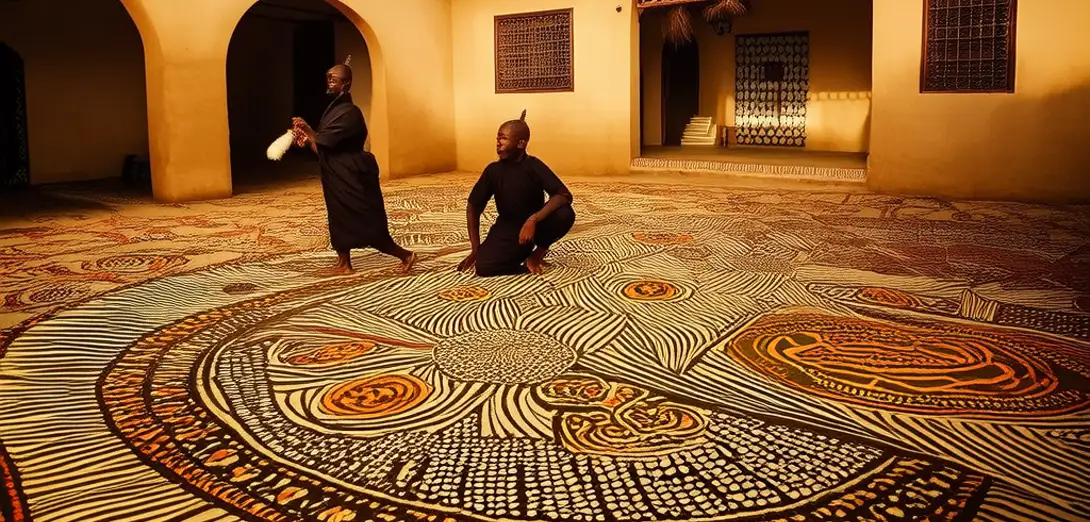
Mud-Print Protocol: Ceremonial Floor Markings as Juridical Cartography in Nigeria’s Yoruba Oyo Compound
泥印规程:尼日利亚约鲁巴奥约宅院仪式性地面标记作为司法制图学
-
In Oyo’s historic palace compounds, mud-floor markings are redrawn daily not for cleanliness but as dynamic jurisdictional maps defining ritual access, dispute arbitration zones, and lineage precedence gradients.在奥约的历史宫殿建筑群中,泥土地面的标记每日重绘,并非为清洁,而是作为动态司法地图,界定仪式准入权、纠纷仲裁区及世系优先级梯度。
-
Each geometric pattern—lozenge, spiral, concentric circle—corresponds to a specific judicial function governed by Ifá divination protocols rather than fixed statutes.每种几何图案——菱形、螺旋形、同心圆——均对应特定司法职能,由伊法占卜规程而非固定法典所规范。
-
The clay mixture includes ash from ancestral hearths and riverbank silt from seven tributaries, embedding hydrological and genealogical provenance into every imprint.黏土混合料包含祖先炉灶的灰烬及七条支流河岸的淤泥,将水文与谱系渊源嵌入每一处印记。
-
Markings shift position seasonally to reflect changing agricultural labor obligations and inheritance cycles tied to yam harvest calendars.标记随季节更移,以反映农耕劳力义务与薯蓣收获历法绑定的继承周期变化。
-
Foreign administrators in the 1920s dismissed these as ‘decorative floor art’, overlooking how spatial displacement of a single spiral triggered reallocation of palm-oil revenue shares.1920年代外国行政官将其斥为‘装饰性地面艺术’,却忽视单个螺旋位移即触发棕榈油收益份额重新分配的事实。
-
Contemporary Oyo courts still require litigants to stand upon designated mud glyphs during testimony—witness credibility is assessed partly by foot placement accuracy.当代奥约法庭仍要求诉讼人作证时立于指定泥制符标之上——证人可信度部分取决于足部落点是否精准。
-
The drying rate of the mud serves as an informal statute-of-limitations clock: cracks wider than a finger-width void certain claims.泥地干燥速率充当非正式时效钟:裂缝宽过一指者,相关主张即告失效。
-
When colonial courts imposed British common law, Yoruba elders responded by embedding English legal terms into mud glyph nomenclature—creating bilingual juridical palimpsests.殖民法院强推英国普通法时,约鲁巴长老将英语法律术语融入泥符命名体系,创制出双语司法重写本。
-
This protocol treats space not as neutral container but as contractual surface continually renegotiated through embodied inscription.此规程视空间非中性容器,而为契约性表面,藉身体铭刻持续再协商。
-
Archaeologists now analyze soil stratigraphy beneath palace floors to reconstruct pre-colonial legal timelines more reliably than colonial court records.考古学家现通过分析宫殿地板下土壤层序,比殖民法庭档案更可靠地复原前殖民时期法律时间线。
-
Mud-print protocol thus operates as performative cartography—where law is not written but walked, erased, and rewritten in earthen medium.泥印规程因而成为展演式制图术——法律非书写而成,而是以泥土为媒,经行走、抹除与重写而生成。
-
Its resilience lies in refusal to separate justice from materiality, memory from moisture, authority from adhesion.其韧性在于拒绝将正义与物质性、记忆与湿度、权威与黏附性相割裂。