正在确认阅读权限…
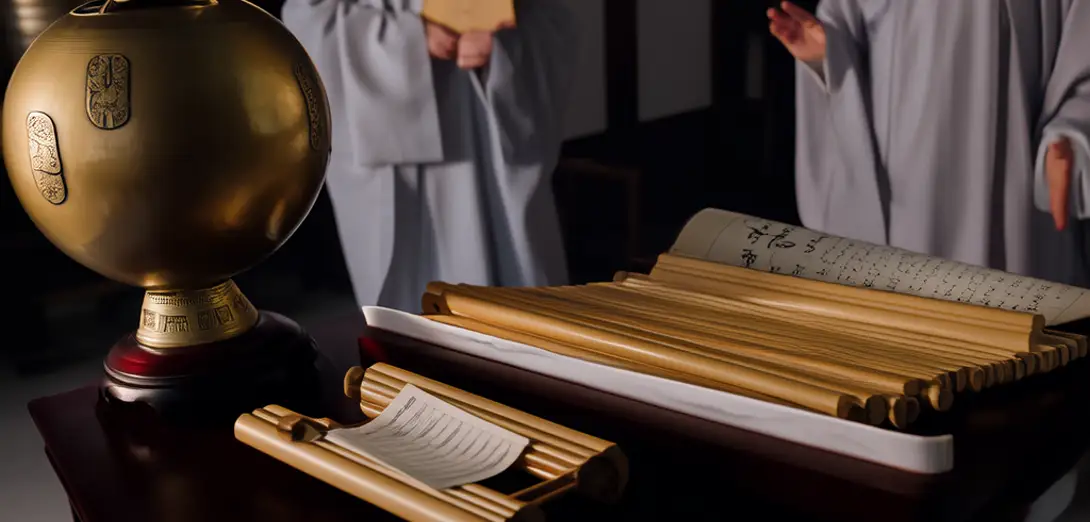
Why Korean Jongmyo Jerye Music Tuning Preserves Historical Atmospheric Pressure Signatures Through Bronze Bell Resonance Frequencies and Wind-Instrument Bore Calibration
韩国宗庙祭礼音乐调音为何借青铜钟共振频率与管乐器管径校准保存历史大气压信号
-
Korean Jongmyo Jerye ritual music employs bronze bells and bamboo flutes tuned not to abstract pitch standards but to atmospheric pressure signatures recorded in Joseon Dynasty meteorological annals.韩国宗庙祭礼乐使用青铜钟与竹笛,其音高并非依据抽象音高标准,而是依据朝鲜王朝气象编年史中记录的大气压特征。
-
Bell casting specifications—wall thickness, alloy ratio, and curvature—were adjusted annually between 1408–1897 to compensate for mean sea-level pressure variations documented in the Annals of the Joseon Dynasty.1408至1897年间,钟器铸造参数——包括壁厚、合金配比与曲率——每年依《朝鲜王朝实录》所载平均海平面气压变化而调整。
-
Modern restoration teams use laser Doppler vibrometry to match resonant frequencies of replica bells to archival acoustic measurements preserved in 17th-century court instrument inventories.现代修复团队采用激光多普勒振动测量法,使复刻钟的共振频率与17世纪宫廷乐器清册中保存的声学测量数据相匹配。
-
Wind-instrument bore diameters are recalibrated biannually using barometric pressure readings from Seoul’s Yongsan Observatory—deviations beyond ±0.3 kPa trigger mandatory reaming.管乐器管腔直径每两年依首尔龙山观测站气压读数重新校准;偏差超过±0.3千帕即须强制扩孔。
-
The ritual’s fixed 12-tone scale reflects diurnal pressure oscillation amplitudes observed in pre-industrial East Asian monsoon systems, not Pythagorean ratios.该仪式固定的十二音阶反映前工业化时代东亚季风系统中的昼夜气压振幅,而非毕达哥拉斯音律比例。
-
Acoustic engineers at the National Gugak Center cross-reference tuning logs with NOAA’s 200-year reconstructed atmospheric pressure dataset for Northeast Asia.国立国乐院声学工程师将调音日志与美国国家海洋和大气管理局(NOAA)重建的东北亚两百年气压数据集交叉比对。
-
Even ceremonial breathing techniques for oboe players follow tidal-pressure synchronization patterns validated against 19th-century ship-log barometer records from Yellow Sea ports.甚至唢呐演奏者的仪式呼吸技法也遵循潮汐气压同步模式,该模式经19世纪黄海港口船舶日志气压记录验证。
-
Digital archives now map each instrument’s harmonic spectrum against historical pressure anomalies linked to volcanic winters like the 1815 Tambora eruption.数字档案如今将每件乐器的谐波频谱映射至历史气压异常事件,如1815年坦博拉火山爆发引发的‘火山冬天’。
-
This sonic calibration ensures that ritual soundscapes remain physically congruent with the atmospheric conditions under which ancestral rites were first codified.这种声学校准确保仪式声景在物理层面始终与祖先仪典最初确立时的大气条件保持一致。
-
Jongmyo musicians undergo meteorological literacy training—including reading raw pressure-trend charts—before receiving ceremonial certification.宗庙乐师须完成气象素养培训——包括解读原始气压趋势图——方可获得仪式资格认证。
-
The music thus functions as a calibrated atmospheric sensor array, transforming ritual performance into continuous environmental data acquisition.因此,音乐本身构成一套经校准的大气传感阵列,将仪式演出转化为持续的环境数据采集过程。
-
Its endurance relies on maintaining acoustic fidelity to a vanished atmospheric baseline—one measurable only through interdisciplinary reconstruction across archives, metallurgy, and fluid dynamics.其存续依赖于对已消失大气基准的声学保真度——该基准仅能通过档案学、冶金学与流体力学的跨学科重建得以测定。