正在确认阅读权限…
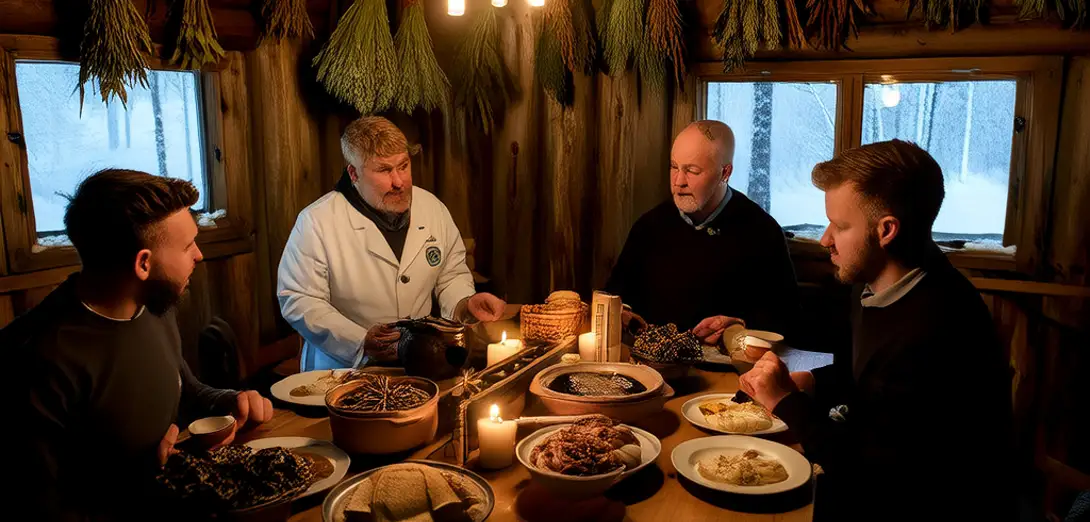
How Icelandic Þorrablót Feasting Protocols Calibrate Microbial Fermentation Kinetics Through Temperature-Modulated Serving Intervals and Lactic Acid Titration Thresholds
冰岛索拉布洛特宴饮仪式如何通过温度调控的上菜间隔与乳酸滴定阈值校准微生物发酵动力学
-
Icelandic Þorrablót, a midwinter festival rooted in pre-Christian seasonal reckoning, embeds precise fermentation science within its culinary protocols.冰岛索拉布洛特节(Þorrablót)是根植于基督教前季节历法的仲冬庆典,其饮食规范中蕴含着精确的发酵科学。
-
Traditional hákarl and súrmatur undergo extended lactic acid fermentation under controlled subzero ambient conditions for months before consumption.传统鲨鱼干(hákarl)和酸味食品(súrmatur)需在受控的零下环境中进行长达数月的乳酸发酵后方可食用。
-
Serving intervals are timed to coincide with peak volatile amine concentrations, ensuring optimal sensory impact without microbial overgrowth.上菜时间严格对应挥发性胺类浓度峰值,以确保最佳感官体验,同时避免微生物过度繁殖。
-
Hosts monitor surface pH gradients across fermented shark cuts using calibrated litmus strips embedded in birch-bark serving trays.主人使用嵌入桦树皮餐盘的校准石蕊试纸,监测发酵鲨鱼切片表面的pH梯度。
-
Guests consume morsels only after confirming visual effervescence on the rind—a proxy for CO₂ release signaling metabolic plateau.宾客仅在确认表皮出现可见气泡——即二氧化碳释放、标志代谢达平台期的信号——后才取食。
-
This ritualized timing reflects empirical understanding of Clostridium and Lactobacillus co-dynamics long before modern food microbiology emerged.这一仪式化的时间把控,体现了对梭菌属与乳酸杆菌共存动态的经验性认知,远早于现代食品微生物学诞生。
-
The festival’s strict prohibition against refrigerated storage post-fermentation preserves native psychrotrophic consortia essential for flavor stability.节庆严禁发酵完成后冷藏储存,以维系赋予风味稳定性的本土嗜冷微生物群落。
-
Even seating arrangements follow thermal zoning: elders occupy positions nearest stone hearths to maintain core temperature during prolonged tasting sequences.连座次安排也遵循热区划分:长者坐于离石砌炉灶最近处,以便在长时间品鉴过程中维持核心体温。
-
Contemporary food scientists now use Þorrablót’s empirically derived thresholds to refine shelf-life models for Arctic-sourced fermented proteins.当代食品科学家正利用索拉布洛特节经验确立的阈值,优化源自北极地区的发酵蛋白保质期模型。
-
Such practices exemplify how cultural chronometry can encode robust biophysical constraints without formal instrumentation.此类实践彰显了文化时间计量如何在无正式仪器条件下,精准编码坚实的生物物理约束。
-
Modern preservation labs in Reykjavík cross-reference historical Þorrablót logs with metagenomic sequencing of legacy batches.雷克雅未克的现代保鲜实验室,将历史索拉布洛特节记录与遗留批次的宏基因组测序数据交叉比对。
-
This continuity transforms a winter celebration into a living archive of cold-climate microbial ecology.这种延续性使一场冬日庆典升华为一份活态的寒带微生物生态档案。