正在确认阅读权限…
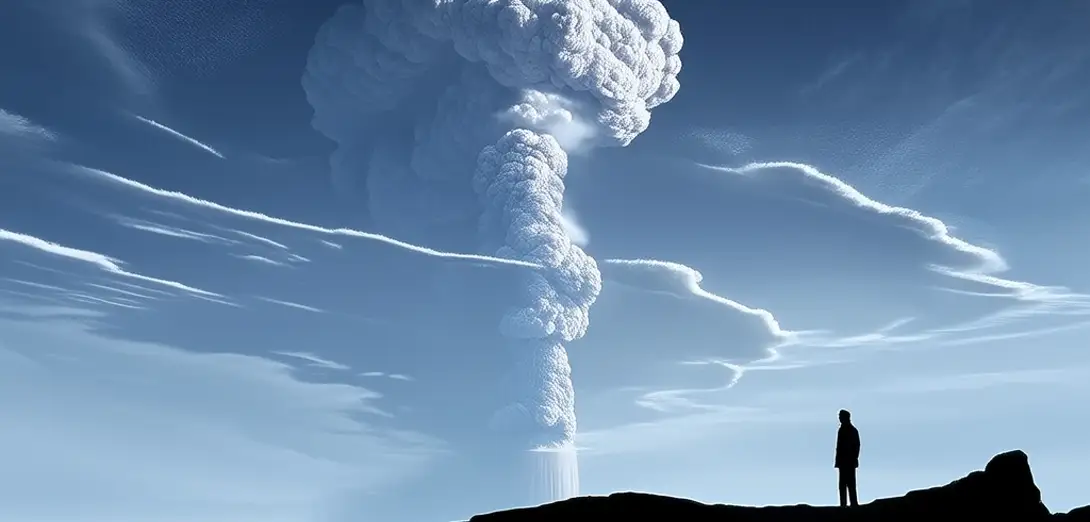
Why Certain Volcanic Eruptions Trigger Global Cooling Rather Than Warming
为何某些火山喷发导致全球降温而非升温?
-
Explosive eruptions injecting sulfur dioxide above the tropopause produce sulfate aerosols that persist for 1–3 years in the stratosphere.剧烈喷发将二氧化硫注入对流层顶以上,形成在平流层中存留1–3年的硫酸盐气溶胶。
-
These submicron particles scatter incoming solar radiation efficiently while absorbing minimal longwave infrared—creating a net radiative cooling effect.这些亚微米颗粒高效散射入射太阳辐射,却几乎不吸收长波红外线,从而产生净辐射冷却效应。
-
The 1991 Pinatubo eruption lowered global mean surface temperature by ~0.5°C for two years, despite releasing negligible CO₂.1991年皮纳图博火山喷发使全球地表平均温度在两年内下降约0.5°C,尽管其释放的二氧化碳可忽略不计。
-
Aerosol optical depth measurements from CALIPSO and OMPS satellites now quantify injection height and dispersion in near real time.CALIPSO和OMPS卫星的气溶胶光学厚度观测现已能近实时量化喷发物注入高度与扩散范围。
-
Volcanic forcing interacts nonlinearly with climate modes: El Niño events often follow major eruptions due to altered tropical Pacific heat budgets.火山强迫与气候模态呈非线性相互作用:重大喷发后常出现厄尔尼诺事件,源于热带太平洋热量收支变化。
-
Aviation industry protocols mandate rerouting flights around volcanic ash clouds—not only for engine safety but to avoid aerosol sampling contamination.航空业规程强制要求绕飞火山灰云——不仅为保障发动机安全,也避免气溶胶采样污染。
-
Paleoclimate reconstructions use sulfate layers in ice cores to correlate historical eruptions with societal disruptions like crop failures.古气候重建利用冰芯中的硫酸盐层,将历史火山喷发与农作物歉收等社会扰动事件关联起来。
-
Geoengineering proposals mimicking this effect remain ethically contested, given uneven regional impacts and termination risks.模仿该效应的地球工程方案因区域影响不均及突然终止风险,在伦理上仍存争议。
-
Model intercomparisons show aerosol microphysical properties—size distribution, composition, and hydration state—dominate uncertainty in cooling estimates.模式比对表明,气溶胶微观物理特性——粒径分布、成分与水合状态——是冷却量估算不确定性的主因。
-
Unlike anthropogenic greenhouse gases, volcanic aerosols lack chemical persistence; their decay follows first-order photolytic kinetics.与人为温室气体不同,火山气溶胶无化学持久性,其衰减遵循一级光解动力学。
-
Regulatory bodies now require volcanic hazard assessments in renewable energy project financing, particularly for concentrated solar power installations.监管机构现要求在可再生能源项目融资中纳入火山灾害评估,尤其针对聚光太阳能发电设施。
-
This natural experiment underscores how planetary climate responds to rapid perturbations—and why emission timelines matter more than cumulative totals alone.这一自然实验凸显了地球气候对快速扰动的响应机制——也说明排放时间进程比累积总量本身更为关键。