正在确认阅读权限…
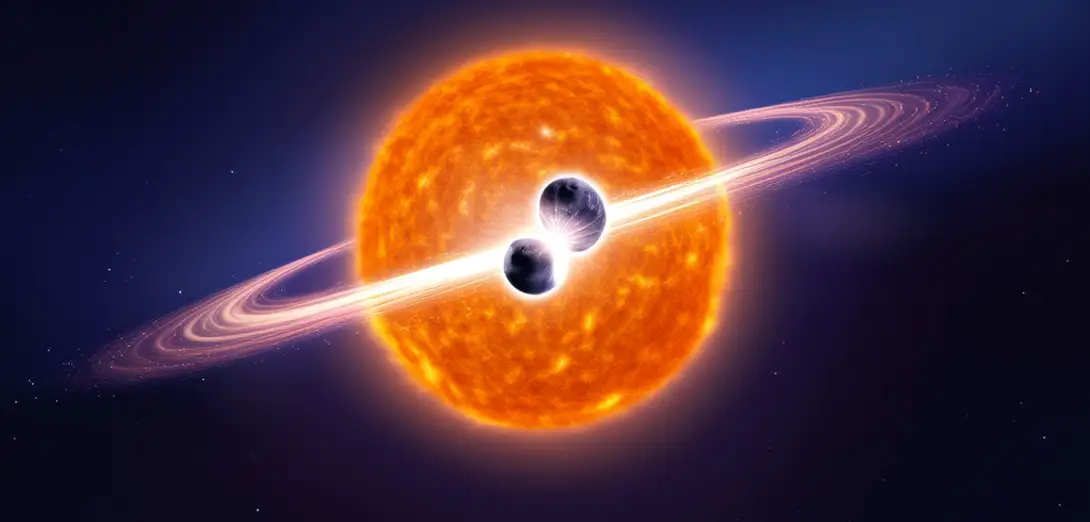
How Quantum Tunneling Enables Nuclear Fusion in Stellar Cores
量子隧穿如何实现恒星核心内的核聚变?
-
Classical physics predicts proton-proton fusion impossible in stars like the Sun due to Coulomb repulsion barriers exceeding available thermal energy.经典物理学认为,太阳这类恒星中质子-质子聚变不可能发生,因为库仑斥力势垒远超可用热能。
-
Quantum tunneling allows protons to penetrate this barrier with finite probability, governed by wavefunction exponential decay across forbidden regions.量子隧穿效应使质子以有限概率穿透该势垒,其行为由波函数在禁戒区的指数衰减所支配。
-
Fusion reaction rates depend exponentially on both temperature and the Gamow peak—the narrow energy window where tunneling probability and Maxwell-Boltzmann distribution overlap maximally.聚变反应速率对温度和伽莫夫峰——即隧穿概率与麦克斯韦-玻尔兹曼分布重叠最强的窄能量窗口——呈指数依赖。
-
Solar core conditions (15 million K, 150 g/cm³) yield only ~10⁻²⁸ m³/s reaction volume rate—yet the Sun’s mass ensures sufficient collisions per second.太阳核心条件(1500万开尔文,150克/立方厘米)下,体积反应速率仅约10⁻²⁸ 立方米/秒;但太阳巨大质量确保了每秒足够多的碰撞次数。
-
Neutrino detection from Borexino and Super-Kamiokande confirms predicted pp-chain fluxes within 1% uncertainty, validating quantum astrophysical models.Borexino与超级神冈探测器的中微子观测结果,在1%不确定度内证实了理论预测的pp链通量,验证了量子天体物理模型。
-
Helium-3 accumulation alters reaction branching ratios, making neutrino spectroscopy a probe of stellar evolution timescales.氦-3积累改变反应分支比,使中微子谱学成为探测恒星演化时间尺度的有效手段。
-
Fusion cross-section measurements at underground labs like LUNA eliminate cosmic-ray background, refining nuclear astrophysics inputs.LUNA等地下实验室的聚变截面测量消除了宇宙射线本底,提升了核天体物理输入参数的精度。
-
Stellar structure simulations now couple hydrostatic equilibrium with quantum-mechanical reaction networks using adaptive mesh refinement.恒星结构模拟现已将流体静力学平衡与基于自适应网格加密的量子力学反应网络耦合起来。
-
Technological fusion attempts replicate stellar conditions imperfectly—magnetic confinement requires 10× higher temperatures to compensate for lower density.人工受控聚变尝试未能完美复现恒星条件:磁约束需达10倍更高温度以补偿密度不足。
-
This quantum phenomenon underpins elemental synthesis: without tunneling, no carbon, oxygen, or life would exist beyond hydrogen and helium.这一量子现象支撑着元素合成:若无隧穿效应,除氢、氦外,碳、氧乃至生命均无法存在。
-
Philosophically, it illustrates how macroscopic phenomena emerge from probabilistic microscopic rules—challenging deterministic intuitions.哲学上,它揭示了宏观现象如何从微观概率性规律中涌现,挑战了决定论直觉。
-
Recognizing this bridges abstract quantum theory with tangible cosmic history—making cosmology empirically accessible through terrestrial measurement.认识这一点,架起了抽象量子理论与可观测宇宙历史之间的桥梁——使宇宙学得以通过地面实验实证检验。