正在确认阅读权限…
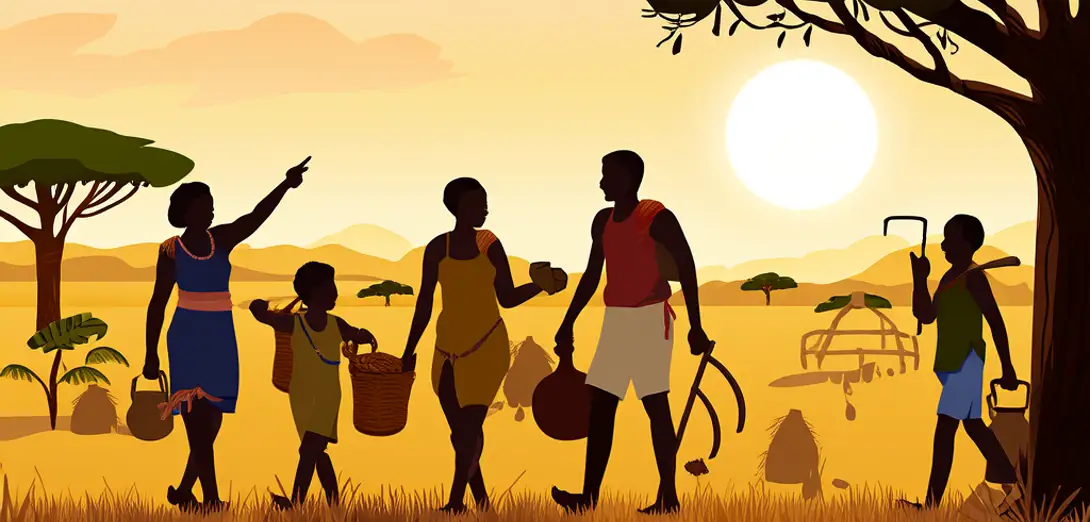
Batch 0020-007: The Bantu Migrations and the Spread of Language, Iron, and Agriculture Across Africa
批次0020-007:班图人迁徙与语言、冶铁及农业在非洲的传播
-
Beginning around 1500 BCE, Bantu-speaking peoples gradually migrated from West-Central Africa southward and eastward.约公元前1500年起,讲班图语的族群逐渐从西中非向南、向东迁徙。
-
They carried ironworking knowledge that transformed local economies and military capabilities across sub-Saharan regions.他们带来了冶铁技术,深刻改变了撒哈拉以南各地的经济与军事能力。
-
Their agricultural practices, especially yam and banana cultivation, supported larger, more stable communities.其农业实践——尤其是薯蓣和香蕉种植——支撑起规模更大、更稳定的社群。
-
Bantu languages diversified over centuries but retained shared grammatical structures and vocabulary roots.班图诸语言历经数世纪分化,但仍保留共通的语法结构与词根。
-
This movement reshaped ethnic landscapes, displaced some indigenous forager societies, and enabled new political formations.此次迁徙重塑了族群格局,取代部分原住采集社会,并催生新的政治形态。
-
Trade networks expanded as Bantu villages exchanged goods like salt, pottery, and iron tools.随着班图村落间盐、陶器与铁制工具等商品交换增多,贸易网络不断扩展。
-
Oral traditions preserved migration stories, genealogies, and ecological knowledge across generations.口述传统代代相传,保存了迁徙故事、谱系及生态知识。
-
By 1000 CE, Bantu languages covered most of southern and eastern Africa.至公元1000年,班图语已覆盖非洲南部与东部大部分地区。
-
The migrations illustrate how technology, ecology, and language interacted to reshape a continent.这场迁徙展现了技术、生态与语言如何相互作用,重塑整片大陆。
-
No single empire emerged, yet cultural continuity unified vast, diverse territories.虽未形成统一帝国,但文化延续性却将广袤而多元的地域联为一体。