正在确认阅读权限…
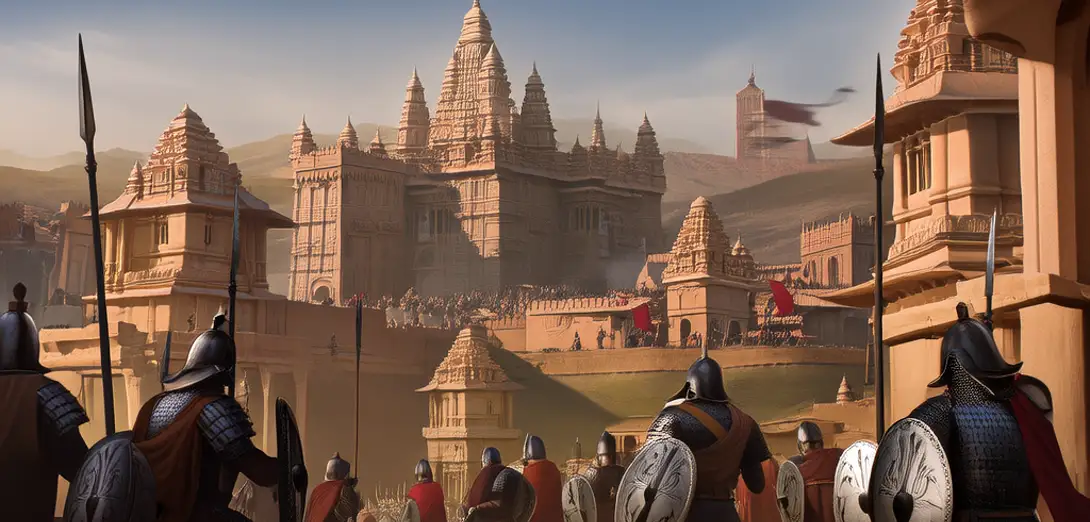
Batch 0020-029: The Vijayanagara Empire and South Indian Resistance to Delhi Sultanate Expansion
批次0020-029:维贾亚纳加尔帝国与南印度对德里苏丹国扩张的抵抗
-
Founded in 1336, Vijayanagara arose in response to repeated invasions by the Delhi Sultanate into southern India.维贾亚纳加尔帝国成立于1336年,旨在应对德里苏丹国对南印度的屡次入侵。
-
Its rulers promoted Hindu temple construction, Sanskrit scholarship, and agrarian irrigation to reinforce cultural sovereignty.其统治者大力推动印度教寺庙建设、梵语学术研究和农业灌溉,以巩固文化主权。
-
The empire controlled fertile river valleys and key ports, enabling wealth from pepper, cotton, and horse imports.帝国控制肥沃河谷与重要港口,借胡椒、棉花及马匹进口积累财富。
-
Military innovation included elite cavalry units and fortified hilltop capitals designed to deter northern siege tactics.军事创新包括精锐骑兵部队,以及为抵御北方围攻战术而建的山巅设防都城。
-
Artistic patronage fused Dravidian temple architecture with Indo-Islamic decorative elements during peaceful exchanges.和平交流期间,艺术赞助促成达罗毗荼寺庙建筑与印度—伊斯兰装饰元素的融合。
-
Despite religious rhetoric, Vijayanagara employed Muslim artillery experts and taxed all faiths equally for state revenue.尽管宣扬宗教话语,维贾亚纳加尔仍任用穆斯林火炮专家,并对各宗教平等征税以充国库。
-
Its 1565 defeat at Talikota fragmented successor states but preserved regional administrative traditions.1565年塔利科塔战败致帝国解体,分裂为若干继承政权,但区域行政传统得以延续。
-
Local chieftains continued temple-centered governance long after imperial collapse.帝国崩溃后,地方酋长长期维持以寺庙为中心的治理模式。
-
The empire demonstrated how cultural revival could serve both ideological resistance and pragmatic state-building.该帝国表明,文化复兴既能服务于意识形态抵抗,亦可支撑务实的国家建构。
-
Historians now view it less as a ‘Hindu bulwark’ and more as a complex, adaptive polity.史学家如今更将其视为一个复杂而富有适应力的政治实体,而非单纯的‘印度教堡垒’。