正在确认阅读权限…
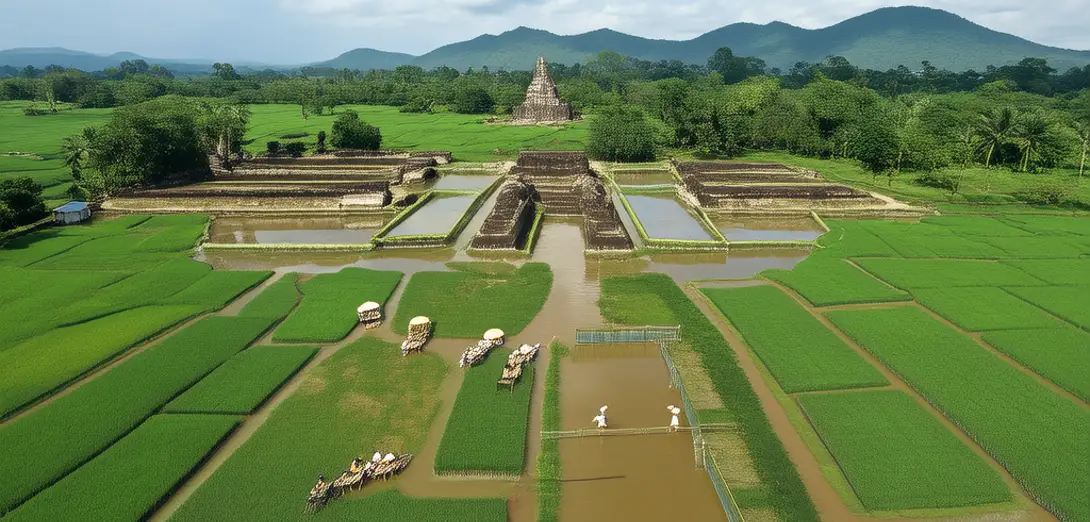
Batch 0012-043: The Khmer Empire and Hydraulic Statecraft in the Angkor Region
批次0012-043:高棉帝国与吴哥地区的水利国家治理
-
Between the 9th and 15th centuries, the Khmer Empire constructed vast reservoirs, canals, and barays to manage monsoon flooding.9至15世纪,高棉帝国修建了庞大的水库、运河和蓄水池,以调控季风洪水。
-
This hydraulic infrastructure supported rice surpluses that fed Angkor’s population of nearly one million people.这套水利设施支撑起稻米盈余,养活了吴哥近百万人口。
-
Temple-mountains like Angkor Wat symbolized cosmic order while also functioning as water-regulation centers.吴哥窟等庙山既象征宇宙秩序,也承担着水资源调控功能。
-
Priestly elites coordinated labor mobilization and maintained records linking rainfall, storage levels, and ritual calendars.祭司精英统筹劳力调配,并记录降雨量、蓄水水位与宗教历法的关联。
-
Gradual deforestation and siltation undermined the system’s resilience during prolonged droughts in the 14th century.14世纪长期干旱期间,渐进式毁林与泥沙淤积削弱了系统的抗灾能力。
-
Political decentralization followed agricultural decline, as provincial governors asserted autonomy amid resource scarcity.农业衰退引发政治分权,地方总督在资源匮乏中纷纷谋求自治。
-
The empire never collapsed suddenly but experienced layered retreats from central authority to localized power.帝国并未骤然崩溃,而是经历从中央权威向地方权力的层层退缩。
-
Its engineering legacy influenced later Southeast Asian kingdoms’ approaches to land and water governance.其工程遗产影响了后世东南亚诸国对土地与水资源的治理方式。
-
Angkor’s ruins reveal how environmental adaptation shaped both spiritual symbolism and administrative capacity.吴哥遗址揭示出环境适应如何同时塑造精神象征与行政能力。
-
State power here rested not on conquest alone but on sustained ecological management.此处的国家权力不仅源于征服,更建立在持续的生态管理之上。