正在确认阅读权限…
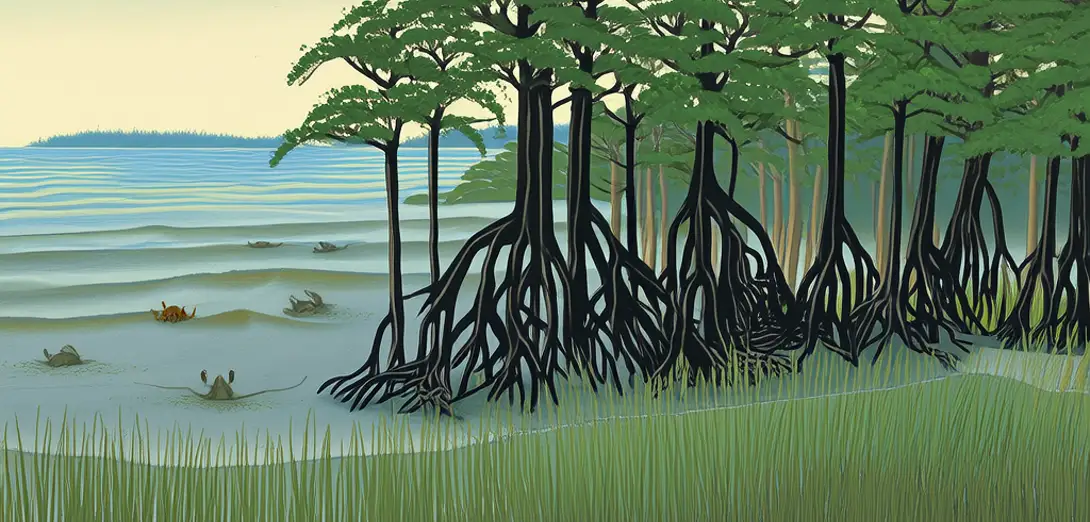
Batch-0022-042: Mangrove–Saltmarsh Ecotone Migration Rates Under Sea-Level Rise
海平面上升背景下红树林–盐沼生态交错带的迁移速率
-
Where mangroves meet salt marshes along temperate coasts, sea-level rise forces landward migration at variable speeds.在温带海岸红树林与盐沼交界处,海平面上升迫使两者向陆地方向迁移,但速度各异。
-
Mangrove seedlings establish fastest where tidal creeks provide sediment delivery and salinity buffering.红树林幼苗在潮汐溪流输送沉积物并缓冲盐度的区域生长最快。
-
Salt marshes retreat slower because their rhizomes stabilize soil better than pneumatophores in low-energy bays.盐沼退缩较慢,因其根茎比低能海湾中红树林的呼吸根更能稳固土壤。
-
Lidar elevation models show marsh platforms gain elevation at 2.1 mm/yr, mangroves at 4.7 mm/yr—both below current SLR rates.激光雷达高程模型显示,盐沼平台年均抬升2.1毫米,红树林为4.7毫米——均低于当前海平面上升速率。
-
Inlets with strong tidal exchange accelerate mangrove expansion by flushing sulfide toxins from marsh soils.强潮汐交换的入海口通过冲刷盐沼土壤中的硫化物毒素,加速红树林扩张。
-
However, seawalls block migration entirely, converting ecotones into abrupt, lifeless boundaries.然而,海堤完全阻断迁移,将生态过渡带变为突兀、无生命的边界。
-
Soil carbon inventories differ sharply: mangrove peat stores twice the carbon per hectare as marsh sod.土壤碳储量差异显著:每公顷红树林泥炭固碳量是盐沼草皮的两倍。
-
Monitoring transects reveal ecotone width narrows by 8 meters annually where hard infrastructure limits space.监测样带显示,在硬质基础设施限制空间的区域,生态过渡带宽度每年缩减8米。
-
Migration success depends less on species traits than on sediment supply and coastal geomorphic openness.迁移成败更多取决于沉积物供给与海岸地貌开放程度,而非物种特性。
-
These zones are not static borders but dynamic frontiers reshaped by hydrodynamics and human barriers.这些区域并非静态边界,而是由水动力过程与人为障碍共同塑造的动态前沿。