正在确认阅读权限…
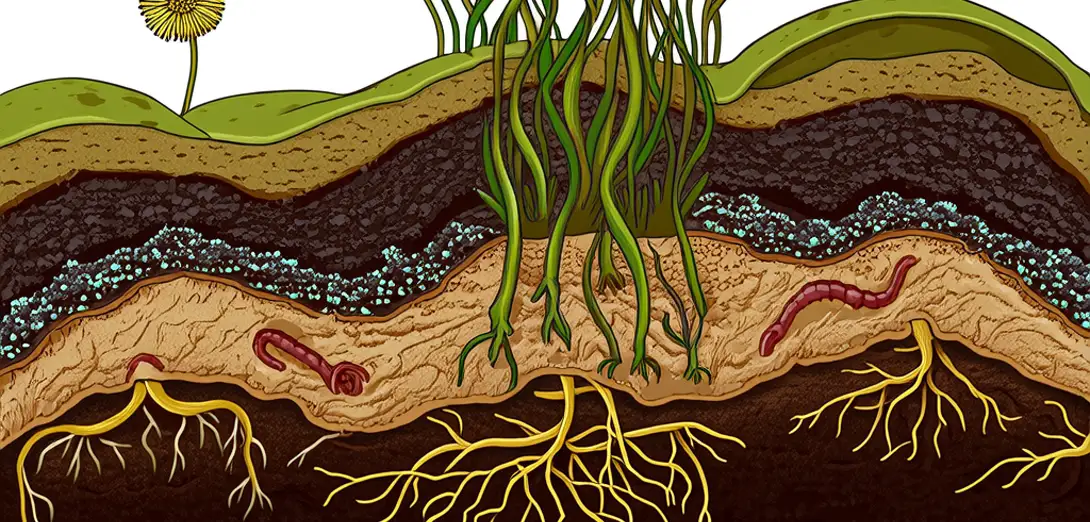
Soil Is Alive: How Microbes, Roots, and Rain Build Fertile Ground
土壤是有生命的:微生物、根系与雨水如何构建沃土
-
Healthy soil contains billions of bacteria, fungi, and earthworms working silently beneath our feet.健康土壤中蕴含数十亿细菌、真菌和蚯蚓,在我们脚下默默工作。
-
Plant roots release sugars that feed microbes, which in turn break down organic matter into nutrients.植物根系释放糖分滋养微生物,后者再将有机质分解为养分。
-
Rainfall leaches minerals downward, but tree roots and mycorrhizal networks pull them back up to the surface.降雨将矿物质淋溶至深层,但树木根系与菌根网络又将其重新吸收回地表。
-
Volcanic soils like those in Hawaii and Indonesia are exceptionally fertile due to recent mineral-rich ash deposits.夏威夷和印尼等地的火山土壤因近期富含矿物质的火山灰沉积而格外肥沃。
-
Desert soils lack organic matter and structure, making them prone to erosion once disturbed by wind or vehicles.沙漠土壤缺乏有机质和结构,一旦受风力或车辆扰动便极易侵蚀。
-
Industrial agriculture often depletes soil through monocropping, synthetic fertilizers, and heavy tillage.工业化农业常通过单一种植、化肥施用和深度耕作耗竭土壤。
-
No-till farming and cover cropping rebuild soil carbon, water retention, and biodiversity over time.免耕种植与覆盖作物能逐步重建土壤碳储量、保水能力及生物多样性。
-
Indigenous land practices—such as terracing in the Andes or rice-fish farming in Vietnam—enhance soil health sustainably.安第斯山脉的梯田耕作、越南的稻鱼共生等原住民土地管理方式,可持续提升土壤健康。
-
Satellite sensors now monitor soil moisture and organic content globally, aiding precision land management.卫星传感器如今可在全球范围内监测土壤湿度与有机质含量,助力精准土地管理。
-
Protecting soil isn’t just about food—it’s about climate stability, clean water, and long-term human survival.保护土壤不仅关乎粮食安全,更关乎气候稳定、水源清洁与人类长远生存。