正在确认阅读权限…
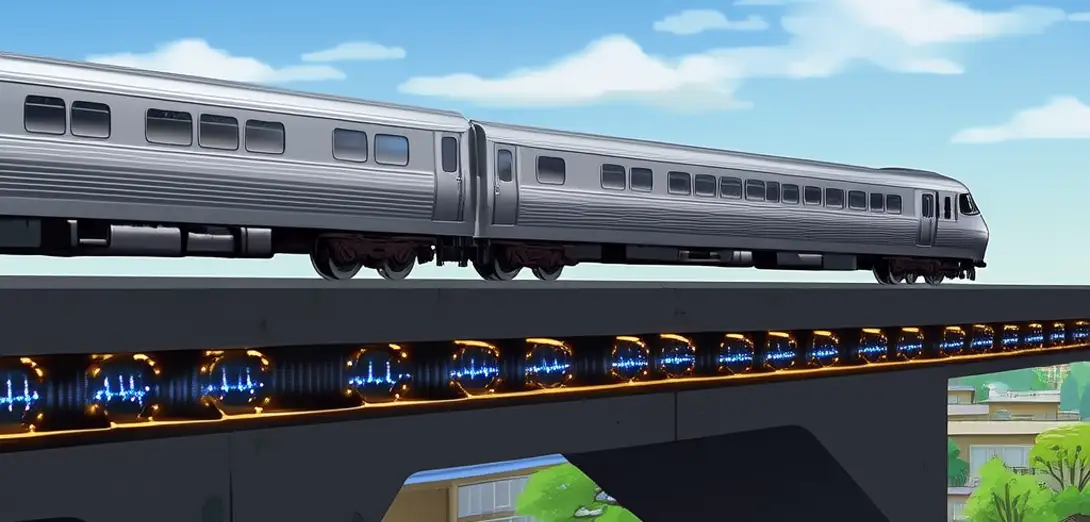
How Magnetic Levitation Trains Float—and Why They Don’t Need Wheels or Rails
磁悬浮列车如何悬浮?为何它们无需车轮与轨道接触
-
Maglev trains float using powerful electromagnets that repel or attract the track beneath them.磁悬浮列车利用强大的电磁铁,通过排斥或吸引下方轨道实现悬浮。
-
Electromagnetic suspension (EMS) pulls the train upward toward a ferromagnetic rail overhead.电磁悬浮(EMS)将列车向上吸向头顶的铁磁轨道。
-
Electrodynamic suspension (EDS) uses superconducting magnets on the train to induce repulsion in conductive guideways.电动力悬浮(EDS)依靠列车上的超导磁体,在导电导轨中感应出排斥力。
-
Because there’s no physical contact, friction drops nearly to zero, allowing speeds over 600 km/h.由于无物理接触,摩擦几乎为零,时速可超过600公里。
-
Cooling magnets to cryogenic temperatures enables superconductivity and stable levitation.将磁体冷却至极低温,可实现超导性与稳定悬浮。
-
Guidance magnets keep the train centered laterally without mechanical steering systems.导向磁体在无需机械转向系统的情况下,使列车横向居中运行。
-
Energy use per passenger-kilometer is lower than airplanes at medium distances.中等距离下,人均每公里能耗低于飞机。
-
Japan’s SCMaglev holds the world record at 603 km/h during test runs.日本SC磁悬浮列车在测试中创下603公里/小时的世界纪录。
-
Unlike conventional rails, maglev guideways require precise alignment and electromagnetic shielding.与传统轨道不同,磁悬浮导轨需精确对齐并配备电磁屏蔽。
-
Maintenance is reduced since there’s no wheel wear, rail corrosion, or engine vibration.因无车轮磨损、轨道腐蚀及发动机振动,维护需求大幅降低。