正在确认阅读权限…
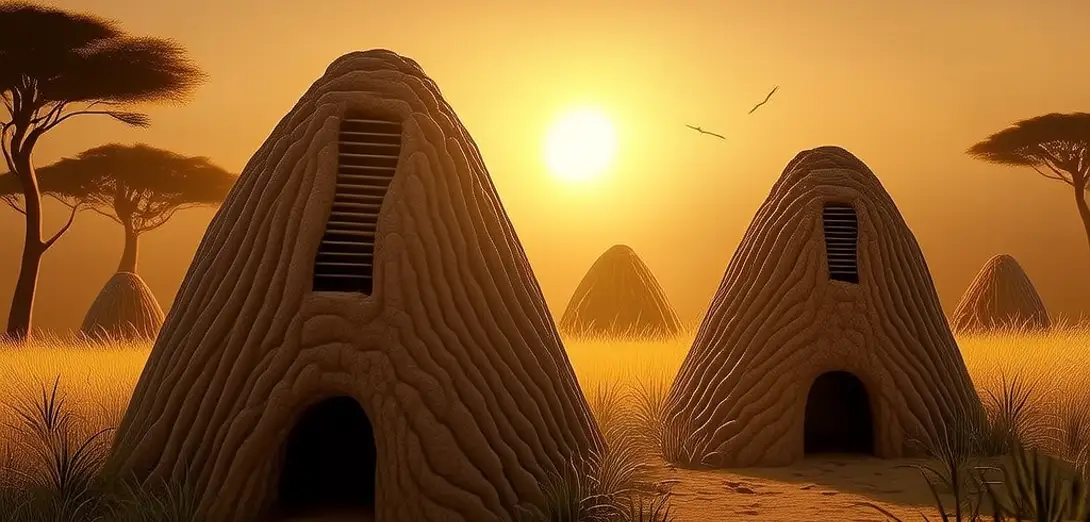
How Termite Mounds Regulate Temperature and Airflow Like Living HVAC Systems
白蚁丘如何像活体暖通系统一样调节温度与气流
-
Termite mounds in Africa maintain near-constant internal temperatures despite external swings from 35°C to 5°C daily.非洲白蚁丘内部温度几乎恒定,尽管外界气温每日在35°C至5°C之间波动。
-
Their intricate tunnel networks function like lungs, using wind pressure differences to drive passive airflow.其错综复杂的隧道网络如同肺部,利用风压差驱动被动气流。
-
Chimneys rise above the mound to create convection currents that pull cool air from underground chambers.烟囱状结构高出蚁丘,形成对流气流,将地下巢室的冷空气向上抽吸。
-
Soil composition, wall thickness, and orientation toward prevailing winds all contribute to thermal stability.土壤成分、墙体厚度及朝向盛行风的方向共同维持热稳定性。
-
Engineers study these structures to design energy-efficient buildings in hot, arid climates worldwide.工程师研究这些结构,以设计全球炎热干旱地区的节能建筑。
-
Sensors placed inside active mounds show airflow reverses direction twice per day with changing wind patterns.置于活跃蚁丘内的传感器显示,气流方向随风向变化每日逆转两次。
-
Unlike human HVAC systems, termites achieve regulation without electricity or moving mechanical parts.与人类暖通空调系统不同,白蚁无需电力或活动机械部件即可实现温控。
-
The structure’s porosity allows moisture exchange that prevents fungal growth inside humid nest spaces.结构的多孔性允许水分交换,防止潮湿巢室内真菌滋生。
-
This biological engineering emerged over millions of years through evolutionary trial and error—not conscious design.这种生物工程历经数百万年演化试错而成,并非有意识的设计。
-
It reminds us that nature often solves complex engineering problems long before humans invent tools to replicate them.它提醒我们:自然早已解决复杂工程问题,远早于人类发明工具加以仿效。