正在确认阅读权限…
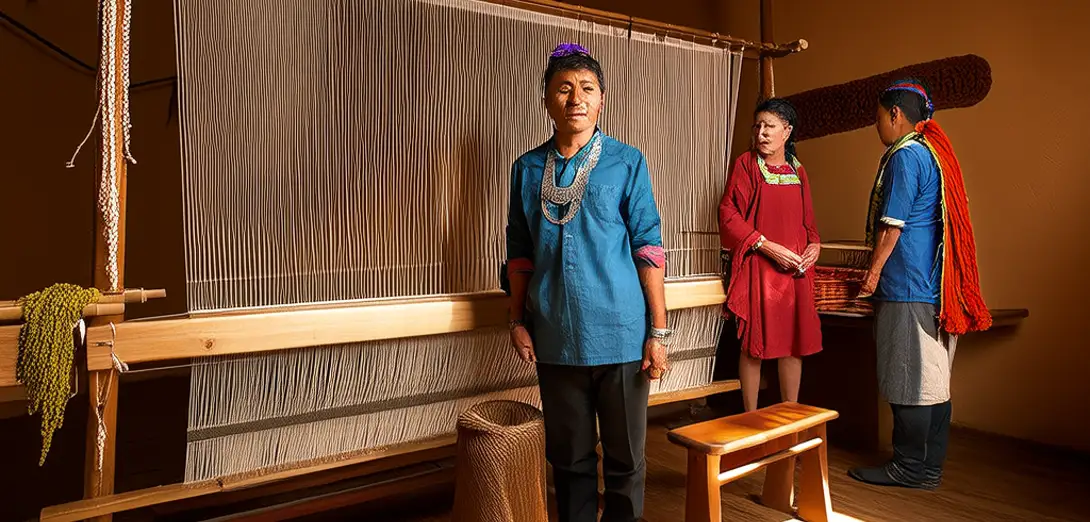
The Shadow-Thread Protocol: Solar Synchrony and Textile Chronometry in Navajo Weaving Guilds
影线规程:纳瓦霍织工行会中的日影同步与纺织计时
-
Navajo weavers align looms east-west not for light, but to track noon-shadow length on warp threads—this measures seasonal drift in ceremonial timelines.纳瓦霍织工将织机东西向摆放,并非为了采光,而是通过经线上的正午影长来追踪仪式时间表的季节性偏移。
-
Each yarn’s twist direction encodes solar declination: Z-twist for winter solstice, S-twist for summer, calibrated to local horizon topography.每根纱线的捻向对应太阳赤纬:Z捻用于冬至,S捻用于夏至,校准依据当地地平线地形。
-
Elders verify seasonal timing by comparing shadow length on newly stretched warps against century-old cedar pegs embedded in workshop floors.长老们通过对比新绷经线上的影长与作坊地板中嵌入的百年雪松木钉,来验证季节时序。
-
Weaving pauses occur when shadows cross specific warp intersections—these moments mark transitions between mythic eras, not clock hours.织造会在影子穿过特定经线交点时暂停——这些时刻标志神话纪元的更迭,而非钟表小时。
-
Dye vats are stirred counterclockwise before sunrise, synchronizing pigment chemistry with Earth’s rotational momentum at that latitude.染缸须在日出前逆时针搅动,使染料化学反应与当地纬度的地球自转角动量同步。
-
Apprentices learn rhythm not from metronomes but by matching shuttle speed to shadow movement across sandstone walls during equinox weeks.学徒不靠节拍器掌握节奏,而是在春分、秋分周内,依砂岩墙上的影子移动速度调整梭子速度。
-
Finished textiles display intentional ‘shadow gaps’—warp intervals where thread density shifts to mirror solar analemma patterns over twelve months.成品织物呈现有意设计的‘影隙’——即经线密度变化的间隔,用以映射一年中太阳运行轨迹( analemma)的形态。
-
Guild archives contain no written calendars—only textile fragments whose fading gradients index decades of ultraviolet exposure and seasonal humidity cycles.行会档案中无文字历法,仅有纺织残片,其褪色梯度记录了数十年紫外线照射与季节湿度循环。
-
When relocating workshops, looms are reinstalled only after verifying that noon shadows fall identically on warp threads as before.作坊搬迁后,织机仅在确认正午影子于经线上落点与原址完全一致时才重新安装。
-
Commercial reproductions omit shadow-thread protocols, rendering them aesthetically authentic but ritually inert artifacts.商业复制品省略影线工艺,使其外观真实却丧失仪式效力。
-
This textile chronometry endures because time here is woven, not counted—its authority lies in material resonance, not abstraction.这种纺织计时法得以延续,因在此地,时间被编织而成,而非被计量——其权威源于材质共鸣,而非抽象符号。
-
Solar alignment isn’t symbolic; it’s infrastructural—without precise shadow-thread correspondence, the cloth cannot hold ceremonial intent.太阳对齐并非象征性行为,而是基础设施性要求——若影线对应失准,织物便无法承载仪式意图。